
Summary
Editor's rating
Is it worth the price once you factor in the subscription?
Chunky, practical design that looks like what it is
Build quality and how it handles weather
Brightness, video, motion alerts: how it actually performs
What this thing actually does day to day
Does it actually make the house feel more secure?
Pros
- Very bright dual floodlights with good coverage
- Reliable motion detection with customizable zones in the app
- Integrates smoothly with other Ring devices and Alexa
Cons
- Requires a paid subscription for video recordings and full features
- Hardwired install needs an outdoor electrical box and some electrical comfort

Specifications
View full product page →| Brand | Ring |
A camera, a floodlight, and a subscription walked into my driveway
I’ve been using the Ring Floodlight Cam Wired Plus (the wired 2021 model, black version) on the side of my house for a few weeks. I replaced an old dumb motion floodlight that only did lights, no camera. I already had a Ring doorbell, so I wanted to see if adding this would actually increase security or just add more notifications and another thing to reset when Wi‑Fi acts up.
Installing it forced me to deal with the electrical box on the wall, so this isn’t like plugging in a lamp. You need to be at least somewhat comfortable turning off the breaker, connecting wires, and hanging a fixture. Ring includes the basics (screws, bracket, little screwdriver), so I didn’t have to run to the hardware store, which I appreciated. From unboxing to seeing the camera in the app took me around 30–40 minutes, and I’m reasonably handy but not an electrician.
Once it was up, the first thing I noticed was the brightness. These floodlights are no joke: my driveway went from dim yellow to basically “parking lot at a small supermarket” level. The camera quality is decent for 1080p: you clearly see faces and license plates at normal distances, but it’s not crystal perfect if you zoom a lot. Motion alerts arrived quickly on my phone, usually within a second or two of someone walking in the zone.
Overall, my first impression is that it’s a pretty solid combo of light and camera, with the usual Ring catch: to really benefit from it, you basically need the subscription. If you hate monthly fees or don’t want to touch electrical wiring, this is already less appealing. If you’re okay with those two points, it does what it says and makes that area of the house feel better covered.
Is it worth the price once you factor in the subscription?
On value, you have to look at two things: the upfront cost of the Floodlight Cam Wired Plus and the ongoing Ring Protect subscription. The device itself isn’t cheap, but it combines a full-strength floodlight, a 1080p camera, motion detection, and a siren in one unit. If you price out a decent standalone floodlight plus a separate outdoor camera with similar features, you end up in a similar ballpark, especially from well-known brands.
The sticking point is the subscription. Without it, you get live view and notifications, which is okay if you mostly want to check what’s going on in real time. But most people buying a security camera want recordings. The subscription gives you up to 180 days of video history, people and package alerts, and easier sharing of clips. It’s not crazy expensive per month, especially if you already have other Ring devices and go for a plan that covers multiple cameras. Still, it’s another bill, and that adds up over a few years.
Compared to cheaper brands that give you local storage or limited free cloud recording, Ring is less generous on the free side but more polished on the app and ecosystem. The Ring app is stable, the interface is clear, and if you already have a Ring doorbell or indoor cams, this slotting in is smooth. That’s where the value makes more sense: as part of a Ring setup, this feels like a logical upgrade. As a one-off camera with no other Ring gear, the value is more debatable if you hate subscriptions.
For me, considering the brightness of the lights, the reliable motion alerts after tuning, and the convenience of having everything in one app, I’d say the value is good but not mind-blowing. You pay for the brand, the ecosystem, and the convenience. If you’re on a tighter budget and don’t care about integration, you can find cheaper options with local storage. If you’re already living in the Ring world and wanted a wired outdoor solution, it’s a reasonable purchase that gets the job done.
Chunky, practical design that looks like what it is
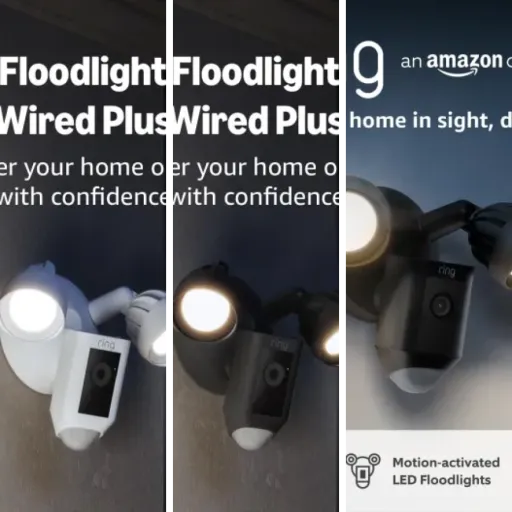
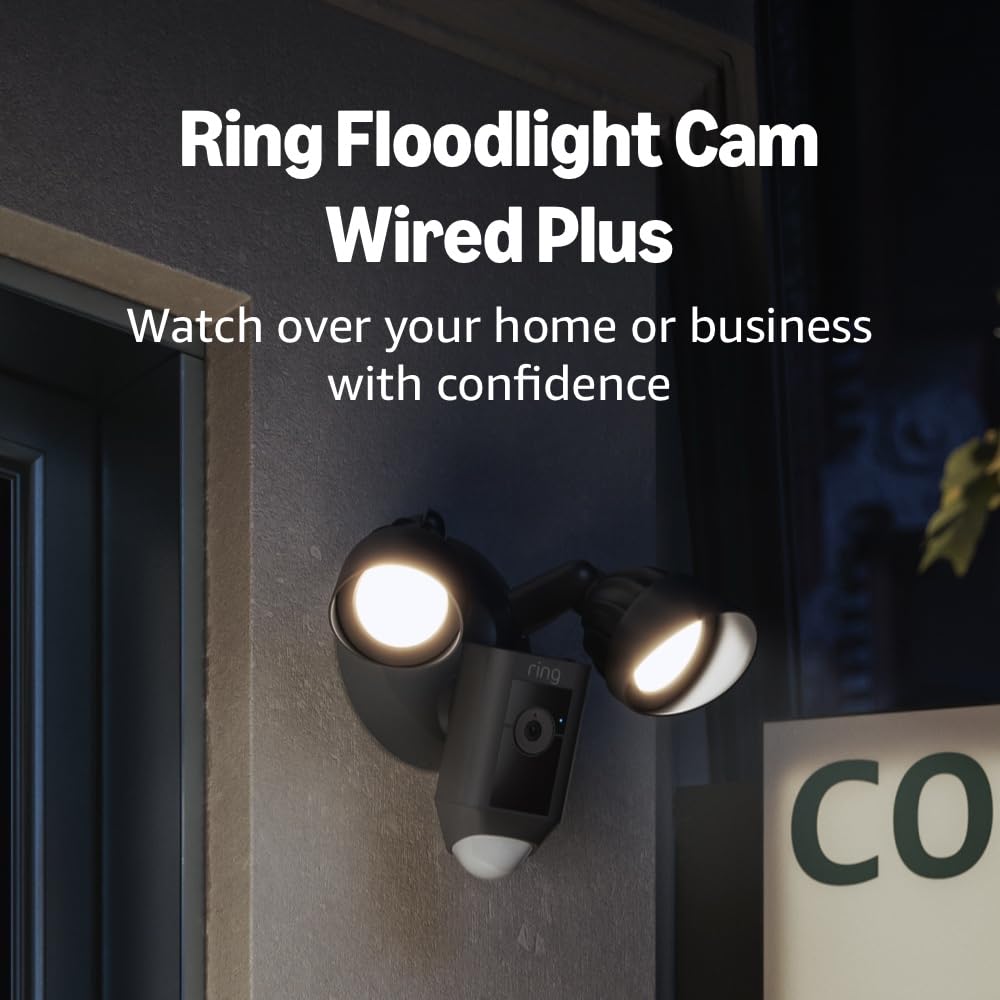
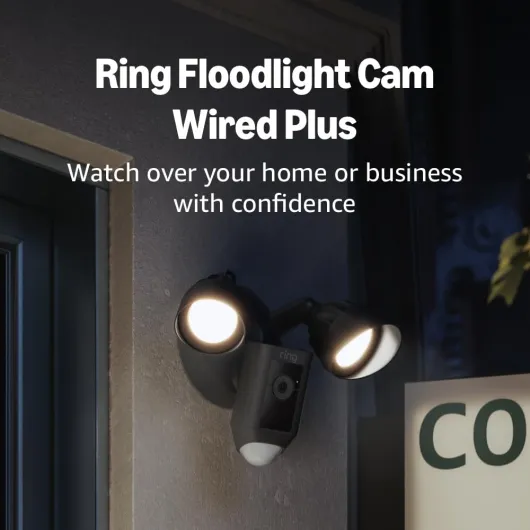
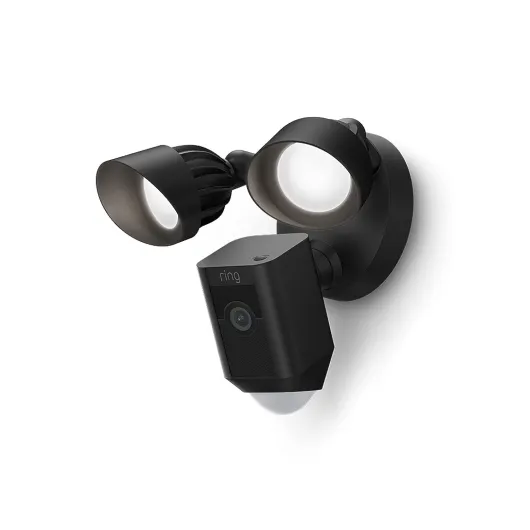
Design-wise, this Ring floodlight cam is not subtle. It’s a black rectangular camera body in the middle with two round-ish LED heads on flexible arms. It looks like a modern security light, not some hidden spy gadget. Personally I like that: it’s clearly visible from the street, which probably helps as a deterrent. If you want something discreet, this isn’t it. Mine is mounted about 9 feet up and you can clearly see the camera lens and the Ring logo.
The lights pivot and tilt enough that I could aim them exactly where I needed: one towards the driveway, one towards the side gate. The camera angle is also adjustable so you can tilt it down or sideways depending on your mounting height. It took a few tries to get the angle right so I wasn’t just recording the neighbor’s yard or the sky. Once locked in, it stayed in place; it doesn’t feel flimsy or wobbly when you adjust it.
In terms of size, the dimensions on paper (11.7 x 7.03 x 9.67 inches) sound large, and on the wall it does have presence. It’s bigger than a simple camera like a Ring Stick Up Cam, obviously, but about the same footprint as a typical dual-head motion floodlight. If you’re replacing an old floodlight, it won’t look out of place. If you’re putting it on the front of a small townhouse, it might look a bit bulky but not ridiculous.
The only thing I don’t love in the design is the all-in-one mount: everything attaches via an integrated base to the round electrical box. It’s fine, but if you don’t have a box exactly where you want the camera, you’re either moving/adding a box or living with a less-than-ideal angle. A bit more flexibility in mounting options would be nice. Still, for a standard replacement of an existing outdoor light, the design is practical and gets the job done.
Build quality and how it handles weather
The camera is rated for -4°F to 122°F (-20°C to 50°C) and is weather resistant. I obviously haven’t tested the full range, but I did run it through some decent rain and a few cold nights. So far, no water intrusion, no fogging inside the lens, and the lights turned on every time. The housing feels solid plastic, not metal, but it doesn’t feel cheap in the hand. Once mounted, it sits tight against the electrical box with a gasket, and I didn’t see any obvious gaps where water could easily get in.
The adjustable arms for the lights and camera have enough resistance that they stay in place even after wind and some light bumps during installation. I tried moving them around a few times to see if they would loosen, and they still hold their position. That’s important because some cheaper floodlights slowly sag over time and you end up lighting the neighbor’s yard or the ground in front of the wall.
From a long-term perspective, Ring gives a 1-year limited warranty, which is pretty standard but not super generous. I’d have liked to see 2–3 years on a hardwired outdoor device that’s clearly meant to stay up for a while. That said, I’ve had other Ring devices (doorbells and indoor cams) for a couple of years without hardware failures, so I’m cautiously optimistic this one will be similar. There’s also the usual firmware and security updates they push through the app, so the software side should stay current for a while.
One small downside: because it’s hardwired, if something does break, replacing it is more annoying than swapping out a plug-in camera. You have to cut power, undo the wiring, and mount the new one. It’s not the end of the world, but it’s more work than a USB camera. Overall, in my short test window, durability seems decent. It feels like it’ll handle normal outdoor abuse—rain, sun, temperature swings—without falling apart quickly.
Brightness, video, motion alerts: how it actually performs
On performance, the floodlights and motion detection are the two big points. The lights are rated at 2000 lumens and 3000K color temperature. In real life, that translated to a strong white-ish light that easily covers my whole driveway and a bit of the street. I can comfortably see to take out the trash or work in the driveway at night without any other lights on. Compared to my old halogen motion light, this one is brighter but with a more even spread and less harsh shadowing.
The camera itself is 1080p HD. During the day, the video is sharp enough to clearly see faces, clothing, and details like car badges. At night, with the floodlights on, it’s still quite clear. Without the lights, it’s usable but more grainy, as you’d expect. If you’re coming from a 2K or 4K camera from another brand, you’ll probably notice the difference when zooming in, but for general home security, I didn’t feel limited. License plates are readable when cars are parked or moving slowly in front of the house, less so if they’re driving past fast.
Motion performance has been mostly reliable. Out of the box, it was too sensitive and triggered on every passing car. After tweaking the customizable motion zones in the app, I cut down most of the false alerts. Now it mainly pings when someone actually comes onto the property. There’s still the occasional random alert from a big truck’s lights or a cat, but nothing crazy. Notifications hit my phone within 1–3 seconds on average over a 200 Mbps connection with about 10–15 ms ping. That’s fast enough to catch someone walking up before they ring the doorbell.
Two-way audio works, but I’d call it functional, not impressive. On my phone, I hear people clearly enough, but sometimes their voice is slightly compressed. On their side, my voice comes through but with a small delay, so conversations feel a bit awkward. For quick “leave the package there” or “hey, can I help you?” it’s fine. I wouldn’t use it to chat for more than a few seconds. Overall, performance is solid for basic security, but if you’re super picky about video resolution or audio, this is decent rather than top-of-the-line.
What this thing actually does day to day
The Ring Floodlight Cam Wired Plus is basically a 1080p security camera + dual LED floodlights + siren in one unit. It hardwires into a 4-inch round outdoor electrical box (not included), runs on standard AC power, and connects to your Wi‑Fi at 2.4 GHz. Once it’s on the wall, you control everything from the Ring app: live view, lights, motion sensitivity, zones, and the siren. It also ties into Alexa if you’re into voice commands or want to see the camera feed on an Echo Show.
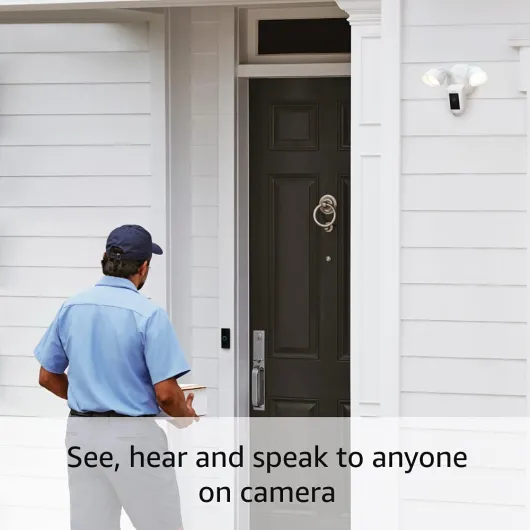
In day-to-day use, the routine is simple: someone walks into the configured motion zone, the camera records and the floodlights can turn on (depending on your settings). You get a push notification on your phone like “Motion detected at Side Yard,” you tap it, and you see a short clip or jump into live view. You can also talk through the camera with two-way audio. I tested this by yelling at a delivery guy “You can leave it at the door, thanks,” and he heard me clearly, though there’s a tiny delay.
The color night vision is basically regular 1080p video with some low-light boosting, especially when the floodlights are on. Without the lights, it’s more standard night vision with decent detail up to maybe 20–30 feet in my case. With lights on, it’s much easier to recognize faces and read plates inside the main zone. The field of view is listed as 140° horizontal and 80° vertical, and in practice it covered my entire two-car driveway and a bit of street without much blind spot, which is what I wanted.
One important detail: if you don’t pay for a Ring Protect subscription, you only get live view and real-time notifications. No saving videos, no going back to see what happened last night. With the subscription, you can store videos for up to 180 days and get people/package alerts. So the product technically works without it, but in real use, I’d say it feels half-finished if you skip the plan. That’s a key thing to know before buying.
Does it actually make the house feel more secure?
In terms of pure effectiveness as a security tool, this thing does its job. Before installing it, the side of my house was basically a dark spot where someone could walk by without me noticing. Now, any movement in that zone lights it up and sends a notification. After a week, I got used to seeing alerts when my partner came home or when I took the trash out. It quickly became part of the routine: if I hear something outside at night, I check the Ring app instead of going to the window.
The deterrent effect is real. The floodlights flipping on are very visible from the street, and the camera is obvious. I had a guy come to the door doing some door-to-door sales and he looked up at the camera right away. Same thing with delivery drivers: they clearly notice they’re on video. You can also manually trigger the 105 dB siren from the app. I tested it once in the afternoon; it’s loud enough to be annoying and draw attention, but not ear-shattering from the ground. I wouldn’t rely on it as a full alarm, but as an extra layer if you see someone messing around, it’s useful.
Where it falls a bit short is without the subscription. If something happens and you didn’t watch it in real time, you can’t go back and see the recording unless you’re paying for Ring Protect. That’s a big deal if you’re using this for actual evidence, like checking vandalism or package theft. With the subscription, you can scroll through the timeline, download clips, and share them. Without it, it’s basically just a live camera and motion light.
Also, effectiveness depends a lot on your Wi‑Fi. The camera needs at least 2 Mbps upload. When my router had a bad day and the signal dropped, I got delayed notifications and one missed recording. That’s not really the camera’s fault, but it’s something to keep in mind: if your Wi‑Fi is weak where you want to mount it, you may need a mesh node or extender. Overall, as long as you have decent internet and accept the subscription model, it’s a practical way to cover a driveway, backyard, or side entrance.
Pros
- Very bright dual floodlights with good coverage
- Reliable motion detection with customizable zones in the app
- Integrates smoothly with other Ring devices and Alexa
Cons
- Requires a paid subscription for video recordings and full features
- Hardwired install needs an outdoor electrical box and some electrical comfort
Conclusion
Editor's rating
Overall, the Ring Floodlight Cam Wired Plus is a practical upgrade if you want to cover a driveway, side yard, or business entrance with both strong lighting and a camera. The floodlights are bright, the 1080p video is clear enough for normal security use, and motion alerts are reliable once you tweak the zones. The design is not discreet but looks like a proper security light, which actually helps as a deterrent. Installation is manageable if you’re comfortable with basic electrical work and already have a 4-inch outdoor box; if not, you may need an electrician, which adds to the cost.
The main downsides are the dependence on a subscription for recordings and the need for decent Wi‑Fi. Without Ring Protect, you lose most of the benefit of having a camera because you can’t go back and review events. So you should think of this as a device with both an upfront and a long-term cost. If you already use Ring doorbells or cameras, this slots in nicely and feels like a solid extension of what you have. If you’re starting from scratch and hate monthly fees, there are other brands that might suit you better, even if their apps feel less polished.
I’d recommend this to people who: already have Ring gear, want a hardwired solution, and like the idea of combining a bright floodlight and a camera in one unit. People who should probably skip it: anyone who refuses subscriptions, renters who can’t hardwire fixtures, or folks chasing ultra-high-resolution video. For most homeowners looking for a straightforward, reliable security light with a camera, it’s a pretty solid pick that does what it claims without too many surprises.