
Summary
Editor's rating
Value: worth it if you accept the subscription and install cost
Design: big, obvious, and looks like it means business
Power and wiring: no battery, so think about installation
Build quality and durability in real weather
Performance: motion detection, image quality, and app experience
What the Ring Floodlight Cam Wired Plus actually offers
Pros
- Bright 2000 lumen floodlights plus 1080p camera in one unit
- Reliable motion detection with customisable zones after setup
- Hardwired power means no battery charging and consistent operation
Cons
- Ring subscription is basically required to get full value from the camera
- Requires mains wiring and may need an electrician, adding to cost
- Bulky, very visible design that won’t suit everyone’s taste or mounting spots

Specifications
View full product page →| Brand | Ring |
A camera, a floodlight, and a siren in one box
I’ve been using the Ring Floodlight Cam Wired Plus on the side of my house, pointed at the driveway and part of the garden. Before this, I just had a basic PIR floodlight and a separate, cheap Wi‑Fi camera that kept dropping connection. I wanted something that could actually record properly, alert me on my phone, and light up the area without me fiddling with three different apps and switches.
So this thing replaces your old wired outdoor light and adds a 1080p camera, motion detection, and a siren. It’s not some magic security system, but it does pull a few jobs into one device. I hardwired it where my old light was, hooked it to Wi‑Fi, and added it to the Ring app with my other Ring doorbell. The setup process in the app is pretty straightforward, as long as your wiring is already there.
In day‑to‑day use, it’s mostly about three things: how fast it alerts you, how clear the image is, and whether the lights actually help when something or someone comes near your house. After a couple of weeks, I’d say it’s generally reliable. Notifications pop up quickly, and the camera quality is decent enough to recognise faces and number plates at short range, especially with the floodlights on.
It’s not perfect though. You basically need the Ring subscription if you want to get real value from it, because without it you can’t review old clips, which kind of kills the point of having a security camera. Also, you either need to be comfortable with mains wiring or pay an electrician, which adds to the total cost. So it’s a good piece of kit, but not exactly cheap once you factor everything in.
Value: worth it if you accept the subscription and install cost
On price, the Floodlight Cam Wired Plus isn’t cheap, especially at full retail. It sits in that mid‑to‑high range for consumer security gear. You’re paying for a camera, dual floodlights, a siren, and the Ring ecosystem in one box. If you catch it during an Amazon sale, like a couple of reviewers did, it feels like much better value. At full price, I’d say it’s decent but not a bargain, especially once you factor in the subscription and maybe an electrician.
The subscription is the big sticking point for value. Without it, you only get live view and instant notifications. No recorded history, no going back to check what happened at 2 a.m., no clips to share with the police if something does happen. With the subscription, you get up to 180 days of video storage and some smarter alerts. For a single camera, the monthly cost isn’t huge, but it adds up over the years, especially if you have multiple Ring devices. To be honest, the hardware price plus ongoing subscription means you need to be okay with paying for a service, not just a one‑off product.
Compared to a traditional CCTV system with a DVR, cabling, and multiple cameras, this is simpler and usually cheaper up front, especially if you only need one or two areas covered. But those wired CCTV setups often have no subscription fees and record locally. So it’s really a trade‑off: easier install and app control with Ring versus more control and no ongoing fees with a proper NVR/DVR system.
So in terms of value, I’d sum it up like this: if you already use Ring, can install it where an existing light is, and you’re fine paying for the subscription, it’s pretty solid value for the convenience and features. If you hate subscriptions or need a big multi‑camera setup, you might be better putting your money into a more traditional CCTV system instead.
Design: big, obvious, and looks like it means business
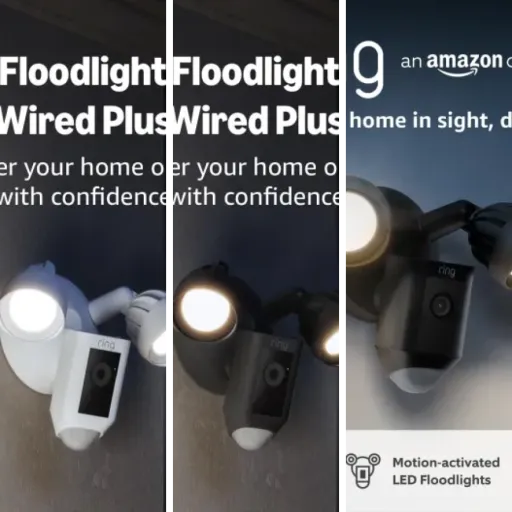
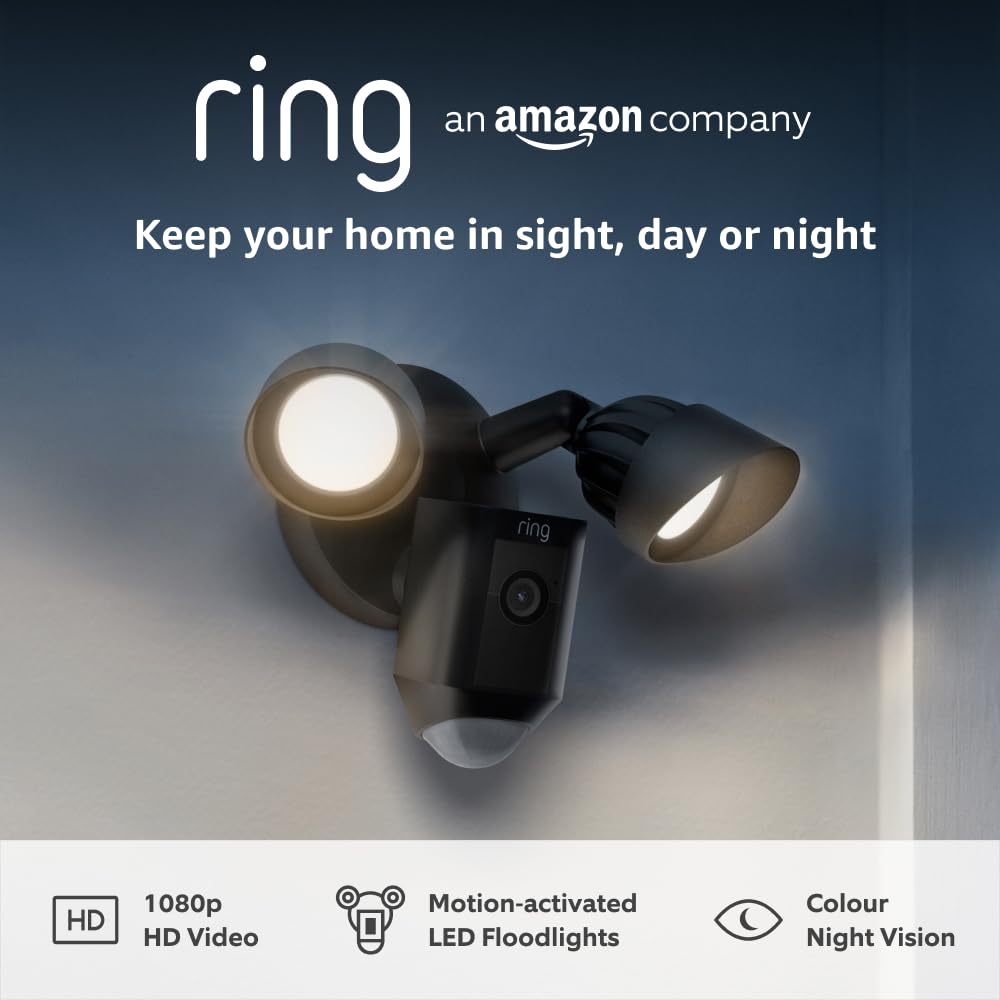
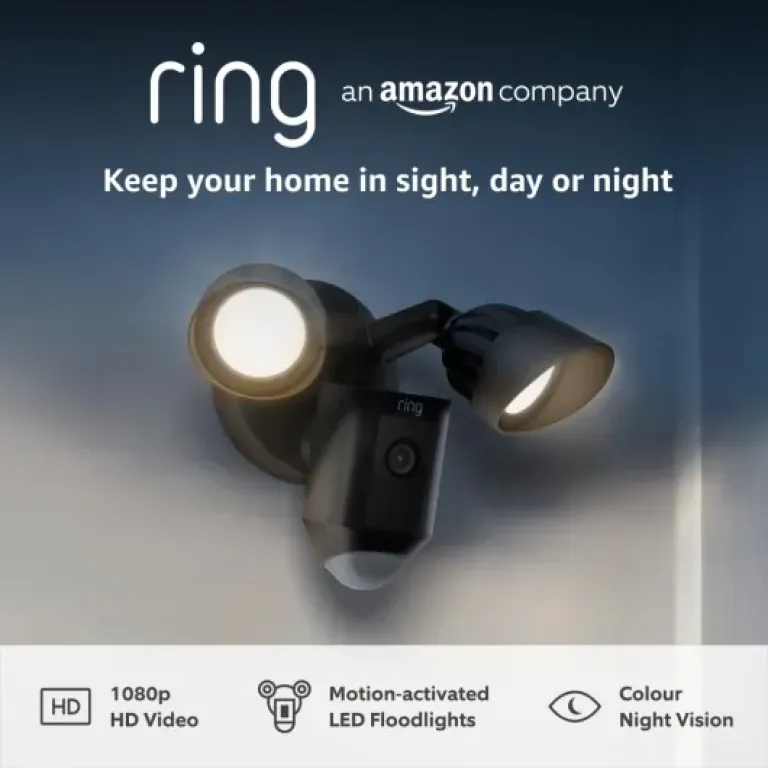
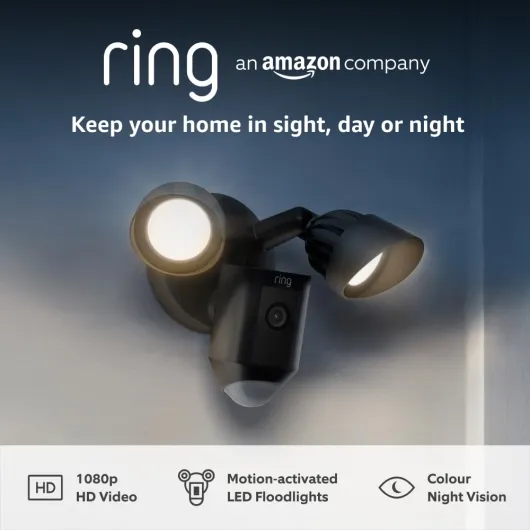
Design‑wise, the Ring Floodlight Cam Wired Plus is not small or discreet. It’s a chunky unit with two adjustable LED light heads and the camera hanging underneath. On my wall it’s very noticeable, which I actually like for security – it clearly looks like a camera and a light, so it acts as a deterrent by itself. If you’re after something subtle, this probably isn’t it. It comes in black or white; I went with black and it blends reasonably well on dark brick, but you still see it straight away.
The two light heads are easy to adjust by hand, so you can angle them to cover a driveway and a path, or just one big area. The camera angle is also adjustable, which helps if your mounting point is a bit high or off‑centre. Once you tighten everything, it stays in place. I’ve had some cheap floodlights in the past that drooped after a few weeks; this one feels more solid and doesn’t move around after you set it.
One thing I noticed: the unit sticks out from the wall quite a bit. That’s fine in a garden or driveway, but if you mount it low near a side passage, be aware you can easily bump it with ladders or big boxes. The size also means you want a decent mounting spot with enough clear space around it so the motion sensors and camera aren’t blocked by gutters or pipes.
Overall, the design is pretty functional: big, obvious, and practical. It looks more like a piece of security gear than a stylish outdoor light. I’m okay with that trade‑off. The main thing is, it’s easy to angle the lights and camera where you need them, and it looks like a proper, serious device rather than a toy camera stuck to the wall.
Power and wiring: no battery, so think about installation
There’s no battery in this model, which is both a plus and a minus. On the plus side, you never have to climb a ladder to recharge anything or worry about the camera dying in the middle of the night. As long as your mains power is stable, the floodlight cam just runs 24/7. That’s one of the reasons I picked the wired version: I didn’t want to add another thing to my “remember to charge this” list.
On the downside, you absolutely need mains wiring where you want to install it. If you already have an outdoor light in the right spot, it’s easier – you just replace that fitting. If you don’t, you’re probably calling an electrician to run a cable and mount a junction box. For me, I replaced an old PIR light, so the wiring was already there. The actual mounting and wiring is not rocket science, but if you’re not comfortable working with 230V, I’d say pay someone to do it. The manual and included tools (that little orange screwdriver is actually decent) help, but it’s still proper electrical work.
Because it’s hardwired, you don’t get the flexibility of just moving it around like a battery cam. Once it’s in, it’s staying there unless you want to patch up holes and redo wiring. That’s fine for a driveway or fixed area you know you want to cover long‑term, but less ideal if you like to change things around. Also, if your power goes out, so does the camera, unless you’ve got your whole circuit on some backup system.
So in terms of "battery" and power situation: it’s stable and low‑maintenance once installed, but you pay for that with less flexibility and potentially higher upfront cost if you need an electrician. If you’re renting or can’t touch the wiring, the wired Plus version is probably not for you – the battery or solar models make more sense there.
Build quality and durability in real weather
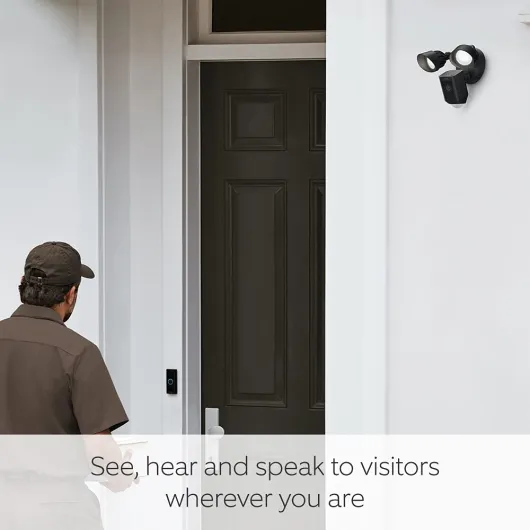
I’ve had it mounted through a couple of proper downpours and some cold nights, and so far it hasn’t complained. It’s rated for -20°C to 50°C and is weather resistant, and in typical UK weather (rain, wind, mild frost) it holds up fine. The casing feels solid, not like thin plastic that’s going to crack in the first freeze. The joints on the light heads and camera arm feel tight but still adjustable, and they haven’t sagged or loosened over time yet.
The lens and sensors are slightly recessed, which helps a bit against direct rain hitting them. You’ll still want to give it a quick wipe every now and then, especially after storms or pollen season, otherwise the image can get a bit hazy. That’s just normal outdoor camera maintenance, nothing special to this model. The black version hides dirt a bit better than white, but you do see dust and water spots under certain light.
From what other users report and from my own short‑term use, the reliability seems decent. I did see one review mention a unit where the lights stopped turning fully off after about a year and needed replacing, but that feels like a one‑off fault rather than a pattern. Ring offers a 1‑year limited warranty, which isn’t huge, but at least covers early failures. After that, you’re basically on your own unless you bought extra cover.
Overall, I’d say the build and durability feel good enough for long‑term outdoor use. It’s not some fragile gadget that you’re scared to touch. It feels like a proper outdoor fixture. Time will tell how it handles several winters and hot spells, but so far it gives the impression of being a unit you can bolt on and not worry about every time the weather turns rough.
Performance: motion detection, image quality, and app experience
Performance is where this thing matters. The motion detection is generally reliable. Out of the box it was a bit too sensitive – it kept triggering for cars on the street and even bigger insects flying close to the lens at night. After tweaking the motion zones and sensitivity in the app, it calmed down and started focusing more on the driveway and garden area I actually care about. You can also set schedules so it behaves differently at night versus daytime, which is handy if you don’t want non‑stop pings while you’re pottering around outside.
The camera quality is decent for a 1080p device. During the day, you get clear enough detail to recognise faces and see what people are doing. At night, if the floodlights kick in, the image is still usable, with colour and enough clarity to spot clothing colours and basic features. If the lights are off and it’s relying only on the sensor, it’s not as sharp, but still okay for basic monitoring. It’s not on the level of higher‑end 4K systems, but for normal home use, it gets the job done.
The two‑way audio is better than I expected. There’s a slight delay, but I can talk to delivery drivers or tell someone to leave a package in a certain spot without them constantly saying “what?”. The microphone picks up voices clearly up to the gate area on my drive. The siren is loud enough to make someone jump, but it’s not as deafening as a full alarm system – think more of a strong deterrent rather than something that will wake the whole neighbourhood.
In terms of connectivity, on a decent 2.4 GHz Wi‑Fi signal, it’s stable. I haven’t had major dropouts, but you do need a solid upload speed (Ring recommends at least 2 Mbps per device). The app itself is fairly straightforward: you get a timeline, event list, and live view. The main annoyance is that the real power is locked behind the subscription; without it, you lose video history and a lot of the point of having a security camera. But if you accept that as part of the package, overall performance is pretty solid and consistent.
What the Ring Floodlight Cam Wired Plus actually offers
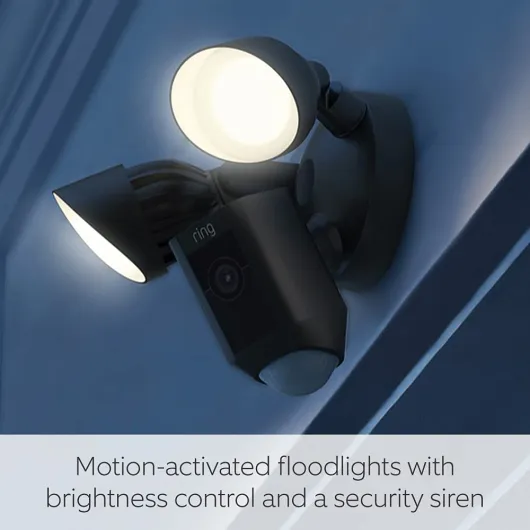
On paper, the Ring Floodlight Cam Wired Plus is pretty packed: 1080p HD video, colour night vision, 2000 lumen LED floodlights, a built‑in siren, two‑way audio, and Wi‑Fi connectivity (2.4 GHz only). It’s meant to be an alternative to a basic CCTV system, especially if you already live in the Ring ecosystem with a doorbell or indoor cam. Once connected, you manage everything from the Ring app: live view, history (with subscription), motion zones, light settings, and siren.
In practice, the core of the product is this: it’s a mains‑powered floodlight that records when it detects motion and lets you see, hear, and talk through your phone. You can link it with other Ring devices so one motion event can trigger other cameras or chimes. The motion detection is rated up to 270 degrees, with a 140° horizontal field of view on the camera, which is enough to cover a typical driveway or garden. The app lets you draw zones so passing cars or pedestrians don’t set it off constantly.
The camera records in 1080p, and the quality is good enough for home use. It’s not cinema‑level, but you can clearly see people, clothing, and basic details. At night, if the floodlights are on, the colour night vision actually helps – you’re not stuck with a grainy black‑and‑white mess. The two‑way audio works decently; there’s a small delay, but it’s fine for telling a courier where to leave a parcel or shouting at someone poking around.
The catch: the real value only shows if you pay for a Ring subscription. Without it, you just get live view and instant notifications. You can’t scroll back to see what happened at 3 a.m. or download clips if something serious happens. With the subscription, you get up to 180 days of video history, person alerts, and a few extras. So when you look at what it offers, keep in mind the camera price plus the ongoing subscription if you really want the full set of features.
Pros
- Bright 2000 lumen floodlights plus 1080p camera in one unit
- Reliable motion detection with customisable zones after setup
- Hardwired power means no battery charging and consistent operation
Cons
- Ring subscription is basically required to get full value from the camera
- Requires mains wiring and may need an electrician, adding to cost
- Bulky, very visible design that won’t suit everyone’s taste or mounting spots
Conclusion
Editor's rating
The Ring Floodlight Cam Wired Plus is a solid all‑in‑one option if you want a bright outdoor light, a reliable camera, and app alerts in one device. The motion detection works well once you dial it in, the 1080p video is clear enough for normal home use, and the floodlights are strong and actually useful, not just a token glow. Being hardwired means no battery headaches, and once it’s in place, it just quietly does its job in the background.
But it’s not for everyone. You either need existing outdoor wiring or you’ll pay an electrician, and the camera only really makes sense if you’re willing to pay for the Ring subscription so you can access recordings. If you hate ongoing fees or you’re aiming for a full multi‑camera CCTV setup with no cloud dependency, this isn’t the best fit. Also, it’s a fairly chunky, obvious unit – good for deterrence, less good if you want something subtle.
If you’re already in the Ring ecosystem, want to cover a driveway, garden, or garage area, and you’re fine with the subscription model, this is a pretty solid choice that gets the job done and integrates nicely with other Ring gear. If you’re on a tight budget, renting, or allergic to subscriptions, I’d look at a basic wired floodlight plus a standalone camera or a local‑storage CCTV kit instead.