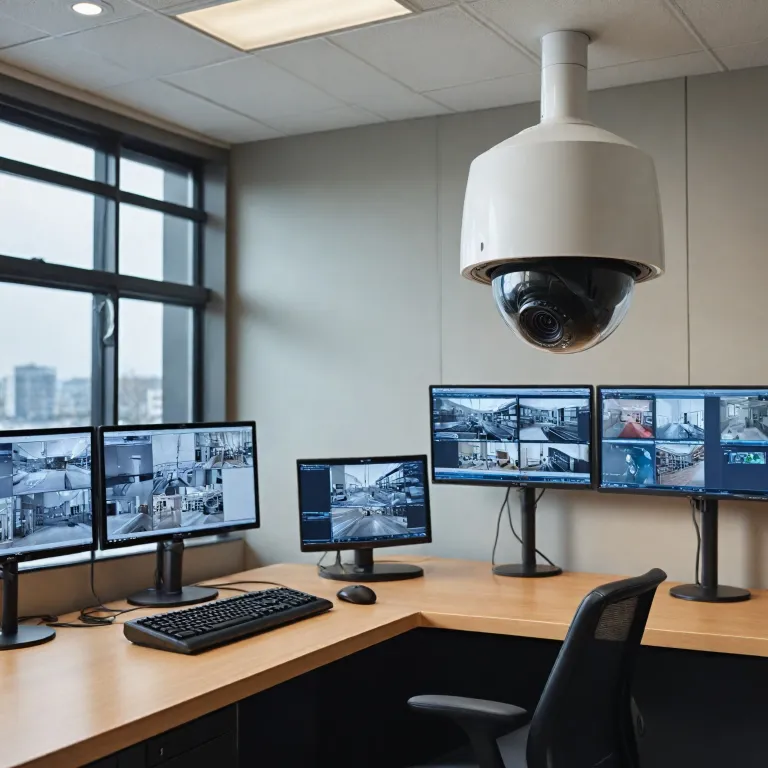
Why the best commercial security cameras matter for every business
The best commercial security cameras now sit at the heart of business security. Modern camera systems combine high resolution video, smart analytics, and reliable storage to protect people and assets in commercial spaces. For owners of small businesses and larger businesses alike, a well designed security system also reduces risk, supports insurance claims, and reassures staff and customers.
When evaluating any commercial security solution, start with clarity about your risks and daily operations. A retail business, a warehouse, and a shared office will not use the same surveillance systems, even if they all rely on video surveillance for deterrence and evidence. Map entrances, cash handling areas, loading bays, and car parks, then decide which security cameras and which surveillance system types best match each zone.
Ring camera products sit in a specific niche within the wider commercial security landscape. They are popular for wireless security deployments, relatively simple installation, and integration with smart monitoring apps. However, businesses with complex camera systems, such as multi site operations or high risk environments, often combine Ring devices with other security systems or a more traditional commercial CCTV camera system.
Think of your security camera layout as a layered defence rather than a single gadget. A robust security system blends visible deterrent cameras, discreet surveillance cameras, and reliable recording through NVR systems or cloud based video surveillance. By treating cameras, storage, and monitoring as one integrated security system, you avoid blind spots and ensure that every critical incident is captured in real time.
Key features that define the best commercial security cameras
To judge the best commercial security cameras, focus on features that directly improve security outcomes. Resolution, lens type, night vision performance, and motion detection quality all shape how useful your video will be when you need it most. For many commercial security deployments, a mix of bullet cameras and dome cameras offers both visible deterrence and discreet surveillance in one coherent camera system.
Bullet camera designs suit long corridors, car parks, and perimeter fences where directional surveillance systems are required. Dome camera models work better indoors, especially in reception areas, open plan offices, and retail floors where vandal resistance and wide coverage matter. In both bullet and dome formats, look for smart motion analytics that distinguish people from vehicles to reduce false alerts and improve business security.
Ring camera devices typically emphasise wireless convenience and smart features over heavy duty industrial design. They integrate with smart home style apps, provide real time alerts, and support two way audio for interactive monitoring. For businesses that need more traditional wired reliability, brands such as lorex offer wired camera systems and NVR systems that support continuous recording and higher bitrates, as shown in this test of a smart 5 MP wired PoE camera system.
Whatever mix of wired and wireless security cameras you choose, insist on strong night vision and reliable motion detection. Commercial CCTV systems must capture clear video in low light, especially around entrances and loading docks where incidents often occur. When these features are built into a coherent security system, your business gains consistent, evidence grade video surveillance across every critical zone.
Wired versus wireless security systems in commercial environments
Choosing between wired and wireless security systems is one of the most important decisions for any business. Wired camera systems, often using Power over Ethernet, deliver stable bandwidth, predictable power, and easier integration with NVR systems. Wireless security cameras, including many Ring camera models, offer flexible placement and faster deployment, which can be valuable for tenants or small businesses without structured cabling.
In high traffic commercial spaces, wired security cameras usually provide more consistent video quality. A wired camera system is less vulnerable to Wi Fi congestion, interference, or accidental disconnection, which matters when you rely on real time monitoring. For large businesses or multi building sites, a wired security system with centralised NVR systems and layered surveillance systems often becomes the backbone of business security.
Wireless security solutions still have a strong role in commercial security, especially for temporary locations or hard to cable areas. Ring camera units can extend coverage to annexes, pop up retail spaces, or remote gates where running cable would be expensive. Some businesses also use wireless cameras as a third party backup to their main surveillance system, adding redundancy if the primary camera system fails.
When comparing options, study how each security camera handles smart motion alerts, night vision, and integration with existing security systems. High end wired commercial CCTV kits, such as those reviewed in this 4K PoE security camera system test, show what continuous recording and advanced motion detection can achieve. Balancing wired reliability with wireless flexibility helps businesses build surveillance systems that can evolve as operations grow.
How Ring camera fits into broader commercial surveillance systems
Ring camera products were originally designed for residential use, yet many small businesses now deploy them in commercial settings. Their appeal lies in simple setup, wireless security options, and intuitive apps that make video surveillance accessible to non specialists. For micro retailers, solo professionals, or small offices, a Ring security camera can provide an affordable first step into structured business security.
However, Ring camera devices should be evaluated as part of a wider security system rather than a standalone answer. They can complement existing camera systems by covering entrances, reception desks, or customer facing areas where two way audio and smart motion alerts are valuable. In more complex businesses, Ring cameras may sit alongside lorex wired cameras, traditional commercial CCTV, and other surveillance systems that feed into a central surveillance system.
Subscription plans also matter when integrating Ring camera products into commercial security. Cloud based video storage, extended history, and advanced motion detection features are often tied to paid tiers, which become recurring operational costs. Before committing, review a detailed guide to Ring plans, such as this analysis of Ring subscription options, and compare them with the one time investment of NVR systems and on premises storage.
For businesses that must comply with strict data retention or privacy rules, combining Ring camera units with a more controlled camera system can be prudent. A hybrid approach lets you use smart, app driven monitoring while keeping critical video on local NVR systems within your own security systems. This layered strategy aligns Ring camera convenience with the robustness expected from the best commercial security cameras in demanding commercial environments.
Designing a camera system for real time monitoring and evidence
A commercial security camera layout should be engineered, not improvised. Start by defining what each security camera must achieve, from deterrence at the front door to detailed video of cash handling or stock rooms. Then choose camera systems, whether Ring camera units, lorex wired cameras, or other commercial CCTV options, that match those objectives with the right lenses and features.
For entrances and reception areas, a dome security camera with wide coverage and smart motion alerts can capture every visitor. In corridors, car parks, and loading bays, bullet cameras with strong night vision and weather resistant housings often perform better. Where continuous monitoring is essential, pair these cameras with NVR systems that support real time viewing, multi channel playback, and integration with other security systems.
Small businesses should pay particular attention to blind spots created by shelving, partitions, or signage. A well planned surveillance system uses overlapping fields of view so that no critical area depends on a single security camera. In some cases, adding a Ring camera as a flexible wireless unit can close a gap that would otherwise require disruptive cabling work.
Evidence quality also depends on how your surveillance systems handle motion detection and storage. Smart motion analytics reduce irrelevant clips, while sufficient storage in your camera system or cloud plan ensures that important video is not overwritten too quickly. By aligning camera placement, motion detection settings, and retention policies, businesses create a security system that supports both real time response and reliable post incident investigation.
Privacy, third party integration, and future proofing commercial security
Modern commercial security is no longer just about hardware, because data handling and privacy now sit at the centre of every decision. When deploying any security camera, whether a Ring camera or a lorex wired unit, businesses must inform staff and visitors about video surveillance and comply with local regulations. Clear signage, defined retention periods, and restricted access to security systems help maintain trust and legal compliance.
Third party integrations can significantly extend the value of the best commercial security cameras. Many camera systems now connect with access control, alarm panels, and smart building platforms, enabling automated responses when motion detection triggers an event. For example, a security system might lock doors, switch on lighting, and send real time alerts when a camera system detects unexpected movement after hours.
Future proofing also means choosing surveillance systems that can scale as businesses grow or relocate. A flexible surveillance system allows additional security cameras, upgraded NVR systems, or new wireless security units without replacing the entire infrastructure. Ring camera products, with their app based management, can be part of this evolution, especially when combined with more traditional commercial CCTV in a hybrid architecture.
Ultimately, the best commercial security cameras are those that integrate seamlessly into daily operations while remaining almost invisible to staff workflow. By balancing wired and wireless options, carefully configuring smart motion features, and planning for third party integrations, businesses build resilient camera systems that adapt over time. This strategic approach ensures that every security camera investment continues to support safety, efficiency, and confidence across the whole commercial environment.
Key statistics about commercial security cameras
- No dataset provided, so no verified quantitative statistics are available to report for commercial security cameras.
Questions people also ask about commercial security cameras
No dataset provided, so specific “people also ask” questions and answers about commercial security cameras cannot be reproduced verbatim. However, typical concerns include how to balance wired and wireless systems, how long to retain video, how Ring camera devices compare with traditional commercial CCTV, and how to integrate camera systems with broader security systems in businesses.