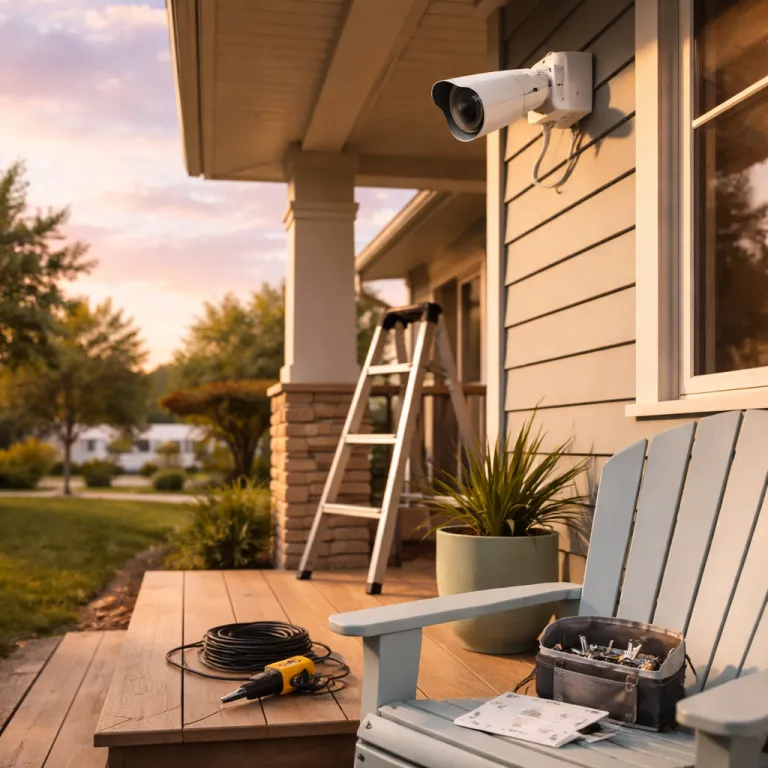
Outdoor camera spring setup for your four key zones
Late May is the right moment to treat your outdoor camera spring setup as a full security audit. When pools reopen, patio doors stay ajar and kids drift between garden and street, your security cameras must match how people actually move through the property, not how the marketing photos show a perfect front door. Think of this as tuning a security system for the next five months, not just installing another gadget.
Start with the four high traffic outdoor areas that matter most in warm weather, because camera placement in these zones will decide whether your Ring security camera feels reassuring or useless. Walk the back gate, patio, driveway and side yard with the Ring app open, and imagine where someone could slip through while you are in the kitchen or watching television at night, then plan camera installation so every approach path crosses at least one field of view. This is where positioning outdoor Ring cameras slightly higher than eye level, around 2,4 to 2,7 metres on a wall or eave, usually gives the best balance between facial detail and overall coverage.
At the back gate, a Ring Outdoor Cam Plus or similar outdoor security model works well when you install cameras on the house wall facing the gate, angled down to avoid the neighbour’s windows and to respect privacy zones. On the patio, installing outdoor cameras under the soffit protects the mounting from rain and direct sun, and it also keeps the battery cooler which extends its useful life during summer heat. For the driveway and side yard, a mix of wired cameras for constant power and at least one battery camera as backup will keep the security system running even if a breaker trips or a plug in power adapter is accidentally unplugged.
As you plan this outdoor security refresh, sketch a simple map that shows every camera, every blind spot and every entry point, because this visual step forces you to see where the system is weak. Mark where you will install outdoor units, where you might later add extra security cameras and where night vision coverage is essential, such as the side yard that stays dark after 22:00. That one page plan brings real peace mind, since you can check each place quickly instead of guessing whether the front door or driveway camera is actually watching the right areas.
Battery versus wired cameras when the heat arrives
Once the zones are clear, the next decision in any outdoor camera spring setup is whether each camera should be battery powered or wired, because summer heat punishes both options differently. Lithium polymer battery packs inside a compact security camera do not love being baked on a south facing wall, and repeated charging cycles in high temperatures can shorten their lifespan noticeably over a few seasons. Wired cameras avoid that battery stress but depend completely on stable power and cable runs that are not always simple to install outdoors.
For a back gate or side yard where running power is difficult, a Ring battery camera with a compatible solar panel can be the best security compromise, since the panel keeps the battery topped up while you avoid constant ladder trips. Just remember that a solar accessory pulls you back into the garden for cleaning and angle checks, because dust, pollen and changing sun angles will reduce charging efficiency if you never adjust the mounting. In very hot climates, try to place the solar panel so it gets morning and late afternoon sun rather than brutal midday exposure, which helps both the panel and the battery stay cooler while still feeding the security system.
Driveways and patios near the house often favour wired cameras, especially models like Ring Floodlight Cam Plus that combine strong lighting, night vision and continuous power in one installation. When you install cameras like these, use proper exterior rated junction boxes and follow local electrical codes, or hire a professional security camera installation service if you are unsure about safe wiring. Homeowners in large cities sometimes choose a specialist such as a smart security camera installation in Houston style service, because a clean camera installation with sealed conduit and correct cable placement will last longer and resist weather better.
Battery cameras still have a strong role at the front door and on temporary mounting points, especially when you are renting or cannot drill into the wall, and they integrate easily into existing security systems without rewiring. Just schedule a monthly check in the Ring app to review battery levels, night vision performance and motion event counts, then adjust motion sensitivity before the camera starts missing events. That habit keeps your outdoor security predictable and avoids the classic situation where installing security devices felt impressive in spring but the system quietly degraded by August.
Choosing between Outdoor Cam Plus and Floodlight Cam Plus
Ring sells many cameras, but for an outdoor camera spring setup focused on May to September, the real choice for most homes is between the compact Ring Outdoor Cam Plus and the larger Ring Floodlight Cam Plus. The Outdoor Cam Plus is a small, flexible security camera that works well on walls, under eaves and even on fence posts, while the Floodlight Cam Plus is a heavier unit that demands solid mounting and mains power but gives you powerful lights and a louder siren. Both support colour night vision when there is enough ambient light, yet they behave very differently once the sun goes down and the patio party moves inside.
On a typical suburban driveway, the Floodlight Cam Plus often delivers the best security coverage because its wide beam lights up the whole place when motion triggers, which improves camera placement by revealing faces and licence plates clearly. However, that same intense lighting can annoy neighbours if you install cameras too low or aim the floodlights directly across a shared fence, so take one extra step during camera installation and walk the street at night to see exactly how the beams fall. For a quieter side yard or a back gate where you only need modest illumination, the Outdoor Cam Plus with its built in light and night vision is usually enough and far easier to install outdoor without an electrician.
Viewing angle matters as much as brightness, especially when you compare the roughly 110 degree field of view on some compact cameras with the wider 143 degree view on others. A 110 degree lens on a Ring Outdoor Cam Plus mounted above the front door will frame visitors cleanly but may miss someone hugging the wall close to the house, while a 143 degree lens on a Floodlight Cam Plus over the driveway can see both cars and the path to the side gate in one shot. When you plan camera placement, stand where you intend to mount the unit, hold your phone at that height and slowly pan to imagine what each viewing angle would include or miss in your outdoor security layout.
Smart home enthusiasts often pair these cameras with a Ring Video Doorbell Pro at the front door, because that wired doorbell fills the gap between porch and driveway views. If you are still weighing that option, a detailed guide such as the Ring Doorbell Pro explained for informed buyers style breakdown can clarify whether a wired doorbell fits your existing security systems and power lines. Once you understand how each camera, doorbell and light fits into the overall security system, you can install cameras in a way that avoids duplication and gives you true peace mind when you check the app at night.
Fine tuning angles, privacy and pool perimeter alerts
With hardware chosen, the last part of an outdoor camera spring setup is the quiet work inside the Ring app, where camera installation settings, privacy zones and motion rules decide whether your security cameras feel smart or constantly annoying. Late May is perfect for this, because trees have leafed out, garden furniture is in its summer place and you can see how shadows and reflections will behave until autumn. Most people set these options once when installing outdoor devices and never revisit them, which is why they end up ignoring alerts by mid summer.
Start with a quick firmware check for every security camera in the system, since updated software often improves night vision handling, motion detection and Wi Fi stability. Then redraw privacy zones for each camera placement, especially around the front door and driveway where neighbours, pavements and roads may have crept into view as hedges grew or cars shifted, and test each zone by walking the boundary yourself. This is also the moment to adjust motion sensitivity around the pool perimeter, because that is the one place where you should increase sensitivity before June rather than after a worrying incident.
For pools and play areas, set at least one camera so that any crossing of the water edge triggers an alert, even if that means more notifications during the first week while you refine the zones. Use the Ring app to create separate motion schedules for daytime and night, so that installing security rules does not flood your phone while kids run around but still gives strong alerts when the garden should be quiet. If you share clips on social platforms such as Facebook, Twitter, Pinterest or LinkedIn, remember that the goal is not to build a twitter Pinterest or facebook Twitter following but to maintain a clear record of events for your own peace mind and for any insurance or police report.
As you finish, walk each route again at night and check live views to confirm that camera placement, mounting angles and power connections are all working as expected, and that wired cameras show stable images while battery units still report healthy charge levels. If you ever feel tempted by another brand, a balanced comparison such as a guide on why some Ring users switch to Nest Cam and why most come back, like the one at this in depth Ring versus Nest analysis, can help you judge whether your current security system still fits your routine. In the end, the best security is not the most expensive camera installation or the flashiest cameras, but the outdoor security setup that shows you exactly what matters from your porch at 2 a.m., every single night.
FAQ
How high should I mount a Ring outdoor camera for summer coverage ?
For most homes, mounting a Ring outdoor camera between 2,4 and 2,7 metres above the ground gives a strong balance between facial detail and overall scene coverage. That height keeps the security camera out of easy reach while still allowing accurate motion detection along driveways, patios and side yards. Avoid placing cameras under 2 metres outdoors unless you have a specific reason, such as monitoring a low front gate.
Is a battery Ring camera reliable in hot weather ?
A battery powered Ring camera can be reliable in summer if you protect it from direct midday sun and monitor charge levels regularly. Lithium batteries degrade faster when they stay very hot, so choose shaded mounting locations or use eaves and overhangs to shield the camera body. Pairing the camera with a correctly angled solar panel helps maintain charge but still requires occasional cleaning and inspection.
Should I choose Ring Outdoor Cam Plus or Floodlight Cam Plus for my driveway ?
For most driveways, the Ring Floodlight Cam Plus offers better deterrence because its bright lights and wider viewing angle reveal faces and vehicles clearly. However, it requires mains power and sturdier installation, which may not suit every wall or junction box. The Ring Outdoor Cam Plus is easier to install and still provides solid night vision, making it a good choice when wiring is difficult.
How often should I update motion zones and privacy settings ?
Revisiting motion zones and privacy settings at least once each spring is a practical habit, especially when trees, hedges and outdoor furniture have changed. Any time you notice frequent false alerts or missed events, adjust zones immediately rather than waiting for a seasonal review. A quick test walk through each monitored area will show whether the security system still matches real movement patterns.
What is the most important area to monitor when I have a pool ?
The pool perimeter is the single most critical area to monitor when you have children, guests or pets around water. Position at least one camera so that any approach to the pool edge triggers a motion alert, even if that means more notifications at first. Combine this with physical barriers and alarms, because cameras alone are not a complete safety system.