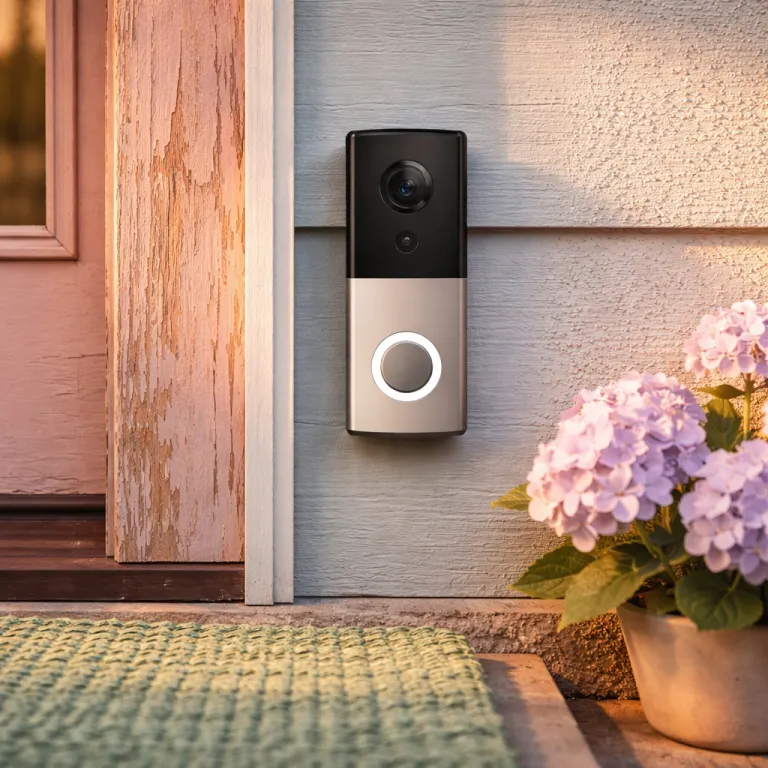
Ring active warnings: from silent video to speaking security guard
Ring active warnings turn a Ring camera from a passive recorder into an active virtual security guard that talks back, reshaping how home security feels for you, your visitors, and your neighbours. When a person enters the frame of compatible Ring cameras such as Ring Video Doorbell Pro 2 or Floodlight Cam Pro, on‑device computer vision analyses the location and behaviour to decide whether the camera will stay quiet, give a polite heads up, or issue firmer warnings. For a privacy‑conscious homeowner, that shift from silent video to tailored audio prompts is the real event, because it changes how night vision, motion detection, and neighbourhood expectations all work together.
In practice, the Ring active warnings system watches for each unusual event and then plays one of several pre‑recorded audio messages through the doorbell or outdoor speaker. A delivery driver walking straight to the door usually triggers a calm message such as “Hi, you are being recorded by a Ring camera,” while someone lingering near parked cars or testing a gate can hear a stronger warning that a virtual security guard is monitoring the area and that event alerts have been logged. Children cutting across the lawn or playing near the porch often fall somewhere in between, which shows both the promise and the limits of AI‑powered descriptions when motion and intent are hard to separate.
These active warnings are currently tied to higher subscription tiers, including Ring Protect Pro and the Virtual Security Guard add‑on, rather than the basic Ring Protect plan that only stores video doorbell footage and standard alerts. According to Ring’s support documentation, availability also depends on country, device model, and local law, and the feature is not offered everywhere in the United States, which means your Ring account, your address, and the applicable terms and conditions all shape whether this virtual security option appears in the Ring app at all. For Virtual Security Guard customers, Ring active warnings can run while a live security guard agent reviews the video feed, so the camera may speak immediately while a human decides whether to call emergency services, subject to the monitoring terms that govern how agents respond.
How active warnings behave at night: motion, misreads, and neighbours
Night is where Ring active warnings matter most, because infrared night vision and motion detection often generate the noisiest stream of event alerts. A Ring Floodlight Cam Pro mounted three metres high over a driveway can now use its camera and microphones not only to capture video but to speak when an unusual event crosses a defined zone, which changes how you think about every rustle, shadow, or passing cat. If you already rely on a camera with infrared to enhance your home security, the step from silent monitoring to spoken warnings is as big as the jump from still photos to streaming video.
Real‑world use on a typical suburban driveway over several weeks shows both strengths and flaws in these active warnings when the sun goes down and the Ring devices lean heavily on infrared. In many night‑time motion events, the system produces no audio at all, a smaller share triggers a gentle “you are being recorded” message, and only a minority play a firmer warning, usually when someone pauses near a vehicle or gate. A uniformed courier approaching the camera doorbell is often logged as a normal visitor, but a teenager in a hoodie pacing near a car can trigger a more aggressive message that a virtual security system is monitoring and that a security guard may review the event, even when the kid is just waiting for a ride. Conversely, children playing tag on the lawn sometimes trigger repeated warnings about an unusual event, which can feel excessive for families and for neighbours who hear the same robotic voice echoing across small gardens.
Those neighbours are the hidden audience of every Ring active warnings clip, because the audio carries beyond your property line even when the video stays locked to your Ring account. A camera doorbell mounted close to a shared hallway or a terrace can effectively broadcast that monitoring is active, that a virtual security guard might be involved, and that emergency services could be called, which some people welcome and others resent. Before enabling the feature in the Ring app, privacy‑minded owners should weigh how often they want their devices to speak, how sensitive the motion zones are, and whether they are comfortable with a third‑party security service shaping the soundscape of the street at midnight; in practical terms, that means testing different motion‑zone layouts, adjusting audio settings, and temporarily disabling active warnings if complaints arise.
Subscriptions, AI limits, and what this means for home security
The subscription ladder behind Ring active warnings is where many buyers need clarity, because not every Ring Protect plan unlocks the same AI tools. Basic Protect plans focus on cloud video storage, simple video descriptions, and standard event alerts, while Protect Pro and compatible add‑ons such as Virtual Security Guard add more advanced computer vision, richer descriptions of each unusual event, and access to a human security guard who can watch live feeds. For households that only want a camera doorbell to log packages and occasional visitors, the extra cost of these premium services may not be justified, but larger homes with multiple Ring devices and frequent night‑time activity often see more value in those active warnings.
There are still clear limits to what this AI can do, even with the latest firmware on compatible Ring cameras. A UPS driver in full uniform is usually tagged correctly as a visitor, yet a neighbour checking a flood or freeze sensor or testing a smoke alarm can sometimes be treated as suspicious, because the system only sees shapes, paths, and timing rather than context. The same applies when a family member steps out to investigate a carbon monoxide alert or to reset a combined smoke and carbon detector, where the camera might issue a stern warning even though the real emergency is inside the house, not on the porch.
For privacy‑conscious users, the bigger shift is philosophical rather than technical, because a talking camera is a different category of security device from a silent recorder. Once a Ring camera participates in virtual security by speaking, sharing data with a third‑party monitoring service, and potentially linking to emergency services, you are accepting a more active role for the system, including possible integration with Amazon Sidewalk and other mesh features that extend connectivity for Ring devices. If you are also evaluating facial recognition features and how AI recognition affects your doorbell footage, resources such as this analysis of what Ring’s new AI recognition means for your doorbell footage on Ring Camera Guru can help frame the trade‑offs, and similar deep dives on enhancing night vision with IR lights for Ring cameras show how lighting, motion zones, and terms and conditions all interact so that at 2 a.m., what matters is not the megapixel count, but the view from your porch at 2 a.m.