Summary
Editor's rating
Is it worth the money, especially with the subscription?
Chunky but clean, with some mounting quirks
Battery life: decent, but you’ll want a spare
Build quality and reliability in real-world conditions
Video quality and motion detection: good, but needs tuning
What you actually get and how it works day to day
Pros
- Sharp 1536p head-to-toe video that clearly shows faces and packages
- Flexible 3D Motion Detection and Bird’s Eye Zones to cut down on useless alerts
- Easy integration with other Ring devices and Alexa for hands-free answering and announcements
Cons
- Real value locked behind a Ring Protect subscription (limited features without it)
- Battery needs charging every 1–2 months in normal use, spare battery basically required
- Can miss motion events until you spend time fine-tuning sensitivity and zones; some chime wiring compatibility issues reported

Specifications
View full product page →| Brand | Ring |
| Dimensions | 5.1 in. x 2.4 in x 1.1 in (128mm x 62mm x 28mm) |
| Available Colors | Satin Nickel |
| Video | 1536p HD+ Video, Live View, Color Night Vision |
| Motion Detection | 3D Motion Detection with Bird’s Eye Zones and Bird's Eye View |
| Field of View | 150° horizontal, 150° vertical |
| Audio | Two-way audio with noise cancellation |
| Power | Electrical Rating: Battery only or battery with hardwired (8 to 24 Vac, 50/60 Hz, 5VA ; or 24Vdc 420mA/500mA)For your safety, only use an existing doorbell transformer within the rangespecified or compatible Ring accessories to power your device.Using incompatible power sources can damage your device and cause electric shock. |
A doorbell that’s basically a security cam on your front door
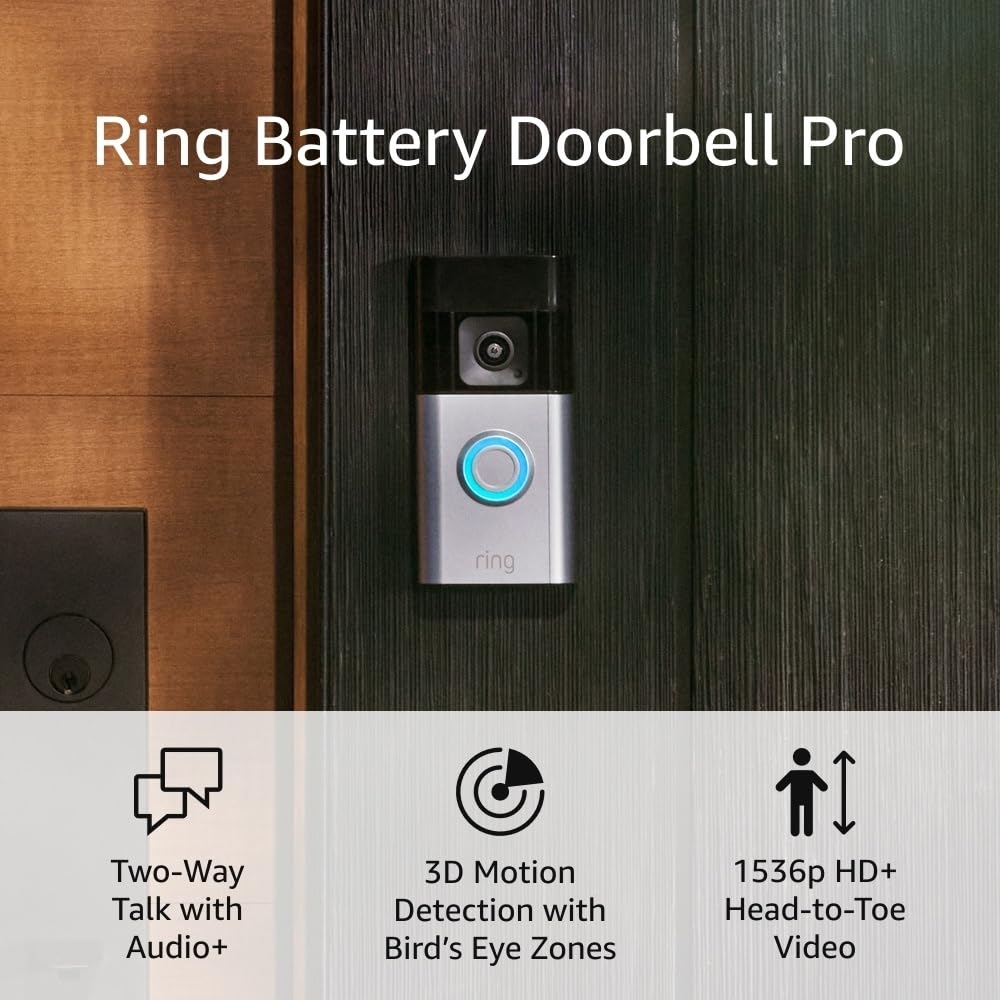
I’ve been using the Ring Battery Doorbell Pro for a bit now, and in simple terms: it does what it says. It’s a battery-powered video doorbell with pretty sharp video, smart motion alerts, and some radar-style tracking. If you’re already using Ring stuff or Alexa at home, it fits in nicely. If you’re totally new to video doorbells, there is a bit of setup and app tweaking before it behaves the way you actually want.
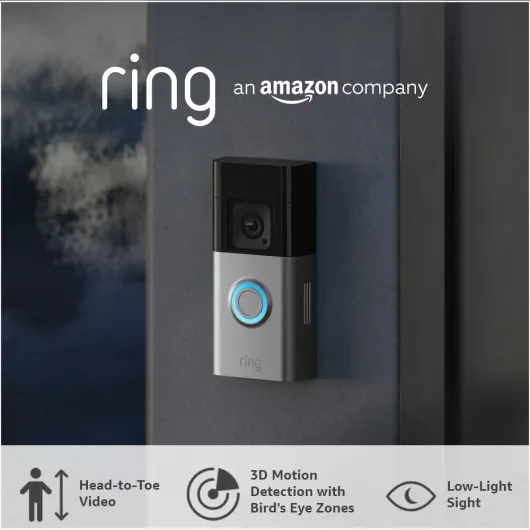
The first thing I noticed is how much more you see compared to older models or basic 1080p doorbells. The head-to-toe view is actually useful: I can see packages on the ground and still see the person’s face. That seems obvious, but on older cams I’d either get the face or the box, not both. Here, 1536p isn’t marketing fluff; the image is genuinely clearer, especially for close-up stuff like faces and parcels.
In day-to-day use, it’s basically two things: a camera that records when someone comes near your door, and a doorbell that pings your phone, Echo devices, or a chime when someone presses it. It’s not magic. You still deal with Wi‑Fi, battery charge, and subscription upsells. But when it’s dialed in, it really does help you keep an eye on deliveries and random people walking up to your house.
Overall, my first impression: pretty solid, but not perfect. The hardware feels decent, the video is clearly better than entry-level models, and the motion stuff is more flexible. On the downside, you basically need a Ring Protect subscription to get the full experience, and you should expect to spend some time in the app adjusting zones and notifications, otherwise you’ll miss events or get spammed with alerts.
Is it worth the money, especially with the subscription?
Price-wise, the Ring Battery Doorbell Pro sits in the higher tier of battery video doorbells. You’re paying for the better resolution, 3D motion detection, and extra features like Bird’s Eye View and head-to-toe framing. On the hardware side alone, it feels like a pretty solid but not crazy bargain. You get good video, flexible motion tools, and easy integration with Alexa and other Ring devices. If you already have Ring cameras or a Ring Alarm system, it makes more sense because it plugs right into what you already use.
Where the value gets more debatable is the subscription. Without Ring Protect, you lose a lot: no video history, no saving or sharing clips, and no package alerts. You basically just get live view and instant notifications. For a doorbell at this price, that feels stripped down. With the subscription, you get up to 180 days of video history, smarter alerts, and the features that actually make this a serious security tool. The plan itself isn’t outrageously priced, but it’s another ongoing bill, and it’s pretty much mandatory if you want to get full use out of the device.
You also have to factor in extras: spare battery, chime, maybe a Wi‑Fi extender or Chime Pro, and possibly a plug-in adapter or solar panel. Suddenly the total package can get noticeably more expensive than just the doorbell listing. If you’re okay with that ecosystem lock-in and ongoing cost, it’s a decent overall package. If you want a one-time purchase with no monthly fees, you might be happier with a different brand that offers local storage or more features without a subscription.
So from a value perspective, I’d say: good for Ring users and Alexa households, average for everyone else. The product itself is competent and does the job well, but the reliance on a subscription and add-ons means the real cost is higher than the box price. If you’re fine paying for convenience and integration, it’s worth it. If you’re watching every dollar, there are cheaper options that still cover the basics, even if they don’t have all the bells and whistles.
Chunky but clean, with some mounting quirks
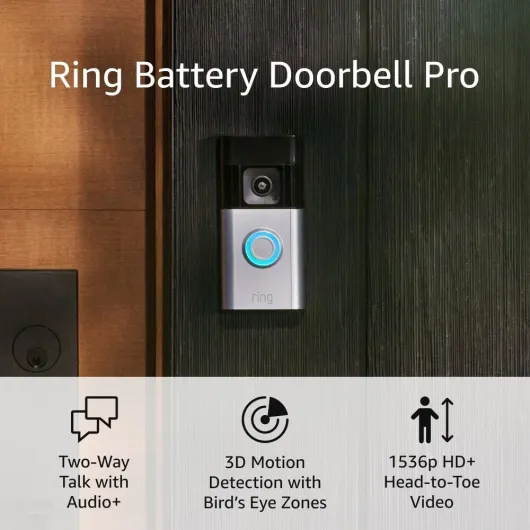
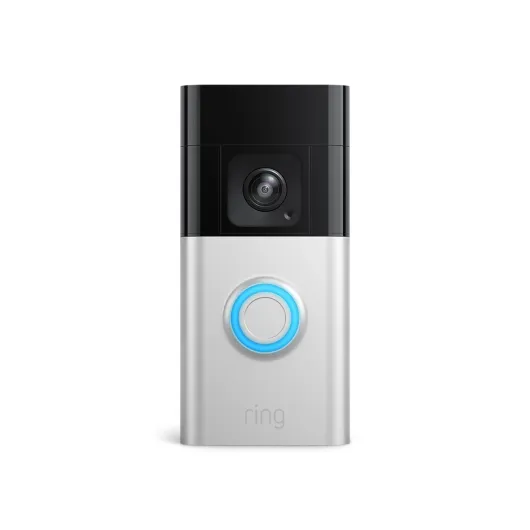
Design-wise, the Ring Battery Doorbell Pro looks like… a Ring doorbell. If you’ve seen the previous models, this one doesn’t feel like a huge departure. It’s a rectangular slab, about 5.1 x 2.4 x 1.1 inches, with the camera at the top and the button at the bottom. The satin nickel faceplate is neutral and fits most doors; it doesn’t scream “tech gadget” from the street, which I liked. It’s not tiny, though. If you’re coming from a regular old dumb doorbell, this will look big, especially on a narrow trim.
The mounting situation is mostly fine but not perfect. They include a corner kit, which is useful if your door is set back or you need to angle the camera toward your walkway. One Amazon reviewer mentioned the curved plate being confusing, and I get that. You need to pay attention to how the plate and corner kit fit together or you’ll end up redoing the holes. If you’re replacing an older Ring model, chances are you’ll either reuse some holes or drill new ones depending on what bracket you had before. If you hate drilling, be prepared to spend a bit of time aligning everything correctly the first go.
Once installed, it sits flush enough and feels secure. The battery pops in from the bottom behind a small door, and there’s a security screw that keeps it from just being grabbed and pulled out. It’s not theft-proof, but it’s not trivial to yank off either, especially if someone doesn’t know where the screw is. The button ring lights up, which is handy at night so visitors can actually see where to press. It looks modern but not flashy, which is fine by me.
Overall, the design is practical, not pretty. It’s a box with a camera that looks like what it is. It doesn’t cheapen the front of the house, but it’s not some design statement either. The main annoyance is the mounting learning curve and, if you’re upgrading from an older Ring, dealing with old brackets and corner kits that don’t line up perfectly with this one. Once it’s on the wall, though, you’ll stop thinking about it.
Battery life: decent, but you’ll want a spare
The doorbell runs on a rechargeable quick-release battery pack, and you can also hardwire it or add a plug-in adapter or solar panel if you want. I used it mainly on battery, since that’s kind of the point of this model. Battery life will depend heavily on how busy your front door is and how aggressive your motion settings are. One Amazon reviewer reported roughly 1.5–2% battery drop per day with normal traffic, which lines up with what I’ve seen: around 6–8 weeks per charge if you swap it around 5–10% remaining.
If your door gets a lot of motion events, live views, and doorbell presses, expect that number to drop. Cranking motion sensitivity to the max and recording every tiny movement will chew through power faster. On the flip side, if you live on a quiet street with just a few visitors and deliveries per week, you might stretch the battery life further. Either way, this is not a “charge once every six months” situation. You’ll be charging it every couple of months at least, more if you’re in a busy area.
Swapping the battery is easy: loosen the security screw, pop open the bottom, slide the battery out, slide a fresh one in. If you only have one battery, the doorbell is offline while you charge it, which is annoying. That’s why I agree with the reviewer who keeps a spare battery charged and ready. That’s pretty much the best way to use this thing if you don’t want downtime. The downside is extra cost: buying a second battery and maybe a solar panel or plug-in adapter if you want less hassle.
Overall, battery life is fine but not mind-blowing. It’s good enough that it doesn’t feel like a chore, but if you expect to forget about charging for half a year, that’s not realistic. For a battery-powered doorbell with this resolution and motion features, 1.5–2% per day is acceptable. Just budget for a spare battery and think about wiring or a plug-in adapter if you really hate dealing with charging every couple of months.
Build quality and reliability in real-world conditions
The doorbell is rated to handle temperatures from -4°F to 122°F (-20°C to 50°C), which covers most normal climates. I haven’t put it through extreme winters or desert heat, but on regular rainy, windy days it held up fine. The housing feels solid enough, not flimsy plastic, and the faceplate sits snugly. It’s not a tank, but it doesn’t feel cheap either. The main concern with devices like this is long-term exposure to direct sun and moisture around the mounting area, which can affect performance over time, especially Wi‑Fi and battery life.
The mounting hardware is basic but does the job. Once it’s on the wall properly, it doesn’t wobble or rattle. The quick-release battery mechanism feels sturdy: it clicks in securely, and you don’t feel like it’s about to fall out. The security screw is small, so don’t lose the tool, but that’s standard Ring behavior. In terms of connectivity, as long as your Wi‑Fi signal at the door is decent, it stays online. If your router is far away or walls are thick, you might see dropouts, in which case a Ring Chime Pro or Wi‑Fi extender is basically mandatory.
There were some reports of issues when hardwiring, especially with existing chimes and diodes. One Amazon reviewer said their old Ring worked fine with a diode, but this one doesn’t play nicely with their doorbell wiring even though it’s supposed to not need the diode. That’s less about physical durability and more about electrical compatibility, but it still affects reliability. If you’re planning to wire it instead of running purely on battery, be ready for some trial and error or to call an electrician if your setup is weird.
In general, durability seems solid for a consumer device, but it’s not bulletproof. I’d trust it to last a few years outdoors if installed correctly and not in direct blazing sun all day. The one-year limited warranty is standard, not generous. If you want something industrial, this isn’t it. For normal home use, though, it feels sturdy enough that I’m not worried about it falling apart anytime soon, as long as I keep an eye on the battery and Wi‑Fi health.
Video quality and motion detection: good, but needs tuning
This is where the Battery Doorbell Pro justifies its price a bit. The 1536p head-to-toe video is genuinely sharper than the older 720p/1080p models. Faces are clearer, text on delivery labels is easier to read when the person is close, and the vertical field of view actually lets you see packages on the ground and the person’s face at the same time. During the day, the image is crisp with decent color. At night, the color night vision is solid as long as you have some ambient light. In complete darkness, it’s still usable, but like any camera, you lose detail the further out you go.
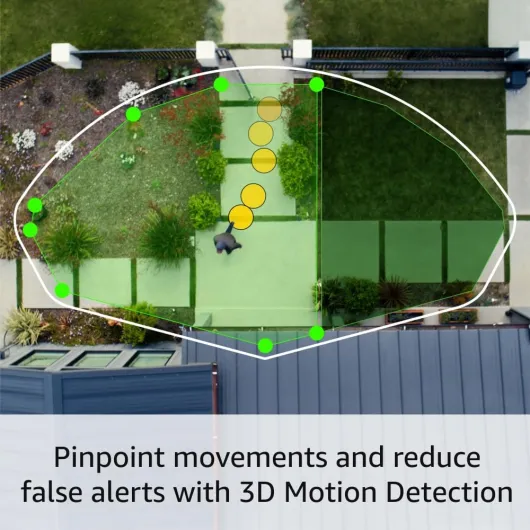
The 3D Motion Detection and Bird’s Eye Zones are cool on paper and actually somewhat useful. You can draw zones on an overhead map and tell it to care only about motion in certain spots, up to about 30 feet. In practice, it cuts down on random street activity a lot, which is good if you’re on a busy road. But it’s not magic. One Amazon user mentioned missed deliveries even with the camera pointed at the porch, and I’ve seen similar behavior: if the sensitivity is too low or the zone is drawn too tight, it just doesn’t trigger. I had to crank sensitivity and motion frequency up to avoid missing people who walked quickly to the door and left.
Audio-wise, the two-way talk with noise cancellation works fine. People can hear me clearly, and I can hear them clearly enough, though there’s the usual slight delay. It’s good for telling delivery drivers where to leave a package or asking a visitor to wait. It’s not some high-end intercom, but it does the job. Live view loads reasonably fast on a decent connection; if your upload speed is close to the 2 Mbps minimum, expect some lag or lower quality.
So, performance is strong but not flawless. When tuned correctly, it captures what you need: visitors, packages, and most motion you care about. But don’t expect it to be perfect right out of the box. Plan on spending 20–30 minutes adjusting motion zones, sensitivity, and notification rules (people vs vehicles vs other motion) to avoid missed events or constant spam. Once you get it dialed in, it’s reliable enough for everyday use, but it’s not set-and-forget for everyone, especially in tricky locations.
What you actually get and how it works day to day
Out of the box, you get the Battery Doorbell Pro unit, a rechargeable quick-release battery, a satin nickel faceplate, a corner kit, charging cable, some screws and tools, and the usual paperwork. No chime, no plug-in adapter, no solar panel – those are all extra. So it’s literally the doorbell and the battery. If you want a traditional chime sound inside the house and not just phone alerts or Echo announcements, factor in the cost of a Ring Chime or Ring Chime Pro.
Setup is straightforward if you’ve ever installed a Ring or any smart device: download the app, scan the QR code, follow the steps. Connecting to Wi‑Fi at 2.4 or 5 GHz is easy enough as long as your signal is decent at the door. Where it gets a bit more involved is the motion settings. By default, it focuses on people, which is good to cut down on noise, but I had to go into the settings and tweak motion sensitivity, zones, and what should trigger notifications (people, vehicles, other motion) to stop it from missing key events or pinging me for every little thing.
In daily use, you’ll mainly interact with it through the app. Someone walks up, it records and (if you set it that way) sends a notification. Someone presses the doorbell, your phone and Echo devices ring, and you can talk through the two-way audio. If you pay for Ring Protect, your clips get stored in the cloud for up to 180 days, you get package alerts, and you can save and share videos. Without the subscription, it’s basically live view and instant alerts only – no history, which is a big limitation if you care about reviewing who came by when you missed a notification.
So in practice, this thing is part hardware, part subscription service. As a product, it’s decent and fairly complete on the hardware side, but the real value (video history, smart alerts like packages) is locked behind the monthly plan. If you’re okay with that and already in the Ring world, it fits nicely. If you hate subscriptions, you’ll probably be annoyed by how basic it feels without one.
Pros
- Sharp 1536p head-to-toe video that clearly shows faces and packages
- Flexible 3D Motion Detection and Bird’s Eye Zones to cut down on useless alerts
- Easy integration with other Ring devices and Alexa for hands-free answering and announcements
Cons
- Real value locked behind a Ring Protect subscription (limited features without it)
- Battery needs charging every 1–2 months in normal use, spare battery basically required
- Can miss motion events until you spend time fine-tuning sensitivity and zones; some chime wiring compatibility issues reported
Conclusion
Editor's rating
The Ring Battery Doorbell Pro is a solid upgrade if you’re already in the Ring world or heavily using Alexa. The video quality is clearly better than older or cheaper models, the head-to-toe framing is genuinely useful for seeing both faces and packages, and the 3D Motion Detection with Bird’s Eye Zones gives you more control over what actually triggers alerts. Day-to-day, it works like you’d expect: you see who’s at the door, you get motion clips, and you can talk to people from your phone or Echo devices without much hassle once everything is tuned.
It’s not perfect, though. Out of the box, the motion settings may miss some events or, if you crank them up, spam you with alerts. You’ll likely spend some time tweaking zones and sensitivity. Battery life is decent but not magical; plan on charging every 1–2 months and buying a spare battery if you don’t want downtime. And the real catch is the subscription: without Ring Protect, the doorbell feels basic, since you lose video history and some smarter alerts. Add in possible wiring quirks with existing chimes, and it’s clear this isn’t a totally friction-free product.
If you want a well-integrated, battery-powered doorbell with good video quality and you don’t mind paying for the subscription and maybe a couple of accessories, this is a strong choice. If you’re trying to avoid ongoing costs, or you just want a simple, one-time-purchase doorbell cam, you might want to look at other brands or cheaper Ring models. Overall, it gets the job done well, especially for security and package monitoring, but you pay for the privilege in both hardware and subscription fees.