
Summary
Editor's rating
Is this kit good value compared to other options?
Compact cameras, magnetic mounts, and a very plain hub
Battery life: the 9‑month claim vs what actually happens
Weatherproofing and how they hold up outside
Image quality, motion detection, and connection stability in real life
What you actually get in the box and how it all fits together
Pros
- No mandatory subscription thanks to local microSD storage in the hub
- Very flexible placement with magnetic mounts and battery or USB-C power
- Decent 1080p image quality with usable night vision and AI person detection
Cons
- Real-world battery life is noticeably shorter than the advertised 9 months if the area is busy
- Occasional connection warnings and potential dropouts, especially at the edge of Wi‑Fi range
- Requires some tweaking of motion zones and settings; not ideal for totally non-technical users

Specifications
View full product page →| Brand | Reolink |
Wireless cameras that you can stick almost anywhere
I’ve been using this Reolink Battery Outdoor CCTV Camera Kit (the Home Hub Mini with 2x Argus MagiCam) for a few weeks around my house and garden. I set one camera watching the front door and the other looking over the back garden and shed. I already had some wired Reolink stuff before, so I was curious to see if these little battery cameras were actually practical or just a gimmick. Short version: they do the job, but you need to be ready to fiddle with settings and accept a few annoyances.
The whole idea here is simple: no cables, magnetic mount, runs on AA batteries, connects to your Wi‑Fi, records to a microSD card in the hub, and you check everything from the Reolink app. On paper it ticks a lot of boxes: 1080p, night vision, weatherproof IP67, person detection, dual‑band Wi‑Fi, and no forced subscription. That’s exactly the kind of setup I was looking for: something I can move around easily without drilling through walls or paying monthly fees.
In day‑to‑day use, it’s a mixed bag. When it works, it’s pretty solid: the app loads quickly, the picture is clear enough to see faces at the door, and the person detection filters out most of the nonsense. But I did run into a couple of issues: one camera dropped offline a few times, battery life depends a lot on how you configure it, and motion detection needs a bit of tuning to avoid either missing things or spamming you with alerts.
If you’re expecting “install and forget forever”, this is not that. If you’re okay spending an evening playing with settings and maybe having to reboot a camera now and then, you get decent wireless coverage for the price. It’s not perfect, there are more polished systems out there, but for a budget‑friendly, cable‑free setup, it’s a reasonable compromise.
Is this kit good value compared to other options?
Looking at the price and what you get, I’d say this Reolink kit is good value but not flawless. You’re getting two wireless outdoor‑capable cameras plus a hub that can store footage locally on a microSD card, all without any forced subscription. That alone already beats some competitors that make you pay monthly just to access recordings. If you already have Reolink gear or you plan to expand later, the hub supporting higher‑res cameras is a bonus.
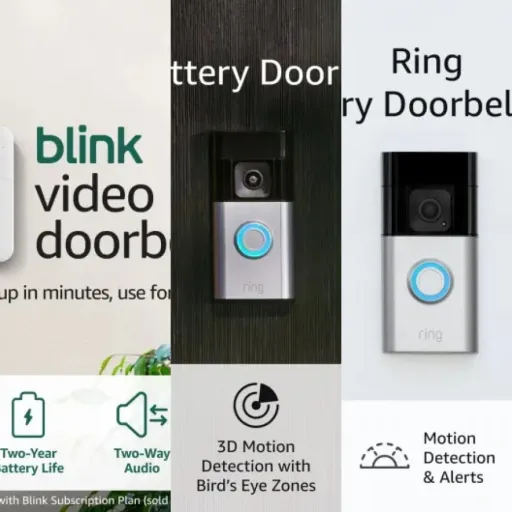
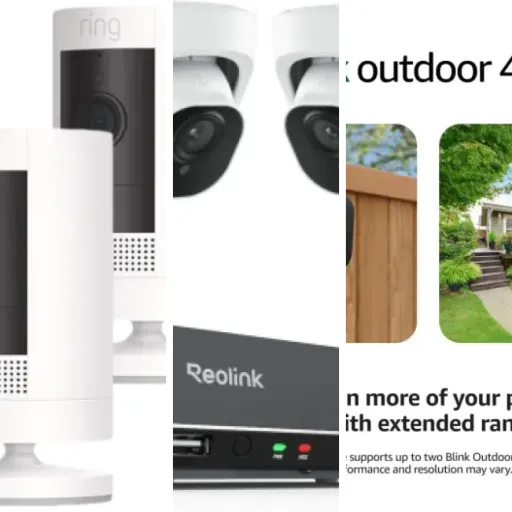
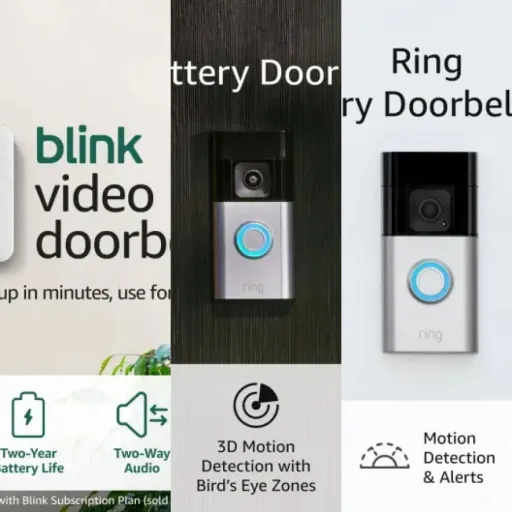
Compared to something like Blink or Ring, here’s how I see it in practice:
- Blink: Better reputation for staying connected and more “set and forget”, but you usually end up paying for cloud storage if you want proper history. Battery life can be longer if you barely trigger them, but they’re more closed in terms of local storage.
- Ring: Slicker app, smoother experience, but the subscription costs add up fast if you want recordings on multiple cameras. Hardware is also usually pricier.
- Reolink kit here: Slightly rougher around the edges (occasional bugs, some tweaking needed), but no mandatory subscription and decent hardware for the price.
The main hidden costs with this kit are: buying a good microSD card, and dealing with AA batteries if you stick to battery power. If you factor in a pack of quality lithium AAs every few months for two cameras, it adds up over a couple of years. If you can power them via USB‑C in the key spots, the value goes up a lot because you basically remove that running cost.
Given the Amazon rating of 3.7/5, I’m not shocked. It reflects the reality: some people get on with it fine and love the flexibility, others hit connection or battery issues and hate it. For me, it lands somewhere in the “pretty solid for the money if you know what you’re doing” category. If you’re a non‑technical user who wants zero hassle, I’d maybe pay more for a more polished ecosystem. If you’re okay tweaking settings and you like the idea of no subscription and easy mounting, the value is definitely there.

Compact cameras, magnetic mounts, and a very plain hub
Design‑wise, the Reolink kit is pretty basic in a good way. The cameras are small white boxes, about 6.8 x 6.8 x 2.9 cm, so they don’t scream “security camera” from across the street. I’ve got one stuck under the soffit at the front and one half‑hidden on a fence post in the back. They blend in enough that visitors notice them only if I point them out. The white colour is neutral, but it will obviously show dirt more if you’ve got them outside near a road.
The magnetic mount is the part I liked most about the design. It’s literally a small metal ball on a base; the camera snaps on with a magnet and you can tilt it pretty much any direction. That makes it easy to fine‑tune the angle without messing with screws or weird brackets. I tried both the adhesive pad and the screw mount. On smooth indoor surfaces, the adhesive pad held fine. Outside, on brick, I went straight for screws because I don’t trust adhesive in British rain and cold. The magnet is strong enough that I wasn’t worried about the camera falling off, even in wind.
The hub is very plain – a small white box that just sits near the router. No big lights, no flashy design. Honestly, that’s good. You plug it in, stick a microSD card in, and forget it. It doesn’t take up much space and doesn’t look out of place next to a router or a smart speaker. Everything is plastic, but it doesn’t feel super cheap. It’s not premium either; it’s just functional plastic, which is what I expected for this price.
One thing to keep in mind: because the cameras are small and light, they’re also easy to grab. If you mount them low and plainly visible, someone could just pull them off the magnet and walk away. That’s the trade‑off of this kind of design. For areas where theft is a concern, I’d mount them higher and maybe slightly tucked away. In short, the design is practical, discreet, but not exactly secure against tampering. It suits rented places and people who don’t want to drill too much, but it’s not a heavy‑duty setup.
Battery life: the 9‑month claim vs what actually happens
The big selling point here is the AA battery power and the claimed “up to 9 months” of battery life. In reality, like always, “up to” is doing a lot of work. With default settings, both of my cameras dropped from 100% to around 80–85% in the first week, which lines up fairly well with one of the Amazon reviews saying they lost more than 20% just while tweaking settings. I had around 15–20 motion events per day per camera at the start, plus me constantly checking the live view while playing with settings.
After that first week, I toned things down: I reduced the sensitivity, shortened the clip length, and turned off some of the more aggressive notifications. With that setup, the battery drain slowed a lot. Over the next two weeks, each camera only dropped another 5–10%. So, in a realistic “normal use” scenario with moderate motion and not obsessively checking the live feed, I’d say you’re looking at maybe 3–6 months of real battery life, not 9. If the camera is in a quiet area with very few events, maybe you get closer to that 9‑month figure. If it’s covering a busy street or a constantly used garden, expect less.
One thing to note: the kit comes with non‑rechargeable AA lithium batteries. That’s good for the first install, but long‑term it’s not exactly cheap or eco‑friendly. You can power the cameras via USB‑C as well, which I tested with a power bank and a spare charger, and that works fine. If you have a spot near a plug, I’d honestly recommend just running a USB cable and forgetting about the batteries. For places where you really can’t run a cable – like a tree or a shed – then the AA option is handy, but you’ll want to stock up on batteries or look into good rechargeables (checking Reolink’s compatibility list first).
In practice, the battery story is: it works, but don’t expect miracles. If you’re thinking you’ll slap these up and never touch them for a year, that’s not happening unless your cameras barely ever trigger. If you’re okay climbing a ladder a few times a year to swap batteries, the convenience of a fully wireless setup is worth it. Just go in knowing that the marketing number is the best‑case scenario, not what most people will see.
Weatherproofing and how they hold up outside
The cameras are rated IP67, and the spec sheet says they work from -10°C to 55°C, which is more than enough for the UK. I’ve had one camera directly exposed to rain and wind for a couple of weeks, and so far there’s been no water ingress, no fogging of the lens, and no obvious issues. They’ve handled heavy rain and a couple of colder nights without any drama. The plastic housing doesn’t feel fragile, and the seals around the battery compartment look decent when you open and close it properly.
That said, these are still small, light plastic cameras. I wouldn’t treat them like rugged industrial gear. If you knock them hard while they’re on the magnetic mount, they will move or even come off, which is kind of the point of the magnet. For places where they might get bumped – like low down near a gate – I’d either mount them higher or use a more secure bracket if Reolink offers one. For normal home use, stuck under eaves or on a shed wall, they seem tough enough.
In terms of long‑term durability, I obviously can’t tell you after only a few weeks, but judging from other Reolink cameras I own, they usually hold up fine for a few years if you don’t abuse them. The biggest risk is probably UV and constant exposure if you mount them somewhere fully open. I’d try to give them at least a bit of shelter – under a small roof or soffit – just to reduce how much direct sun and rain they get. That also helps with water droplets on the lens, which can mess up night vision.
Overall, the durability feels adequate for normal home and garden use. They’re clearly not designed to survive vandalism or serious tampering, but for regular weather and the odd knock, they seem alright. If you want something you can mount at street level in a rough area, I’d probably look at a more solid, wired bullet camera with metal housing. For a typical UK semi or terrace with cameras out of easy reach, these should be fine.
Image quality, motion detection, and connection stability in real life
On the performance side, the cameras are fine but not impressive. The 1080p video is decent for a budget kit: you can clearly see faces at the front door within 3–4 metres, read big text on parcels, and recognise people you know. It’s not razor‑sharp like some 2K or 4K systems, but for basic home security, it does the job. At night, the “night colour” mode and infrared are usable. If there’s a bit of ambient light (streetlight, porch light), you get a fair colour image. In complete darkness, it switches to IR and you get the usual black‑and‑white view. You can still see who’s there, but don’t expect miracles in terms of detail.
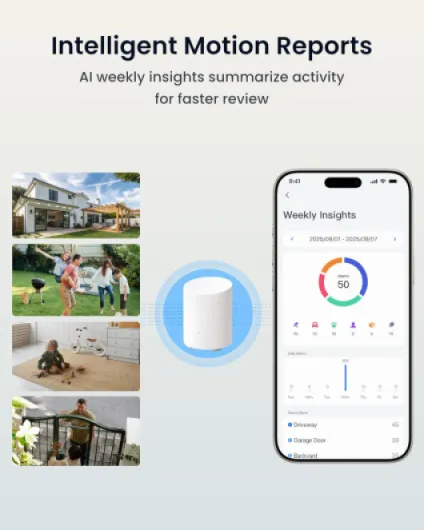
Motion detection is where I spent the most time tweaking. Out of the box, it was a bit too sensitive for my front door camera – it picked up cars on the road and even tree movement sometimes. Once I set custom detection zones and limited detection to “person” rather than “all motion”, it calmed down and became a lot more useful. For the back garden camera, it works pretty well catching people and ignoring most birds and cats, but it still throws the odd random event. It’s not perfect AI, but it’s better than basic motion‑only systems I’ve used before.
The Wi‑Fi performance is mixed. Near the house, with the hub and router in the hallway, both 2.4GHz and 5GHz worked fine. I tried moving one camera to the shed at the end of the garden, and that’s where I started seeing occasional disconnections and warnings. It never stayed offline for days like one of the Amazon reviewers, but I did get the odd “camera disconnected” push notification even though it came back by itself. If your walls are thick or your router is far from where you want the camera, you might need to either move the hub or use a Wi‑Fi extender.
Playback in the app is okay. The “smart playback” with filters by person, date and device is handy when you’re trying to find a specific event. It’s not lightning fast, but it works. There’s a small delay when going from live view to recorded clips, and sometimes the first second of a recording is missing, which is a bit annoying if someone just pops into the frame quickly. Overall, performance is acceptable for the price: good enough for basic monitoring, but if you want flawless, always‑on, zero‑lag performance, you’ll probably want a more expensive wired system.
What you actually get in the box and how it all fits together
The kit is basically three main bits: the Home Hub Mini and two Argus MagiCam wireless cameras. In the box you get the hub, two cameras, AA batteries for each camera, magnetic mounts, adhesive pads, screws, a small network cable for the hub, a power adapter, a USB‑C cable and the usual manuals and stickers. No microSD card is included, which is slightly annoying because the whole “no subscription” thing depends on you buying one. I used a 128GB card I already had, and it worked fine.
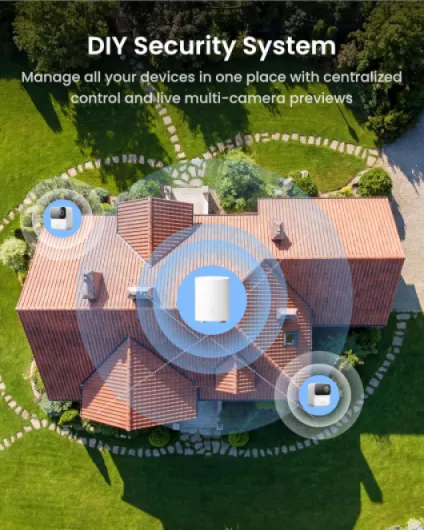
The hub is the brain of the system. You plug it into power and your router (or Wi‑Fi, depending on how you set it up), and it handles recording and AI stuff. It supports up to 12MP cameras, which is overkill for these 1080p MagiCams, but at least it means you can expand later if you stick with Reolink. The cameras themselves are small box‑shaped units with a magnetic back that snaps onto the included mounts. That magnet is strong enough to hold them on a metal surface like a shed door or railing without screws, which I liked a lot.
Setup is done through the Reolink app. You scan a QR code on the hub, then add the cameras one by one. For me, the process took about 20–30 minutes from opening the box to getting both cameras online, including a firmware update. It’s not complicated, but it’s not instant either. One thing I noticed: the hub and cameras like a solid Wi‑Fi signal. When I tried to push a camera to the far end of the garden, it connected but complained occasionally about signal, which lines up with some Amazon reviews about disconnections.
Overall, the presentation of the kit is straightforward: you’re buying a simple, expandable Reolink ecosystem starter pack. No base subscription traps, but also no card included and no super fancy bells and whistles. It feels more like a practical tool than a polished high‑end gadget, which is fine as long as you go in with the right expectations.
Pros
- No mandatory subscription thanks to local microSD storage in the hub
- Very flexible placement with magnetic mounts and battery or USB-C power
- Decent 1080p image quality with usable night vision and AI person detection
Cons
- Real-world battery life is noticeably shorter than the advertised 9 months if the area is busy
- Occasional connection warnings and potential dropouts, especially at the edge of Wi‑Fi range
- Requires some tweaking of motion zones and settings; not ideal for totally non-technical users
Conclusion
Editor's rating
Overall, the Reolink Battery Outdoor CCTV Camera Kit with 2x Argus MagiCam and Home Hub Mini is a decent wireless option for people who want flexibility and local storage without a subscription. The cameras are small, easy to mount with the magnetic system, and the picture quality is good enough for normal home security. The app is usable, AI person detection helps cut down on pointless alerts, and the hub makes it simple to manage everything from one place. For the price, getting two outdoor‑ready cameras and a hub is hard to argue with.
On the downside, you need to accept that this is not a perfect, polished system. The “up to 9 months” battery claim is optimistic; in real life you’re more likely looking at 3–6 months depending on how busy the area is and how you configure it. Some users, and occasionally me too, run into random disconnection warnings or brief offline moments, especially when pushing Wi‑Fi range. Setup is not difficult, but you’ll spend time tweaking detection zones and sensitivity to get the balance right.
I’d recommend this kit for people who: want a low‑cost way to cover front door, garden, or shed; care about local storage and avoiding subscriptions; and don’t mind a bit of tinkering. If you want rock‑solid reliability, ultra‑long battery life with no effort, or a super slick app experience, I’d look at Blink, Ring, or a wired Reolink NVR setup instead. For me, it’s a good but slightly rough‑around‑the‑edges solution that makes sense if you go in with realistic expectations.