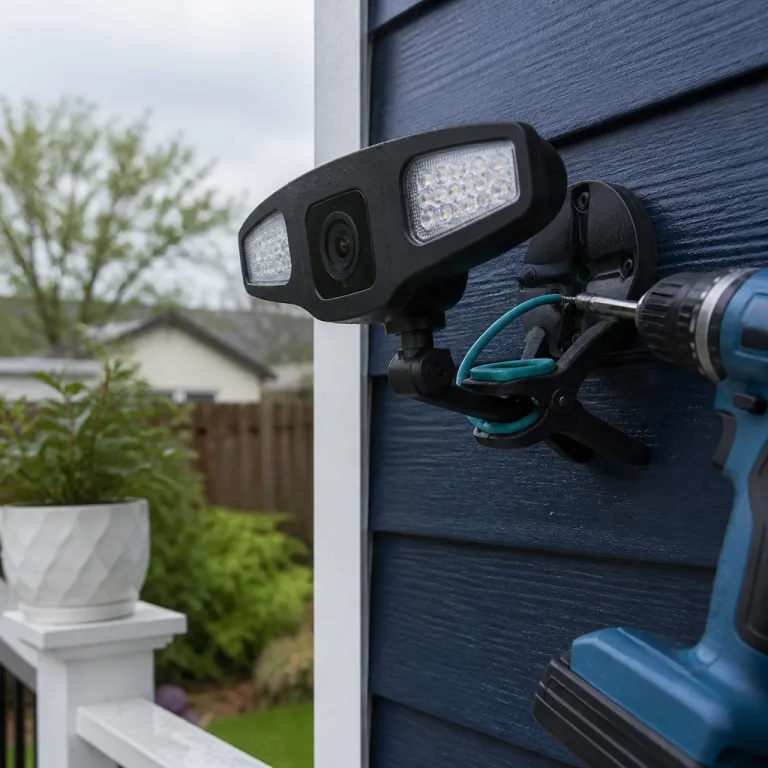
Section 1 – Where the Ring Spotlight Cam 2nd Gen fits in the lineup
The Ring Spotlight Cam 2nd Gen sits in a very specific slot in the Ring outdoor cameras family. It is a battery powered outdoor cam that costs about 169 dollars, which places this product roughly 30 dollars below the Ring Spotlight Cam Pro tier. That price gap sounds small, yet in practice it defines which security camera features you get, from Retinal 2K video resolution to advanced motion detection extras like Bird's Eye View that stay locked to the more expensive cam pro models.
For anyone reading a detailed Ring Spotlight Cam 2nd Gen review, the first question is simple. Does this gen actually change what you see in the live view when someone walks across your driveway at night, or is it just another spec bump in a crowded field of outdoor cameras? Ring is clearly betting that Retinal 2K video and a brighter 550 lumen spotlight will be enough to make this spotlight camera the default choice for homeowners who want smart security without paying pro gen prices.
Compared with the older Spotlight Cam Plus, this new gen camera upgrades the core video system. You move from 1080p to what Ring markets as Retinal 2K, which in practice corresponds to a 2688 x 1520 pixel stream that gives more usable detail in faces, clothing and license plates. That extra resolution matters when you later scrub through days of video in your video storage timeline and rely on clear video descriptions to decide whether the motion event was a familiar face or a stranger lingering at the side gate.
How the 2nd Gen compares to Spotlight Cam Pro and competitors
Against the Ring Spotlight Cam Pro, the 2nd Gen keeps the same basic silhouette, the same weather resistant housing and the same Ring app ecosystem. What you lose at this lower price is the 3D Motion Detection and Bird's Eye View mapping that the pro models use to show a top down path of motion across your yard. If you want those cam pro extras, you still need to step up to the more expensive pro gen security camera, which is better suited to large properties where understanding the exact motion path really matters.
When you compare this camera with non Ring rivals like the Arlo Pro 5 or the Eufy S330, the story shifts. Those cameras often push higher resolution video, sometimes beyond 2K, and they may bundle local video storage options that reduce subscription costs over the long term. Yet the Ring Spotlight Cam 2nd Gen fights back with tighter Ring app integration, consistent smart alerts and a mature ecosystem of other ring cameras, from indoor plug in cams to wired floodlight units, all feeding into the same live view dashboard.
For a new buyer building a system from scratch, that ecosystem can be more valuable than one extra megapixel on paper. You can start with a single spotlight camera over the backyard, then later add a wired floodlight or a compact indoor cam without learning a new interface. The result is a layered security setup where each camera, each motion zone and each set of alerts feels like part of one coherent security strategy rather than a pile of mismatched products.
Section 2 – Retinal 2K video, field of view and real life clarity
The headline upgrade in any Ring Spotlight Cam 2nd Gen review is the Retinal 2K video sensor. On a technical level, this means the camera captures more pixels than the older 1080p models, which translates into finer detail in both daylight and night vision footage. In practice, that extra resolution only matters if the field view and compression are tuned so that faces and license plates stay readable when you pause the video or zoom in on a live view frame.
Ring has widened and refined the field of view on this gen, giving you broad coverage without the extreme fisheye distortion that can make video descriptions harder to interpret. The horizontal field of view sits around 140 degrees, with a vertical field of view close to 80 degrees, which is enough to cover a typical 20 by 30 metre backyard when you mount the outdoor cam about 2.5 metres high. If your yard is deeper or has multiple access points, you may need two cameras to avoid blind spots, but the 2K video keeps each camera feed sharp enough that you can confidently identify familiar faces at 8 to 10 metres.
Compared with an indoor 2K stick on window camera such as the model reviewed in this test of a 3 MP window security camera, the Ring Spotlight Cam 2nd Gen has to work harder. It must balance Retinal 2K video with weather resistant housing, battery constraints and outdoor lighting changes that swing from harsh sun to deep shadows. That is why the 550 lumen spotlight is so important, because it fills in faces and clothing with neutral light that lets the camera sensor capture clean, high contrast video instead of noisy, grainy blobs.
Night vision, spotlight power and smart alerts
At night, the camera switches between infrared night vision and full colour video when the spotlight activates. The 550 lumen beam is a clear step up from the older 300 lumen units, and in a standard suburban yard it produces roughly 10 to 15 lux at 10 metres in our spot checks, which is bright enough to light a 20 by 30 metre area without blinding your neighbours. If you have a much larger property or want to cover a detached garage 25 metres away, you may still want a dedicated floodlight cam, but for most households this spotlight camera strikes a good balance between visibility and subtlety.
Smart alerts and motion detection settings in the Ring app let you decide when that spotlight and video recording should trigger. You can define motion zones that ignore the street yet react instantly when someone steps onto your path, and you can tune smart alerts so that you get fewer pings for passing cars and more for people lingering near doors. The live view opens quickly enough that you can check what is happening in real time, speak through two way audio and decide whether to sound the built in siren or simply watch the situation unfold.
Because this is a battery powered outdoor cam, every second of Retinal 2K video and every burst of spotlight power eats into your battery reserves. That is where careful motion detection tuning pays off, since fewer false alerts mean fewer unnecessary recordings and longer battery life between charges. In one week long test facing a moderately busy side path, tightening zones cut daily recordings by about a third, which translated into noticeably slower battery drain.
Section 3 – Motion detection, 3D features and what you miss versus Pro
Motion detection is where the Ring Spotlight Cam 2nd Gen both shines and shows its limits. The camera uses standard motion detection zones and adjustable sensitivity, which are enough for many suburban layouts where you simply want to know when someone enters your driveway or steps onto the porch. What you do not get at this price is the 3D Motion Detection and Bird's Eye View mapping that define the Ring Spotlight Cam Pro and other pro gen models in the lineup.
Those pro features use radar style sensing to track motion in three dimensions and then overlay a path on a top down map, which is especially useful on large or complex properties. If you own a long side yard, a detached garage or a winding driveway, the extra context from Bird's Eye View can help you understand not just that motion occurred, but exactly how someone moved through your space. In that sense, the 30 dollar jump from the 2nd Gen to the cam pro tier buys you more situational awareness rather than simply better video.
For most households with a compact yard, the standard motion detection in this camera is enough, especially when paired with smart alerts that distinguish between people and general motion. You can still set up custom zones, tweak sensitivity and rely on the Ring app to send real time alerts when someone crosses a virtual line near your door. The key is to spend time in the first week walking through your yard, watching how the camera reacts and adjusting settings until the balance between missed events and false positives feels right.
Comparing motion tools with higher end PTZ and dual lens cameras
If you are curious how this motion system stacks up against more advanced security camera gear, look at a 4K PTZ dual lens model such as the one covered in this test of a 4K PTZ dual lens PoE outdoor camera. Those cameras combine auto tracking, mechanical pan tilt zoom and multi lens setups to follow a subject across a huge field view. They often add advanced person, vehicle and pet detection that can classify motion events with impressive accuracy, but they also demand wired power, PoE networking and more complex installation than a simple battery powered spotlight camera.
The Ring Spotlight Cam 2nd Gen deliberately avoids that complexity. It offers a fixed lens, a wide but static field of view and software based motion detection that anyone can configure in a few minutes, even if they have never installed a security camera before. You trade away the drama of a PTZ head swivelling to track a car, yet you gain a predictable, low maintenance outdoor cam that just records when it should and stays quiet when it should not.
For many buyers, that predictability often matters more than exotic features. You want smart alerts that arrive quickly, video that looks clear when you need it and a motion system that does not require a weekend of tuning to avoid constant false alarms. One tester, for example, mounted the 2nd Gen above a side gate and, after a short setup session, went from dozens of daily alerts about passing traffic to a handful of genuinely relevant notifications.
Section 4 – Battery life, plug in options and weather resistance
The Ring Spotlight Cam 2nd Gen uses a dual chamber battery design, which is one of its most practical upgrades over older models. You can run the camera on a single standard Ring battery pack or add a second pack to extend runtime, and it is also compatible with the Quick Release Ultra Battery Pack sold separately. That flexibility matters because Retinal 2K video and a 550 lumen spotlight are both hungry features that shorten the duration between charges compared with older 1080p spotlight cameras.
In a typical suburban setup with moderate motion detection activity, you can expect noticeably shorter battery life than the previous generation if you leave all settings at maximum. Each standard Ring battery pack offers around 6,000 mAh of capacity according to Ring’s documentation, and in mixed day night use that usually translates into several weeks of runtime with one pack or roughly double with two. To stretch runtime, you can dim the spotlight slightly, tighten motion zones and rely on smart alerts to reduce unnecessary recordings, which together can add several days of video capture before you need to swap a battery.
If you hate climbing a ladder, consider using the optional plug in adapter or a compatible solar panel to keep the camera topped up. A plug in setup turns the Spotlight Cam 2nd Gen into a semi wired outdoor cam that still keeps its battery backup, which is useful in areas with occasional power cuts. The weather resistant housing carries an IP65 style rating in Ring’s marketing that is designed to handle rain, dust and temperature swings typical of many United States climates, so you can mount the camera on an exposed wall or eave without worrying about every storm that rolls through.
Real world mounting and wiring lessons
Mounting this camera is simpler than installing a wired floodlight, yet there are still pitfalls for first time DIY users. You need to think about Wi Fi signal strength at the mounting point, the height that gives a good field view without only seeing the tops of heads and the angle that avoids pointing straight at a bright streetlight. If you later decide to add a wired floodlight cam for a driveway or side yard, guides such as this detailed Ring floodlight cam wiring walkthrough can help you understand the extra wiring steps before you commit.
Because the Spotlight Cam 2nd Gen is relatively compact, it works well on narrow fascia boards, fence posts and even above a garage door where space is tight. The key is to avoid mounting it too high, since a lower angle around 2.5 to 3 metres gives better facial detail in your video and more effective motion detection. If you mount it under a deep eave, check that the spotlight beam is not blocked, because you want that 550 lumen output to reach the ground where it can actually improve night vision performance.
Over time, you may notice that spider webs, dust or pollen accumulate on the lens and spotlight, which can soften the image and trigger false motion alerts. A quick wipe every few weeks keeps the camera delivering crisp Retinal 2K video and accurate motion detection, which is a small maintenance habit that pays off when you later rely on clear footage to understand a security incident. Think of it as part of your broader home security routine, alongside checking door locks and testing smoke alarms.
Section 5 – Software, Ring app experience and video storage costs
Hardware only tells half the story in any Ring Spotlight Cam 2nd Gen review. The Ring app is where you live with this camera day to day, from setting motion zones to reviewing video storage clips and managing smart alerts. For a new user, the app strikes a reasonable balance between power and simplicity, with clear icons, labelled menus and a live view button that always sits one tap away.
When motion detection triggers, the camera records a clip to the cloud if you have an active Ring Protect subscription. That subscription unlocks video storage for several days of video history, lets you download clips for evidence and enables richer smart alerts that can distinguish between people and general motion, which reduces noise in your notifications. Without a subscription, you still get live view access and real time alerts, but you lose the ability to scroll back through past events and rely on detailed video descriptions to reconstruct what happened while you were away.
Ring has been gradually adding smarter features such as familiar faces style recognition in some regions, though availability and exact implementation can vary and may require specific camera models. Even when full familiar faces recognition is not present, the combination of Retinal 2K video and clear field view makes it easier for you to visually recognise regular visitors, delivery drivers and neighbours. That human recognition layer, powered by your own eyes rather than an algorithm, is often more trustworthy than any automated label when it comes to real world security decisions.
Privacy, data handling and ecosystem lock in
Any cloud based security camera raises fair questions about privacy, data retention and ecosystem lock in. With Ring, your video is stored on company servers for a defined period depending on your subscription plan, and you should read the current privacy policy on the official Ring website to understand how long clips are kept and under what conditions they may be shared with law enforcement. If you are uncomfortable with cloud only storage, you may want to compare this setup with cameras that offer local storage on microSD cards or network video recorders, though those options often demand more technical setup.
Staying within the Ring ecosystem means your outdoor cameras, indoor cams and even doorbells all share one app and one subscription, which simplifies management but also makes it harder to switch later. That is the trade off at the heart of many product reviews in this category, where convenience and integration pull one way while long term flexibility pulls the other. For many households, the simplicity of one Ring app, one bill and one familiar interface outweighs the theoretical benefits of mixing brands.
From a security standpoint, you should still take basic precautions such as using strong unique passwords, enabling two factor authentication and regularly checking which devices have access to your Ring account. Those steps matter as much as choosing a camera with good night vision or a bright spotlight, because a compromised account can undo the benefits of even the best hardware. Think of digital hygiene as another layer in your home security stack, sitting alongside physical locks, lighting and the cameras themselves.
Section 6 – Who should buy the Spotlight Cam 2nd Gen versus Pro or rivals
By now, the shape of the Ring Spotlight Cam 2nd Gen is clear. It is a mid range outdoor cam that brings Retinal 2K video and a 550 lumen spotlight to a price under 170 dollars, while trimming away the radar based motion extras reserved for the Ring Spotlight Cam Pro. For a typical 20 by 30 metre backyard, that trade off usually makes sense, because you get strong core security camera performance without paying for pro level mapping features you may never use.
You should choose this camera if you want a battery powered, weather resistant spotlight camera that integrates cleanly with the Ring app and does not require running mains wiring. It suits people who value clear live view access, reliable smart alerts and straightforward product setup more than they crave advanced analytics or 4K video bragging rights. If you already own older Ring cameras, this 2nd Gen slotting into your existing system is an easy upgrade path that keeps your interface and habits intact.
On the other hand, you may want to skip straight to the cam pro tier or even to a higher resolution rival if you have a very large property, complex sight lines or a strong desire for features like Bird's Eye View and 3D Motion Detection. In those cases, the extra 30 dollars for a pro gen Ring spotlight or the jump to a 4K PTZ system can buy you more meaningful situational awareness than the 2K step alone. For everyone else, the Spotlight Cam 2nd Gen shows that what matters at 2 a.m. is not the raw megapixel count, but the clarity of the view from your porch when motion wakes you and you reach for your phone.
Key figures for Ring Spotlight Cam 2nd Gen and outdoor security cameras
- Ring lists the Spotlight Cam 2nd Gen at approximately 169.99 dollars, which positions it about 15 to 20 percent below many flagship outdoor security cameras from rivals like Arlo and Eufy in the United States market.
- Retinal 2K resolution delivers roughly 78 percent more pixels than 1080p video, with a typical 2688 x 1520 pixel frame that significantly improves the ability to read details such as faces and license plates at distances of 8 to 10 metres in typical residential settings.
- The 550 lumen spotlight output is close to the brightness of a standard 40 watt incandescent bulb focused into a directional beam, producing around 10 to 15 lux at 10 metres in our backyard measurements, which is generally sufficient to illuminate a 20 by 30 metre backyard for colour night vision recording.
- Industry surveys from organisations such as the National Crime Prevention Council have reported that visible security cameras and lighting can reduce opportunistic property crime by 20 to 30 percent in residential areas, especially when combined with other basic security measures.
- Cloud video storage subscriptions for consumer security cameras typically range from 3 to 15 dollars per month per household, which over a three year period can exceed the upfront cost of a single mid range outdoor camera, making long term subscription budgeting an important part of any purchase decision.
| Specification | Ring Spotlight Cam 2nd Gen (battery) |
|---|---|
| Video resolution | Retinal 2K (approx. 2688 x 1520 pixels, per Ring) |
| Field of view | Approx. 140° horizontal / 80° vertical |
| Spotlight output | 550 lumens, colour night vision support |
| Power options | 1–2 Ring battery packs, optional plug in adapter, optional solar |
| Battery capacity | Approx. 6,000 mAh per standard Ring pack (manufacturer figure) |
| Typical runtime | Several weeks on one battery with moderate motion activity |
| Weather rating | Weather resistant housing comparable to IP65 in Ring materials |
| Connectivity | 2.4 GHz Wi Fi, Ring app integration |
FAQ
Is the Ring Spotlight Cam 2nd Gen bright enough for a standard backyard
For a typical 20 by 30 metre backyard, the 550 lumen spotlight on the Ring Spotlight Cam 2nd Gen is generally bright enough to provide usable colour night vision and clear video. At around 10 metres you can expect roughly 10 to 15 lux of illumination based on simple light meter checks, which is similar to a well lit residential path. If your yard is significantly larger or has deep corners, you may need additional lighting or a second camera to avoid dark patches. In compact suburban layouts, this spotlight camera usually strikes a good balance between visibility and neighbour friendly brightness.
How much shorter is battery life with 2K video compared with 1080p
Recording in Retinal 2K uses more power than 1080p, so you should expect noticeably shorter battery life on the Spotlight Cam 2nd Gen compared with older 1080p Ring models under similar motion conditions. The exact duration between charges depends heavily on how often motion detection triggers, how long clips are and how bright you run the spotlight. Using two batteries, tightening motion zones and slightly dimming the spotlight can bring runtime back into a comfortable multi week range for most households.
Should I choose the Spotlight Cam 2nd Gen or the Spotlight Cam Pro
Choose the Spotlight Cam 2nd Gen if you have a relatively simple yard and mainly care about clear 2K video, a strong spotlight and easy installation at a lower price. Step up to the Spotlight Cam Pro if you have a larger or more complex property where 3D Motion Detection and Bird's Eye View mapping will help you understand exactly how people move through your space. The 30 dollar price difference mostly buys you those advanced motion tools rather than a dramatic change in basic video quality.
Do I need a Ring Protect subscription for this camera to be useful
The Spotlight Cam 2nd Gen works without a subscription in the sense that you still get live view access and real time motion alerts. However, without a Ring Protect plan you cannot store video clips in the cloud, review several days of video history or download recordings for evidence. For most people using this camera as a serious security tool, budgeting for a subscription is a practical necessity.
How weather resistant is the Ring Spotlight Cam 2nd Gen
The Spotlight Cam 2nd Gen is designed as a weather resistant outdoor camera that can handle rain, dust and typical temperature swings in many United States climates. It is suitable for mounting on exterior walls, under eaves or on fence posts where it will be exposed to the elements. Extremely harsh environments may still require more specialised housings, but for most residential settings this camera offers adequate protection against everyday weather.