
Summary
Editor's rating
Is the TC92 KIT good value or are you overpaying for 4K?
Chunky, visible, and built more for deterrence than discretion
Solar panel and battery: does it really stay at 100%?
Weather resistance and build: will it survive outside long-term?
Image quality, night vision and AI: how it actually behaves day-to-day
What you actually get with the TC92 KIT
Pros
- Clear 4K image with usable zoom and good color night vision
- Solar panel keeps the battery topped up, very low maintenance once installed
- AI detection for people/pets/vehicles works well without forcing a subscription
Cons
- No SD card included, so extra cost if you want local storage
- Needs solid outdoor Wi‑Fi to fully benefit from 4K and remote access
- Camera is fairly large and very visible, not ideal if you want something discreet

Specifications
View full product page →| Brand | Tapo |
A wireless camera that actually feels ‘set and forget’
I’ve been using the Tapo TC92 KIT 4K solar outdoor camera at home for a few weeks, mainly to cover the driveway and a bit of the garden. I’m not an installer or anything, just someone who’s fed up with cameras that lose Wi‑Fi, chew through batteries, or spam you with useless alerts. I bought this because I wanted something I could mount, link to Wi‑Fi, and then basically ignore unless something actually happens outside.
In practice, this camera goes in that direction. Between the solar panel, the 4K image, and the pan/tilt with AI tracking, it’s clearly aimed at people who want one solid camera to cover a big area instead of several cheap ones. I’ve used Blink and a couple of budget no‑name cameras before, so I had something to compare it to. The first thing that stood out was how much more stable the connection is and how much clearer faces and number plates are, especially during the day.
It’s not perfect, though. You need to add a microSD card if you don’t want to pay for cloud, the app has quite a lot of options that can feel a bit busy at first, and you really do need decent Wi‑Fi outside or you’ll lose the benefit of 4K. Also, the camera body is not tiny. If you want something super discreet, this isn’t it. It looks like a proper CCTV camera, which is good for deterrence but not very subtle.
Overall, my first impression is that it’s a pretty solid, no‑nonsense security camera for a house if you already have a half‑decent router and somewhere to put the solar panel. If you’re expecting miracles in a Wi‑Fi dead zone or want completely free, unlimited cloud storage, you’ll probably be annoyed. But if you’re okay with local SD recording and just want reliable coverage without climbing a ladder every month, it does the job well.
Is the TC92 KIT good value or are you overpaying for 4K?
On value, I’d say the Tapo TC92 KIT sits in a pretty good spot. It’s not the cheapest camera out there, but you’re paying for a mix of things: 4K resolution, pan/tilt with AI tracking, solar panel included, dual‑band Wi‑Fi, and no forced subscription. When you compare that to something like Blink, where you buy batteries and sometimes pay extra for cloud, or to wired systems that need an NVR and cabling, the total cost here starts to look reasonable for a home setup.
You do need to factor in an SD card if you want local recording without any subscription. That’s an extra cost, but honestly, a 64 or 128 GB card is not that expensive nowadays. Tapo also offers a cloud plan (around £29/year from what I’ve seen), which is optional. I like that the AI detection (people/pets/vehicles) works without forcing you into a monthly fee. Many brands lock this behind a paywall. So if you’re fine with local storage only and just want notifications and live view, you can skip the subscription completely.
Where the value really shows is if one of these cameras can cover what you’d normally need two fixed cameras for. Because it pans and tilts and tracks, you can mount it on a corner and cover both your driveway and garden, like one of the reviewers did. That saves you buying a second unit. On the flip side, if your Wi‑Fi is weak outside and you don’t want to upgrade your router or add a repeater, paying for a 4K camera that ends up streaming in potato quality is a bit of a waste.
So in my opinion: if you already have a half‑decent home network and you want a reliable, low‑maintenance outdoor camera with good image quality, the price is fair and the kit feels like good value. If you’re trying to do this on the absolute lowest budget possible, there are cheaper 1080p cameras that will sort of do the job, but you’ll likely sacrifice either image clarity, solar convenience, or app quality.

Chunky, visible, and built more for deterrence than discretion
Design‑wise, the Tapo TC92 KIT is pretty straightforward: white body, black front, typical bullet‑style look with a chunkier base because of the pan/tilt mechanism. It’s not a small camera. Once it’s on the wall or under the soffit, you can clearly see it from a distance. Personally I like that, because a visible camera is often enough to make people think twice. But if you’re trying to keep things discreet or avoid annoying a picky neighbour, you’ll definitely notice it’s there.
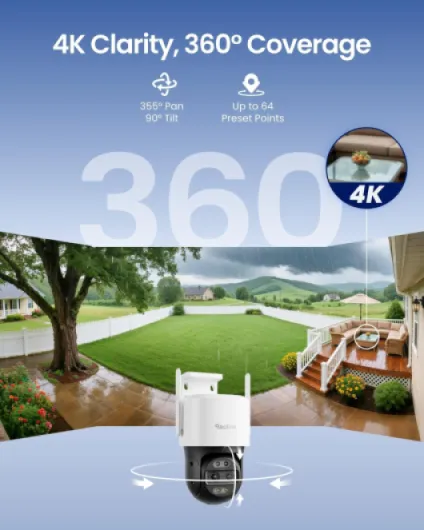
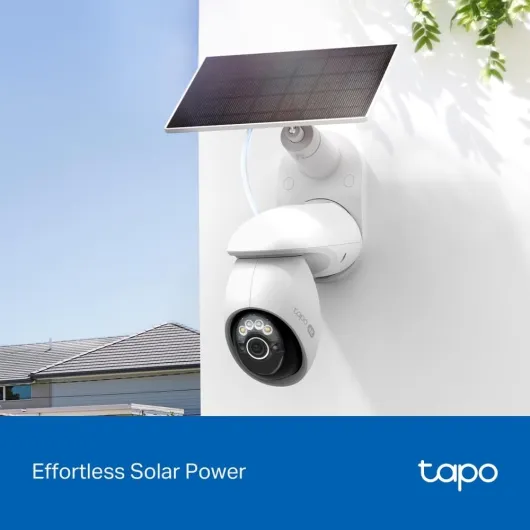
The mount is a screw‑in ceiling/wall style bracket that lets the camera rotate and tilt. The pan/tilt is motorized, so the camera can spin around 360° horizontally and tilt up and down. The movement is fairly smooth and doesn’t sound cheap or grindy. It’s not silent – in a very quiet garden you can hear it move when it tracks something – but it’s not loud enough to be annoying indoors. The solar panel is a separate rectangular black panel with its own bracket, and you connect it to the camera with the supplied cable. This is handy because you can put the panel in a better sun spot than the camera itself.
In terms of layout, all the sensitive bits (SD slot, buttons) are hidden behind a rubber cover that you get to by rotating the camera. It’s a bit unintuitive the first time; I also had to fiddle with it to find the reset and SD slot, exactly like one of the Amazon reviewers mentioned. Once you know where things are, it’s fine, but the first setup could be clearer with a diagram in big letters.
Overall, the design feels more practical than pretty. It looks and feels like a proper outdoor camera, slightly plasticky but not cheap‑toy level. It’s clearly made for permanent outdoor mounting, not for moving around the house every week. If you’re okay with a visible, purposeful look and don’t care about it blending perfectly into your facade, you’ll be fine with it. If you want something tiny and cute, this is not that product.
Solar panel and battery: does it really stay at 100%?
The whole point of this kit is that you don’t have to keep climbing a ladder to charge the thing. In my case, with the solar panel in a half‑decent position (not perfect, UK weather, some cloudy days), the camera has basically stayed between 95–100% the whole time. That lines up with what a lot of Amazon users are saying: even in winter or rougher weather, the solar panel is usually enough, as long as it’s not in constant shade. When I first installed it, I made the classic mistake of putting the panel too close to the soffit where it got less direct light. The charge was hovering around 80–85%. After I moved it a bit higher and angled it better, it went back to near 100% and stayed there.
The camera itself doesn’t require you to mess with removable batteries; it’s an internal battery that the solar panel keeps topped up. If you disconnect the panel, the camera still runs on its own battery for a good while, but obviously that depends on how aggressive your settings are (4K, high motion sensitivity, constant events, etc.). With everything pretty much maxed out – color night vision, frequent recordings, AI detection – it still didn’t drop much because the panel was doing its job.
What I liked is that this setup genuinely feels maintenance‑light. Compared to Blink where I was buying expensive batteries every few months and still dealing with dropouts, this is more “set it up properly once and leave it alone”. But you do need to think about the panel placement: if you just slap it anywhere and it barely sees the sun, don’t expect miracles. The cable between the panel and the camera gives you some flexibility to put the panel in a better spot than the camera itself, which helps.
If you live somewhere with very poor sunlight for long periods and you also run the camera on very high settings, you might still need to top it up occasionally, but for a typical UK/European house with average daylight, it’s good enough to forget about manual charging. For me, this is one of the main selling points of this kit compared to standalone battery cameras.
Weather resistance and build: will it survive outside long-term?
The TC92 KIT is rated IP65, which in normal people’s terms means rain, dust, and general outdoor grime aren’t a big deal. Mine has already gone through a couple of heavy rain days and some windy weather, and there’s been no sign of water ingress, fogging behind the lens, or anything like that. The plastic body doesn’t feel premium, but it also doesn’t feel flimsy. Once it’s screwed in, it doesn’t flex or wobble unless you really push on it. The pan/tilt mechanism still feels tight after repeated use in the app.
The weak point on a lot of outdoor cameras is the seals around the SD card slot and buttons. Here, everything is tucked behind a rubber cover that you only access when you rotate the camera. It’s a bit of a pain the first time, but it does mean that in normal use you’re not constantly opening and closing that flap, which should help the seal last longer. The solar panel is also weather‑proof and hasn’t shown any issues so far. The cable connection has a rubber grommet that you should push in properly; if you half‑do it, that’s where water could become a problem over time.
In terms of long‑term durability, I obviously haven’t had it for years, but Tapo (TP‑Link) gear I own from a couple of years back (indoor cameras and plugs) still works fine, so I’m reasonably confident they’re not using the cheapest possible components. The three‑year manufacturer warranty is also a bit reassuring – most budget cameras only give you one or two years at best. I’d still avoid constantly twisting and turning the camera by hand; just use the app and let the motor do the work.
If you’re in a place with extreme temperatures (very hot summers or very cold winters), I’d keep expectations realistic: plastic always ages, and any camera will look a bit tired after a few seasons of full sun. But for a typical UK/European climate with rain, wind, and some frost, the TC92 feels robust enough. It’s not luxury build quality, but it’s solid and practical for residential use.
Image quality, night vision and AI: how it actually behaves day-to-day
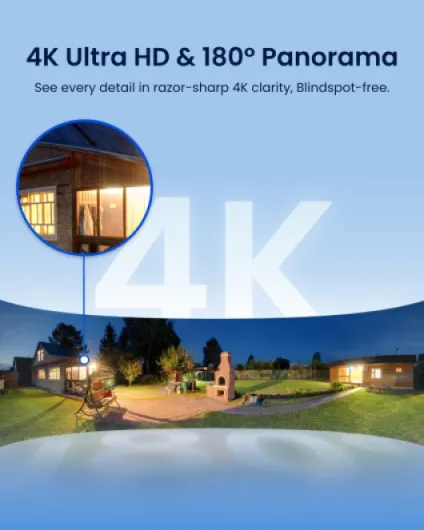
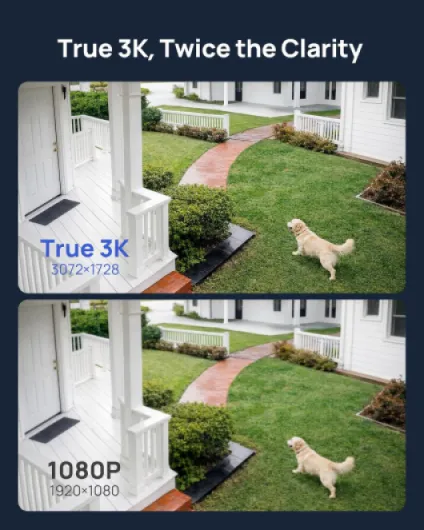
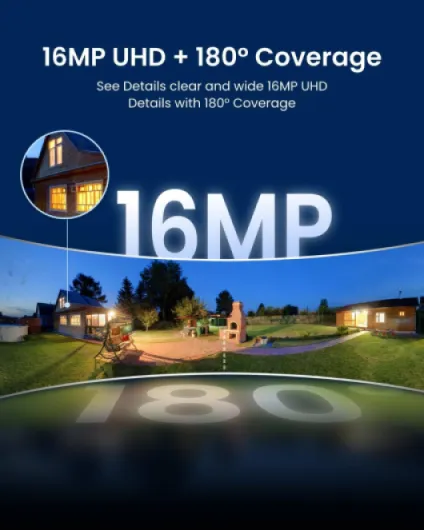
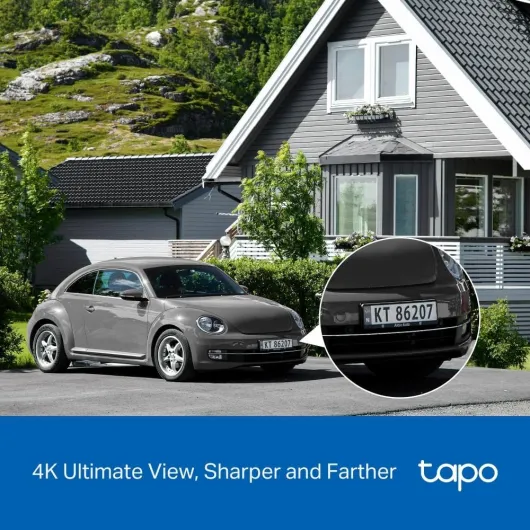
On performance, this is where the TC92 feels like a decent step up from cheaper cameras. In daylight, the 4K image is genuinely sharp. Faces, car plates (within a reasonable distance), and small details like parcels on the doorstep are easy to see when you zoom in. The 18× zoom is digital, so it’s not magic, but combined with 4K you still get usable detail when zooming in through the app. Compared to the 1080p and 2K stuff I had before, it’s a clear improvement, especially if you need to check something that happened a bit further away in the frame.
At night, the color night vision with the F1.6 lens and built‑in spotlights does a good job, as long as you don’t expect miracles in pitch‑black conditions without the light. With the spotlights enabled, you get proper color footage, and you can actually see facial features, which matches what a lot of reviewers said. If you turn the lights off and just use the sensor, it’s more classic IR‑style, but still clear enough for basic monitoring. I ended up leaving the lights on for motion events only, so it doesn’t look like a constant floodlight but still lights up when someone is near.
The AI detection is one of the strong points. You can set it to distinguish between people, pets, and vehicles. In practice, that means you can cut a lot of nonsense alerts from rain, branches, or insects. After some tweaking of the activity zones and sensitivity, I got to a point where most alerts were actually useful – people walking up the drive, cars entering, that sort of thing. It’s not 100% perfect (sometimes it calls a cat a person or vice versa), but it’s miles better than basic motion detection that just triggers when a leaf moves.
The 360° AI tracking is more of a mixed bag. When someone walks across the field of view, the camera does a decent job of following them, which is great if you want to see where they go in your garden. But if there’s a lot of movement (cars, people, pets) in different directions, the camera can end up doing a bit of a dance, turning back and forth. In a quiet residential setup, it’s handy; in a very busy street, I’d probably narrow down the zones or even disable auto‑tracking. Overall, though, performance is solid for a residential camera, especially considering you don’t need a paid subscription for the AI detection itself.
What you actually get with the TC92 KIT
Out of the box, the Tapo TC92 KIT is basically three things: the camera, the solar panel, and the mounting hardware. No SD card, no hub needed, no weird proprietary batteries to buy later. The camera itself is a wireless outdoor 4K unit with pan/tilt (so it can rotate and follow movement), a built‑in battery, and dual‑band Wi‑Fi (2.4 GHz and 5 GHz). The solar panel plugs into the camera and is meant to keep that battery topped up all year, assuming you don’t mount it in the shade like a clown.
The spec sheet looks a bit overkill on paper: 4K (8MP), color night vision with an F1.6 lens and spotlights, AI detection for people/pets/vehicles, 18× digital zoom, IP65 weather resistance, and no mandatory subscription. You can either stick a microSD card in it or pay for Tapo Care cloud if you want remote clip history and a bit more convenience. I went with a 128 GB microSD, which is enough for my use. The camera records in MPEG‑4, and you manage everything via the Tapo app on phone or tablet, plus you can link it to Alexa or similar if you’re into that.
In daily use, what this means is: one camera can cover a lot of area thanks to the pan/tilt and tracking, and you don’t have to mess with power cables. You just need to screw the camera and solar panel in place, connect it to your Wi‑Fi, and choose your detection zones and sensitivity inside the app. There’s no NVR or DVR box to manage, which for a typical house is honestly fine. If you’re coming from Blink, Eufy, or similar, it feels like the Tapo ecosystem is a bit more configurable and the app is more grown‑up, but also slightly less plug‑and‑play for non‑techy people.
So in short: it’s a self‑contained outdoor CCTV kit that leans on solar and Wi‑Fi instead of cables and recorders. If you want a full multi‑camera wired system, this is not what you’re shopping for. If you want one or two cameras to secure entrances or a driveway with as little ongoing hassle as possible, the TC92 KIT is more in that lane.
Pros
- Clear 4K image with usable zoom and good color night vision
- Solar panel keeps the battery topped up, very low maintenance once installed
- AI detection for people/pets/vehicles works well without forcing a subscription
Cons
- No SD card included, so extra cost if you want local storage
- Needs solid outdoor Wi‑Fi to fully benefit from 4K and remote access
- Camera is fairly large and very visible, not ideal if you want something discreet
Conclusion
Editor's rating
Overall, the Tapo TC92 KIT 4K solar camera is a solid choice if you want a straightforward, low‑maintenance outdoor camera that you can install once and mostly forget about. The 4K image is clear, the color night vision is genuinely useful, and the AI detection cuts down a lot of junk notifications once you’ve tuned it. The solar panel does what it’s supposed to do: keep the battery topped up so you’re not up a ladder every few weeks. For a typical front‑of‑house or driveway setup, it covers a lot of ground thanks to the pan/tilt and tracking.
It’s not flawless. You need to add your own SD card if you don’t want to pay for cloud, the camera is quite visible and not exactly small, and you really do need decent outdoor Wi‑Fi to benefit from 4K. The auto‑tracking can also be a bit too active in very busy areas if you don’t tweak the zones properly. But none of these are deal‑breakers for a normal home user who’s willing to spend a bit of time in the app at the start.
If you’re already in the Tapo ecosystem or you’re comparing this to Blink or similar battery cameras, I’d say the TC92 KIT is better suited to someone who wants reliability and clear footage over rock‑bottom price. It’s good for homeowners who want to monitor a driveway, garden, or entrance without running cables. People who should probably skip it: those with very weak Wi‑Fi outside, renters who can’t drill into walls easily, or anyone who just wants a tiny, discreet camera. For everyone else, it’s a practical, well‑rounded option that gets the job done without trying to be fancy.