
Summary
Editor's rating
Is it worth the money?
Chunky but practical design with one big plus: that 180° view
Build quality and reliability: feels solid, but QC looks hit-or-miss
Image quality, detection, and app: good, but not miracle-level
What this Reolink floodlight camera actually offers
PoE, networking, and storage: great if you’re a bit technical
Pros
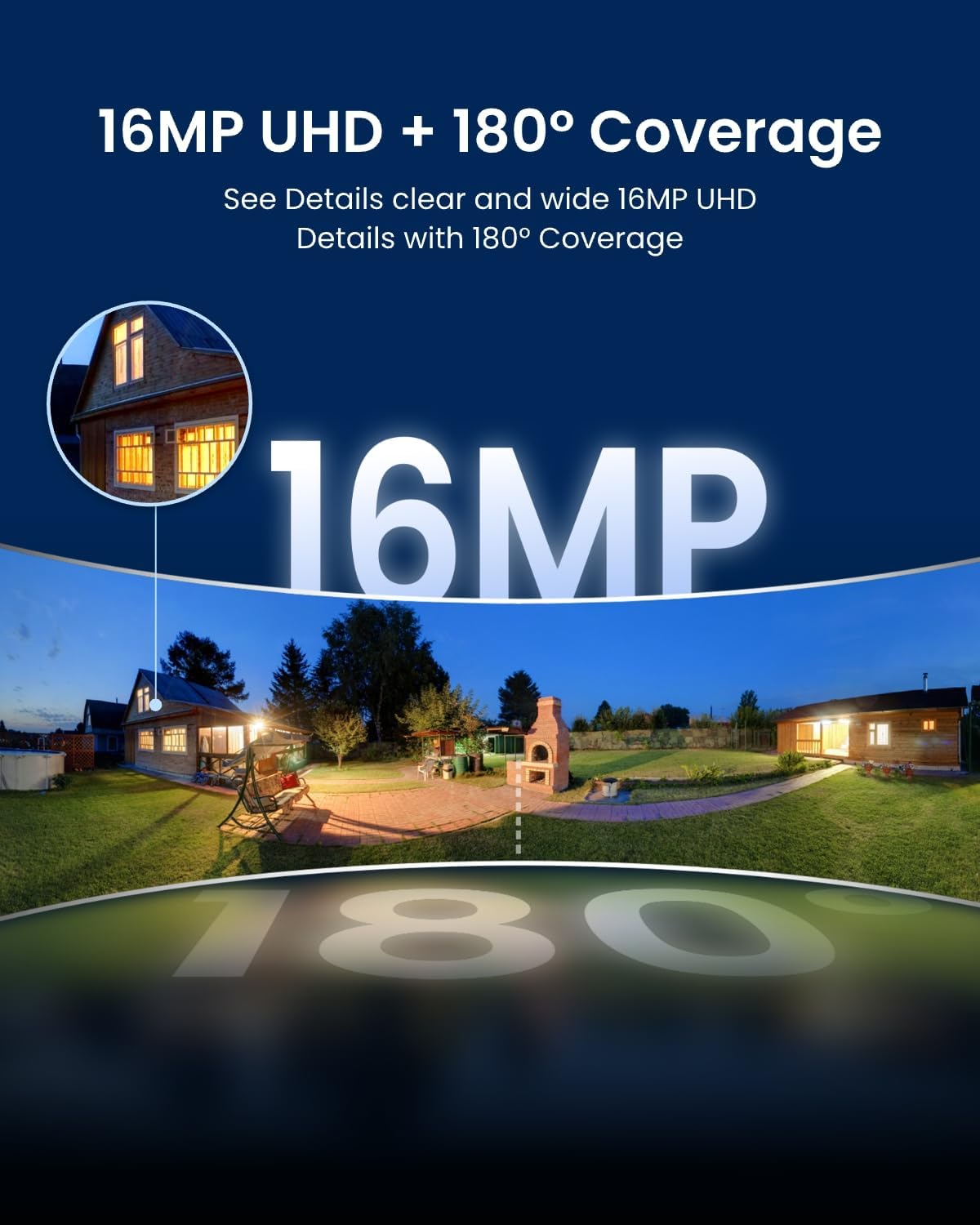
- Very wide 180° coverage from a single dual‑lens unit, ideal to replace two cameras
- Bright 2800‑lumen floodlight with adjustable brightness and modes, usable as real outdoor lighting
- PoE and local storage (SD, NVR, NAS) with no mandatory subscription
Cons
- Requires solid PoE power; weak switches can cause reboots when the light turns on
- 16MP marketing is a bit misleading; zoomed‑in detail is decent but not outstanding
- Quality control looks inconsistent based on user reports (SD cover thread issues, hot/choppy units)

Specifications
View full product page →| Brand | Reolink |
A floodlight camera that tries to do everything at once
I’ve been running this Reolink 16MP Elite Pro Floodlight PoE camera outside for a bit now, and I’ll be honest: I bought it mainly because I was sick of having four separate cameras to cover one side of the house. The promise of a 180° view, built-in floodlight, PoE, and 16MP sounded like a neat all-in-one solution. On paper, it ticks a lot of boxes: dual lens, bright floodlight, PoE so no messing with extra power cables, and local recording without paying a subscription.
In day-to-day use, it feels like a pretty solid product with a few quirks you need to know about before buying. It’s not some miracle gadget that solves everything, but it does simplify a setup if you already have Ethernet runs or a PoE switch/NVR. If you’re used to Wi‑Fi cameras, this feels more like a small piece of a proper CCTV system than a smart home toy.
What stood out to me quickly was the wide coverage and the brightness of the floodlight. You really do cover a big area with a single unit, and the light is strong enough to replace a standard outdoor floodlight. On the other hand, you need to be ready to deal with a couple of technical details: PoE power budget, possible need for an injector, and some compromises on image clarity when you zoom in on the 16MP image.
If you’re thinking about it as a simple plug‑in gadget like a Ring camera, you might be disappointed. If you see it as a semi‑pro camera that needs a bit of setup but gives you a lot of control and local storage, it starts to make more sense. I’ll walk through what worked well for me and what felt a bit meh so you can see if it fits your use case.
Is it worth the money?
From a value point of view, I’d call this camera good but not unbeatable. You’re paying for a few key things: 180° coverage from one unit, a strong built‑in floodlight, PoE, and 16MP dual‑lens recording. If you compare that to buying two separate 4K PoE cameras plus a separate floodlight, the price starts to look more reasonable, especially if you factor in the time and hassle of installing multiple devices and running extra cables.
Where the value drops a bit is when you realize you might still need to buy extra gear: a proper PoE injector or PoE switch that can handle the floodlight power draw, and a large SD card if you want onboard storage. Some buyers also thought it came with a separate power adapter and had to order one (or adjust their setup). So the final cost isn’t just the camera; it’s camera + power solution + maybe storage + maybe an NVR if you want full 24/7 recording and easy playback.
Image quality is good enough for home security, but if you were expecting super crisp detail when zooming in because of the “16MP” label, you might feel a bit underwhelmed. It’s still better than many cheap 1080p cameras, but you’re mainly paying for width and flexibility rather than insane sharpness on faces at long distance. In that sense, the camera is decent value for what it really does well: cover a large area with one device, light it up strongly, and record locally without a subscription.
If you already have Reolink gear or a NAS and you like the idea of one cable, one device, full side‑of‑house coverage, then the price makes sense. If you just want a simple smart camera for basic monitoring and some light, this might be overkill and you could get cheaper Wi‑Fi floodlight cameras. For me, given the 180° view and PoE, I’d say it’s fairly priced, but I wouldn’t pay a big premium over its usual sale price. If you can catch it on discount, even better.
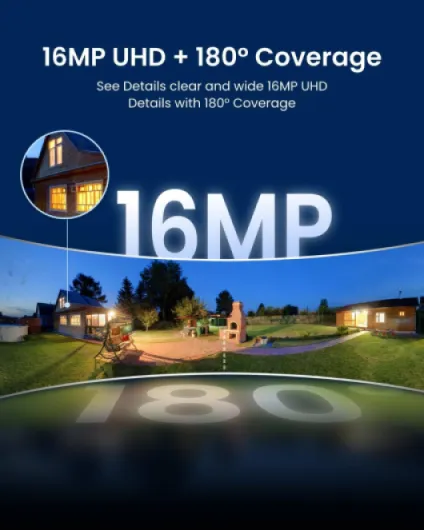
Chunky but practical design with one big plus: that 180° view
Physically, this camera is not small. It’s a chunky unit with two lenses in the middle and two floodlight panels on the sides. Mounted on the wall, it looks more like a proper security device than a discreet spy cam. Personally, I like that – it acts as a visible deterrent – but if you’re trying to keep your façade minimal and clean, this will stand out. The white metal body looks fine, nothing fancy, but it doesn’t feel cheap or flimsy either.
The main design win is really the dual‑lens layout. The stitching between the two images is surprisingly smooth in normal use. You only really notice the seam when something is very close to the camera, like insects or when you walk right under it. For covering a driveway, garden, or the full side of a house, it does exactly what it says: one unit, full wall coverage. I replaced two older bullet cameras with this one, and I’m still seeing more of the scene than before.
The floodlight arms are adjustable, which is important because 2800 lumens straight into a neighbor’s window would be a quick way to get complaints. You can angle each light to spread the beam or focus more on a driveway or gate. The light housing and the camera body feel solid enough for outdoor use. It’s rated as waterproof and, so far, rain and wind haven’t bothered it. No condensation or weird fogging on the lenses yet.
One thing to flag: it’s not a simple “swap your existing dumb floodlight and reuse the mains wires” design. This is PoE only (no Wi‑Fi, no simple 230V light wiring). So design‑wise, it’s aimed clearly at people okay with running Ethernet, not casual DIYers who only want to replace a lamp. If you’re comfortable drilling, routing a cable, and maybe adding a PoE injector, the design works well. If you want something super plug‑and‑play, this is a bit more involved.
Build quality and reliability: feels solid, but QC looks hit-or-miss
Build-wise, the camera gives a good first impression. The body is metal, the joints and brackets don’t feel flimsy, and the overall weight (around 1.3 kg) gives the sense that it’s not hollow plastic. It’s rated as waterproof for outdoor use, and after exposure to rain and a couple of windy days, I haven’t seen any leaks, fogged lenses, or corrosion starting. The floodlight panels stay firmly in place once tightened, they don’t sag with time like cheap lights sometimes do.
However, reading through other users’ reviews and combining that with my own experience, I’d say quality control seems a bit uneven. Some people report issues like a badly threaded SD card slot cover they couldn’t tighten, or a unit getting very hot and streaming choppy video from day one. I didn’t hit those specific problems, but I did notice the camera gets quite warm when the floodlight has been on for a while. Not burning hot, but clearly above what I’m used to from smaller PoE cameras. For outdoor gear it’s probably fine, but it’s something to be aware of if you mount it in a very tight, unventilated spot.
The firmware and app side have been stable for me so far: no random disconnects, no need to keep rebooting it. Recording to NAS and SD has been reliable. Still, the fact that one user had a unit that was “hideously choppy” even in the official app and Home Assistant tells me there are some lemons out there. That’s not shocking for electronics, but on a product at this price, it’s a bit annoying. The good news is that Reolink gives a 2‑year warranty, so if you get a bad one, you at least have some backup – but you have to be willing to deal with returns.
Overall, I’d rate durability as “promising but not bulletproof”. The materials and weather resistance feel good, the design looks like it’s meant to last outside, but the occasional QC misses (SD cover threads, overheating units) mean you’re not completely safe from a dud. If you buy it, I’d suggest testing all features thoroughly in the first couple of weeks: SD slot, PoE stability under full floodlight brightness, continuous recording, and long night sessions. If something feels off (excessive heat, constant rebooting), I’d swap it under warranty right away instead of hoping it will magically fix itself.
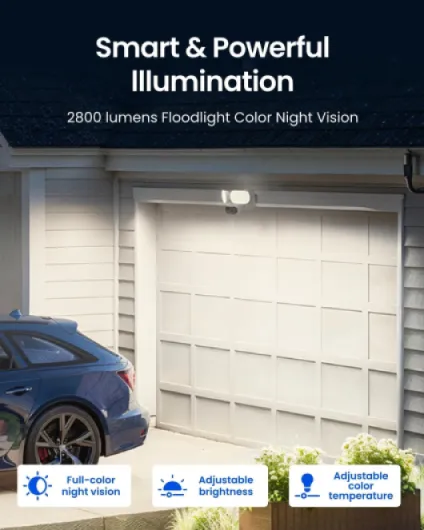
Image quality, detection, and app: good, but not miracle-level
On performance, I’d say it’s pretty solid overall, with a couple of limitations you notice after a few days. During the day, the image is sharp, colors are realistic, and the 180° coverage is the real strength. You see a lot in a single frame, which is great for monitoring a driveway plus part of the street or a big yard. The trade‑off is that everything looks slightly smaller because of the wide angle, so reading something like a car plate at distance is not always guaranteed, even though it’s “16MP”.
At night, you can choose between full‑color night vision (using the floodlight) and IR black‑and‑white. With the floodlight on, the image is very usable, close to daytime quality in a 20–25 meter range. The downside is that if someone is close to the camera and the light is on full blast, their face can get washed out. You can dim the light to avoid that, but then you lose some of the deterrent effect. With IR only, the image is still fine, but as some users mentioned, the IR range doesn’t fully match the width of the camera’s field of view. You get a bright central area and darker edges.
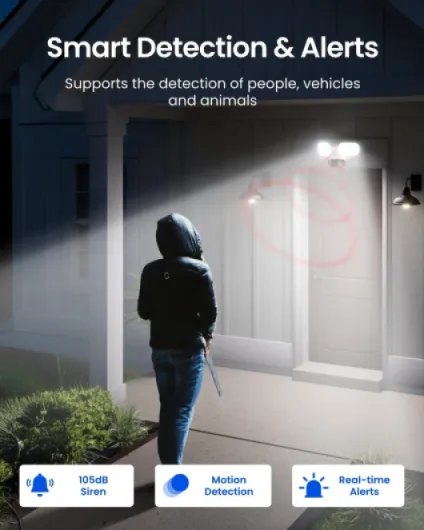
The motion detection and AI are decent. Human and vehicle detection are accurate most of the time. I had a few false alerts from large insects flying right in front of the lens and from strong rain, but nothing crazy. You can tweak sensitivity and motion zones, which helps. The 105 dB siren is loud enough to get attention, but I wouldn’t rely on it as your main alarm – more of a scare tactic than anything else. Two‑way audio works; the mic picks up voices clearly within a reasonable distance, and my voice going out is understandable, just with the typical bit of delay.
Streaming and recording are smooth as long as your network and PoE power are up to it. When I first tried it on a cheap PoE switch, the camera would reboot when the floodlight kicked in, which matches what one Amazon reviewer said. Swapping to a proper PoE injector fixed that. So performance depends a bit on your infrastructure: with a decent PoE source and wired network, the camera runs fine. If you cut corners on the switch or cabling, you might get choppy streams or random reboots and blame the camera when it’s really the power delivery.
What this Reolink floodlight camera actually offers
On paper, this thing is packed. You get dual 8MP lenses stitched together for a 180° panoramic view, so effectively a 16MP stream. It’s PoE, so one Ethernet cable carries both data and power, and you can hook it to a Reolink NVR, a PoE switch, or a PoE injector. There’s a built‑in 2800‑lumen floodlight, full‑color night vision, IR night vision, and smart detection for people, vehicles, and animals. It supports microSD (up to 512 GB), NVR, NAS, FTP – basically all the usual local storage options.
In practice, what this means is: if you already have a small network rack or at least a PoE switch or NVR, it slides into your setup quite nicely. I ran a single Cat6 cable from my switch, and the camera came up quickly in the Reolink app. The app is pretty straightforward: live view, timeline, playback, motion zones, light settings, siren toggle, etc. It’s not fancy, but it gets the job done without feeling cluttered.
The smart detection is decent. I set it to notify only for people and cars, and it mostly avoided spamming me for tree branches. It still triggers sometimes on bigger animals or bugs flying right in front of the lens, but nothing outrageous. The floodlight can be set to: always on, motion‑triggered, or off, and you can tweak brightness and how long it stays on. That’s handy if you want it both as security and as regular outdoor lighting for evenings.
Where the spec sheet oversells it a bit is the 16MP claim. Yes, technically it’s 16MP combined, but once you start zooming in on faces or license plates, it’s not as sharp as you might expect from that number. It’s good enough to recognize someone you know, but don’t expect CSI‑level zoom. Overall though, if you read the specs as “one very wide 4K‑ish camera with strong light and PoE” instead of obsessing about 16MP, you’ll have more realistic expectations.
PoE, networking, and storage: great if you’re a bit technical
This camera really shows its strengths if you’re comfortable with PoE and local storage. It’s not Wi‑Fi, so you need an Ethernet cable run to wherever you want it. For me, that was fine: I already had Cat6 going around the house. Plugged into a proper PoE injector or a decent PoE switch, it fires up and gets an IP quickly. With a weaker or borderline PoE switch though, you can hit the same problem one reviewer mentioned: the camera reboots when the floodlight comes on because the power draw spikes and the switch can’t keep up.
Storage options are flexible. You can use:
- a microSD card (up to 512 GB – not included),
- a Reolink PoE NVR (with the right hardware revision for 16MP),
- a NAS like Synology via RTSP/ONVIF,
- or FTP/NAS setups if you want more control.
I had it recording to a Synology NAS. Setup wasn’t complicated, but it’s not “one button” either – you need to know how to add an RTSP/ONVIF camera. Once linked, it recorded reliably. The onboard SD card is handy as a backup, but I wouldn’t rely only on that for anything critical; if the camera is stolen, the SD goes with it.
On the smart home side, it’s not as polished. Some users couldn’t get it to integrate with Google Home. That matches my experience: this is more CCTV‑style gear than smart display gear. You manage it mostly through the Reolink app or an NVR/NAS interface. If you’re used to Ring or Nest where everything shows up nicely on your smart display, this will feel more old‑school. Personally, I’m okay with that, but it’s something to keep in mind.
Pros
- Very wide 180° coverage from a single dual‑lens unit, ideal to replace two cameras
- Bright 2800‑lumen floodlight with adjustable brightness and modes, usable as real outdoor lighting
- PoE and local storage (SD, NVR, NAS) with no mandatory subscription
Cons
- Requires solid PoE power; weak switches can cause reboots when the light turns on
- 16MP marketing is a bit misleading; zoomed‑in detail is decent but not outstanding
- Quality control looks inconsistent based on user reports (SD cover thread issues, hot/choppy units)
Conclusion
Editor's rating
Overall, the Reolink 16MP Elite Pro Floodlight PoE is a strong all‑in‑one option if you want wide coverage, wired reliability, and local storage without subscriptions. The 180° dual‑lens setup really does reduce the number of cameras you need, and the 2800‑lumen floodlight is bright enough to act as your main outdoor light in many cases. During the day, the picture is clear and wide; at night, you can choose between color with the light on or IR black‑and‑white. Motion detection for people and vehicles is generally reliable, and the app is simple enough to live with every day.
On the downside, you need to be comfortable with PoE and basic networking. If your PoE switch is weak, the camera may reboot when the light kicks in, so you might need to budget for a better switch or injector. The promised 16MP is a bit oversold: the image is good, but when you zoom in on faces or plates, it’s not as sharp as the number suggests. There are also some scattered reports of quality control issues like faulty SD covers or units running too hot. The 2‑year warranty helps, but it’s still a hassle if you get a bad one.
I’d recommend this to people who: already have (or plan to have) a PoE/NVR or NAS setup, want to cover a big area with one camera, and like the idea of a proper floodlight plus CCTV in one device. If you’re more of a plug‑and‑play user who just wants an easy Wi‑Fi camera for occasional checks on the driveway, or you rely heavily on deep smart‑home integration like Google Home displays, I’d look at simpler, cheaper floodlight cams instead.