Why ring camera audio recording laws are not the same as video rules
Most people install a Ring doorbell or security camera to feel safer. They assume that if the camera stays on their own wall and the video footage shows only what is visible from the street, everything is automatically legal. That belief collides hard with how United States wiretapping and eavesdropping law treats audio recording from smart cameras and doorbell cameras.
When you mount a Ring cam by your front door, you create two different types of surveillance at once. The video recording from the camera usually falls under property owner rights, because anyone walking up your path has a very limited reasonable expectation of privacy in what can already be seen from the sidewalk. The audio recording feature, however, is governed by stricter federal and state laws that were written long before Wi‑Fi security cameras and always‑on doorbell devices existed.
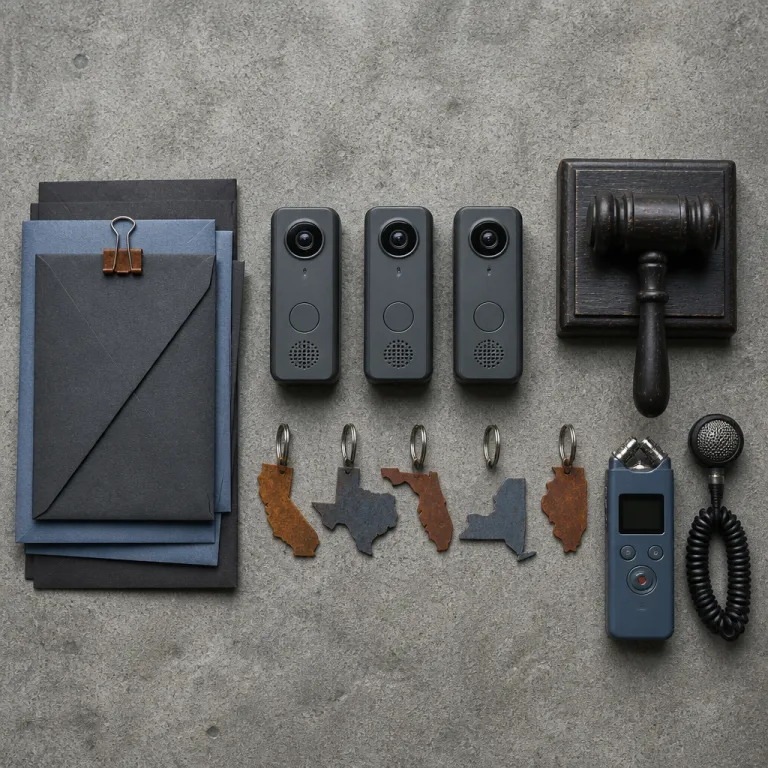
Under federal law, only one party consent is required to legally record a conversation, which means that if you are part of the conversation your Ring doorbell can record audio without needing the other person’s permission. Several states go further and require all party consent, and that is where Ring doorbells and other security cameras start to create real legal issues. As of 2024, states such as California, Delaware, Florida, Illinois and Maryland are often cited by the Reporters Committee for Freedom of the Press and other legal guides as applying all party consent rules broadly, and some recent cases have explored how those rules interact with smart doorbell cameras.
Video from a Ring camera that simply captures people walking past on a public sidewalk is rarely a problem by itself. The legal trouble starts when the device records voices clearly enough that the conversation could not have been overheard without technological help, because that can trigger state wiretap or eavesdropping laws. In those stricter all party consent jurisdictions, a Ring video doorbell that will record audio by default can turn a casual chat on your porch into potential evidence in a privacy dispute.
Ring’s own marketing focuses on crisp video footage, motion alerts and easy sharing with law enforcement, but it says far less about the legal risks of audio recording. The Ring app ships with the microphone enabled, so every compatible security camera and doorbell camera will record video and sound unless you change the settings. That default matters, because many homeowners never open the app’s deeper menus and never realize that their devices are quietly collecting audio from visitors, neighbors and delivery drivers.
From a privacy perspective, the gap between what people think their Ring cameras do and what they actually record is wide. Visitors may see a small Ring doorbell on the wall and assume it only captures video, not their words, which shapes their expectation of privacy at your doorstep. When the device instead creates a permanent audio recording of every knock and every argument, the mismatch between expectation of privacy and reality becomes a legal and ethical fault line.
The five all party consent states where your ring audio can cross the line
To understand ring camera audio recording laws, you have to separate federal rules from state wiretap statutes. Federal law uses a one party consent standard, which means that if you are part of the conversation you can legally record it, even with a security camera or doorbell camera. Several states, however, insist on consent from everyone involved, and that is where a Ring device mounted by your front steps can quietly create legal issues.
California, Delaware, Florida, Illinois and Maryland are frequently listed among the states that require all party consent for most audio recording, and that can include sound captured by security cameras on private homes. If your Ring doorbell will record audio by default in one of these states, every conversation on your porch may be treated as a private communication that cannot be recorded without clear notice or explicit consent. The law in these jurisdictions was written with phone calls and hidden microphones in mind, but courts and commentators have started to apply the same law to smart cameras that record video and sound together.
Visible hardware helps but does not fully solve the problem. A shiny Ring doorbell with a glowing ring and a small camera lens tells visitors that some kind of video surveillance is happening, yet it does not necessarily warn them that the device will record their voices as well. A sticker that says “video and audio recording in progress” or “audio recording on this property” strengthens your legal position, but lawyers still debate whether such notice alone creates enough reasonable expectation to satisfy strict all party consent laws.
Risk is not just about what the statute says, but about who might complain. In a quiet Maryland cul‑de‑sac, a neighbor who realizes your security cameras captured their heated argument on the sidewalk could claim an invasion of privacy if the audio is clear and the conversation was not meant for others. In Florida or Illinois, a delivery driver who learns that your Ring cam recorded their side conversation with a colleague might argue that they never consented to being part of your permanent video footage archive.
Law enforcement interest adds another layer. Police in many cities have historically requested Ring video footage from homeowners, and Amazon’s transparency reports show that Ring has responded to thousands of law‑enforcement requests for customer video in recent years, which raises obvious privacy concerns for people who appear in the recordings. If your device captured both video and audio of a neighbor’s dispute in California, that combined video recording and sound could be pulled into a criminal or civil case, even though the people speaking never knew your doorbell camera was acting as a recording device.
For a deeper look at how police access to Ring video footage has evolved and what settings you should change, a detailed guide on police access to Ring footage explains the current landscape. The short version is simple. In all party consent states, you should treat the audio recording feature on every Ring cam as a potential legal liability, not a harmless extra.
How to tame the ring app so your camera respects privacy
If you already own Ring doorbells or security cameras, the most important privacy step takes less than a minute. Open the Ring app, tap your specific device, then go to Device Settings, Audio Settings, and finally the toggle labeled Audio Streaming and Recording. When you switch that off, the camera will record video only, which dramatically reduces your exposure under strict ring camera audio recording laws.
On a Ring Video Doorbell Pro 2 or a Ring Battery Doorbell Plus, the microphone is sensitive enough to pick up conversations several metres away, especially in quiet suburban streets. That means your device may record not just the person pressing the button, but also people talking on the public sidewalk or in a shared hallway, which raises expectation of privacy questions in apartment buildings. In all party consent states, disabling audio recording entirely in shared spaces is the safest move, because no one walking past your door reasonably expects a neighbor’s cam to archive their private chats.
Some homeowners want more nuance than a simple on or off switch. You can combine motion zones, privacy zones and schedules in the Ring app so that your security camera will record video only when someone approaches the door, not when neighbors chat on the curb. You can also aim the camera down toward your own porch, reducing how much public space appears in the video footage and lowering the odds that your device captures conversations that were never meant for you.
For privacy‑conscious users, the best practice is to treat audio recording as an emergency tool, not a default. Turn it on temporarily if you are dealing with specific security issues, such as repeated harassment at your door, then turn it off again once the situation is resolved. A guide to essential apps for Ring doorbell users can also help you pair your Ring cameras with automation tools that mute notifications, limit sharing and keep your security system from becoming a neighborhood surveillance hub.
Remember that every Ring cam, from the basic Ring Indoor Cam to the Ring Floodlight Cam, can be configured so that it will record video without sound. That single change keeps most of the security value while sharply reducing the chance that your devices stumble into wiretap territory. In practice, burglars care far more about being seen than being heard, so you rarely lose meaningful security by silencing the microphone.
Think, too, about how you share what your cameras capture. Sending a short video recording of a package theft to a neighborhood chat is one thing, but posting long clips with clear audio of neighbors arguing can look like an invasion of privacy, even if the law in your state is less strict. When in doubt, trim the video footage, mute the audio and share only what you need to solve the security problem at hand.
Real world scenarios where ring audio creates legal issues and how to avoid them
The most common trouble spot for ring camera audio recording laws is not a dramatic crime, but ordinary life at the edge of your property. Picture a Ring Video Doorbell 4 on a townhouse in Illinois, where the front steps sit less than two metres from a busy shared sidewalk. With the default settings, that doorbell camera will record every joke, argument and side conversation that passes within range, even when no one rings the bell.
In that scenario, people chatting on the public sidewalk may still have a reasonable expectation that their words are not being stored by a private security camera, because they are not directly interacting with your home. If one of those people later learns that your device captured a sensitive conversation in full, they could argue that the audio recording violated all party consent law, especially if the voices are clear and the video footage shows that they were not addressing you. The legal outcome would depend on specific facts, but the risk is real enough that privacy‑focused homeowners should not ignore it.
Shared hallways in apartment buildings are even trickier. A Ring cam or video doorbell mounted just outside your unit in Maryland might seem like a simple security upgrade, yet it can easily record video and audio of neighbors unlocking their doors, arguing with partners or talking on the phone. Those neighbors did not choose to walk onto your porch, and they may have a stronger expectation of privacy claim if your devices will record their private moments every time they pass.
Then there is the question of what happens after an incident. If law enforcement knocks on your door in California and asks for video recording from your Ring doorbells, you may feel pressure to hand over everything, including audio, even when the request is informal. Once that video surveillance data leaves your control, anyone whose voice appears in the clips loses practical control over how their words are used, which deepens the invasion of privacy for people who never knew they were being recorded.
For homeowners who travel often, it is tempting to leave every recording feature on and let the cameras watch everything. A guide to Ring vacation mode settings shows how to tighten security without turning your house into a 24‑hour audio trap for neighbors and dog walkers. The smart move is to let your Ring doorbell and other security cameras record video aggressively while you are away, but to keep audio recording off unless you face a specific, documented threat.
Ultimately, the safest legal posture in all party consent states is simple. Assume that any time your Ring cam will record clear voices, you should either obtain explicit consent, post unmistakable notice, or disable the microphone. Home security should protect your family and your visitors at the same time, because the real test of a security camera is not the megapixel count, but the view from your porch at two in the morning.
Key statistics on ring cameras, audio recording and legal risk
- A nationwide survey by Security.org in 2023 reported that roughly 20% of Americans use some form of home security camera, and a significant share of those devices include built‑in microphones that are enabled by default, which means millions of households may be creating audio recordings without fully understanding state consent laws.
- Research compiled by the Reporters Committee for Freedom of the Press, updated through 2024, shows that more than a dozen states use some version of all party consent for audio recording, but only a subset, including California, Delaware, Florida, Illinois and Maryland, are regularly discussed as applying those laws to modern devices such as smart doorbell cameras and Wi‑Fi security cameras.
- Ring has stated publicly in Amazon transparency reports that it responded to thousands of law‑enforcement requests for customer video footage in a recent year, a figure that highlights how quickly private video surveillance can become part of public investigations once homeowners agree to share clips from their cameras.
- Consumer testing by independent reviewers has found that many Ring models, including the Ring Video Doorbell Pro 2 and Ring Floodlight Cam, can capture intelligible speech at distances of five to ten metres in quiet conditions, which significantly expands the zone where people may have a reasonable expectation that their conversations are not being recorded.
- Legal analyses from digital rights organizations note that in all party consent states, damages for unlawful audio recording can include statutory penalties per violation, meaning that a single Ring device that records dozens of conversations without consent could, in theory, expose the owner to substantial financial claims if a court finds that the recordings violated state law.