
Summary
Editor's rating
Value for money: where it stands versus other options
Design and build: plastic but decent, very "modern CCTV" look
Battery life and solar: mostly set-and-forget, with a few caveats
Weather resistance and long-term feel
Video quality, night vision and AI detection in real life
What you actually get in the box and how it all fits together
Pros
- Sharp 4K video with good daytime and decent color night performance
- No monthly fees thanks to 32GB local eMMC and built-in AI detection
- Solar + 10000mAh battery works well if panels get a couple of hours of sun
Cons
- Only supports 2.4GHz Wi‑Fi, setup can be annoying on some routers
- App is usable but less polished than bigger brands

Specifications
View full product page →| Brand | Anona |
Solar cameras that actually make sense on a normal house
I’ve been using this 4-pack of Anona Aurora 4K solar cameras around a regular semi-detached house, not a mansion, so my feedback is very down-to-earth. I put one covering the driveway, one on the back garden, one by the front door and one watching the side gate. I’ve had them running long enough to see a bit of rain, some gloomy days, and a couple of sunny days, and I’ve been checking the app almost daily to see how they behave in real life.
The first thing I looked at was: do I actually stop thinking about charging these things? I’ve used battery cameras before and constantly worrying about whether they’re about to die is annoying. With these, each camera has its own small solar panel and a 10000mAh battery inside, so in theory you get "forever power" if the sun plays along. I was curious how that holds up when the weather is not perfect and the camera records a lot of motion clips.
The second point for me was video quality and notifications. 4K sounds nice on paper, but I mainly care about being able to clearly see faces, car plates near the house, and what my dog is doing in the garden at night. Also, I didn’t want my phone buzzing every 10 seconds for leaves moving. These cameras claim AI detection for people, vehicles, pets and packages with no subscription, so I really pushed those settings to see if it’s actually usable or just a gimmick.
Overall, my experience is that this kit is pretty solid for a normal household that wants decent coverage without going into a full wired NVR setup. It’s not perfect: the 2.4GHz Wi‑Fi only limitation is a bit of a pain, the app still feels like a young product in places, and you do need to think a bit about where to place the solar panels. But if you’re okay with that and you just want something that records locally, doesn’t charge you every month, and has genuinely good image quality, it gets the job done.
Value for money: where it stands versus other options
In terms of value, this 4-pack sits in that middle zone: not bargain-basement, not super premium. You’re paying for four 4K cameras, each with solar, each with a big battery, and built-in 32GB storage. The key point for me is no mandatory subscription. A lot of big brands lure you in with a lower upfront cost, then hit you with monthly cloud fees if you want AI detection or proper history. Here, the AI detection and local recording are included in the price. Over a couple of years, that can easily save you more than the price difference with cheaper hardware.
Compared to other wireless solar cameras I’ve tried, the Anona Aurora kit offers:
- Better than average video quality (true 4K vs 1080p/2K)
- Local eMMC instead of a cheap microSD that can fail or fall out
- Solid AI detection without extra fees
- A useful time-lapse / AOV mode you don’t see on every brand
If you’re on a tight budget and only need one or two basic cameras, this full 4-pack might feel like overkill. You could get something cheaper with 1080p and live with the limitations. But if you genuinely want to cover multiple sides of a house with decent quality, don’t want to wire power, and hate the idea of monthly cloud fees, the price starts to look quite fair. For a four-camera, solar-powered, 4K, no-subscription setup, I’d say the value is pretty solid, especially if you catch it on sale.
So, not the cheapest kit on the market, but you’re getting real benefits for the extra money: better image quality, more independence from cloud services, and less hassle with charging. If those things matter to you, the value is there. If you just want "something that records vaguely" and you don’t care about details, you can definitely spend less elsewhere.
Design and build: plastic but decent, very "modern CCTV" look
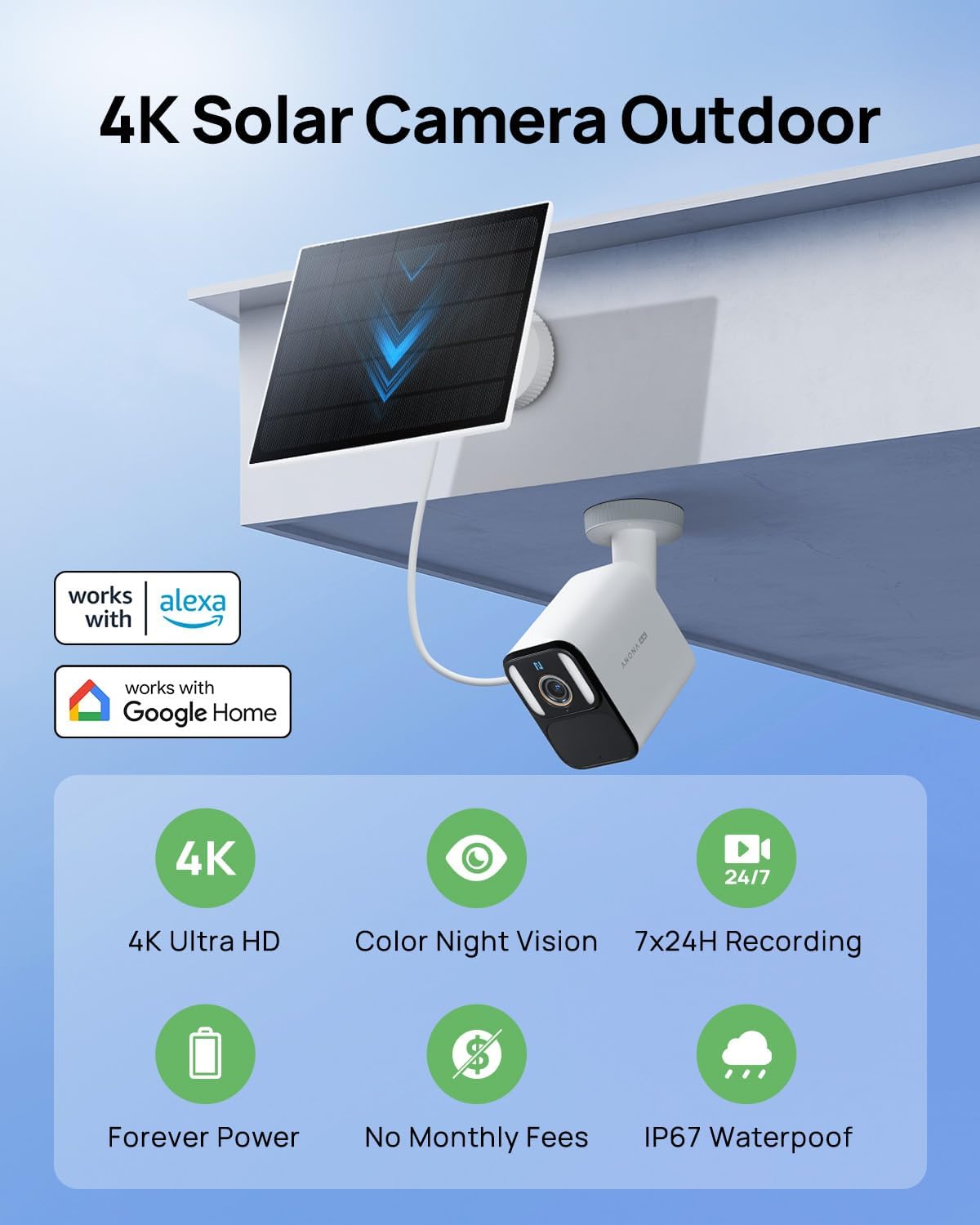
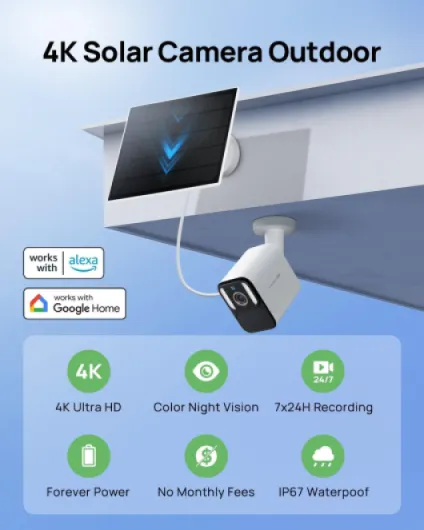
Design-wise, these are compact bullet-style cameras in white plastic with a black front. They look like modern CCTV, not tiny hidden gadgets. If you want something "discreet", this is not it – they are visible, which can actually be a plus for deterrence. The solar panels are separate pieces that you mount nearby with their own bracket and cable into the camera. Once everything is on the wall, you end up with two mounts per camera: one for the cam, one for the panel.
The plastic housing feels fine for the price range. It’s not heavy-duty metal like some pro cameras, but it doesn’t feel cheap toy-level either. IP67 rating is a good sign: in normal rain they held up without any issues, and the seals around the ports look decent. I wouldn’t be scared to mount them fully exposed on an outside wall. The joints allow enough angle adjustment to point them where you want, but you do need to tighten the screws properly, especially if you get strong winds. The solar panels flex a bit if you push them, but once mounted they stayed put for me.
What I liked is the 136° viewing angle. It’s wide without going into fisheye distortion territory. On my driveway camera I could cover from the front door to most of the street in front of the house with one unit. For the back garden, one camera roughly covered the whole width. The trade-off is that objects further away are smaller in the frame, but that’s normal for this kind of lens.
My main criticism on design is cable management between the panel and the camera. The cable is just there, no built-in conduit or channel. It works, but you need to think about how to route and secure it so it doesn’t flap around or get yanked. Also, everything is white, which stands out on darker brick. Overall though, for a mid-range wireless kit, the design is practical. Not pretty, not ugly, just straightforward and functional.
Battery life and solar: mostly set-and-forget, with a few caveats
Power is the big selling point here: 10000mAh battery + 4.8W solar panel per camera. Anona claims around 180 days on a single charge without solar under light use. With the panels hooked up, the idea is that you rarely, if ever, need to manually charge. In my setup, I mounted the panels where they get a couple of hours of decent sun per day, not full sun all day long. After the initial full charge, the battery percentage on each camera stayed pretty stable, even with daily motion recordings and AOV on during the day.
On cloudy days, you can see the battery drop a bit, especially on the busiest camera (the driveway, with cars and people). But then a couple of sunny days brought it back up. So it’s a bit of a balance:
- If you have constant motion and poor sun, you might slowly drain over weeks.
- If you have moderate motion and at least 2 hours of sun regularly, it basically maintains itself.
What I liked is that I didn’t have to bring down a camera to charge it during the test period. With previous battery-only cameras, I was doing that every couple of months, which gets old quickly, especially if you’ve mounted them high. Here, once they were up and the panels were angled somewhat correctly, I more or less forgot about power and just checked the battery percentage out of curiosity.
My only warning: think about panel placement before drilling. You want the panel slightly higher or to the side of the camera, with a clear view of the sky. If you tuck it under a deep roof or behind a gutter, the whole "forever power" idea becomes "charge every few weeks". Also, the cable between panel and camera is not super long, so measure roughly where you’ll put both. As long as you plan that, the combo of battery + solar works well and feels practical for real-world use.
Weather resistance and long-term feel
Durability is always a bit tricky to judge early, but I can at least talk about build quality and how they handled some rougher weather. These cameras have an IP67 rating, which on paper means dust-tight and able to handle being sprayed with water and even brief submersion. In normal human terms: rain, splashes, and general outdoor conditions should be fine. I’ve had them through a couple of heavy showers and gusty winds, and nothing leaked, fogged up or came loose.
The plastic housings and brackets feel solid enough for typical home use. They’re not industrial-grade, but they don’t feel like they’ll crack at the first sign of frost either. The mounting screws bite well into brick and wood as long as you drill proper pilot holes (I followed the 4mm then 6mm approach like one of the Amazon reviewers mentioned, and it does help). Once tightened, the cameras stayed in position and didn’t droop, even with the weight of the antenna and the occasional wind hitting them.
The solar panels are the more vulnerable-looking part, just because they’re flat and exposed. I was a bit worried they’d shake or rattle in the wind, but they actually held up better than I expected. The brackets have enough stiffness, and as long as you tighten all the joints, they don’t flap around. If you live in a very windy area, I’d mount them slightly lower and closer to the wall to reduce leverage, but for a typical suburban setting, they’re fine.
Long term, the main wear points will probably be the panel-cable connections and the plastic aging under UV. If you’re super picky, you might prefer metal-bodied cameras, but then you’re usually paying more and sometimes losing the wireless/solar convenience. For the price and target user, the durability feels reasonable. I’d be comfortable leaving these up year-round without babying them, and if something does go wrong, it’s likely to be after a couple of years, not a couple of months.
Video quality, night vision and AI detection in real life
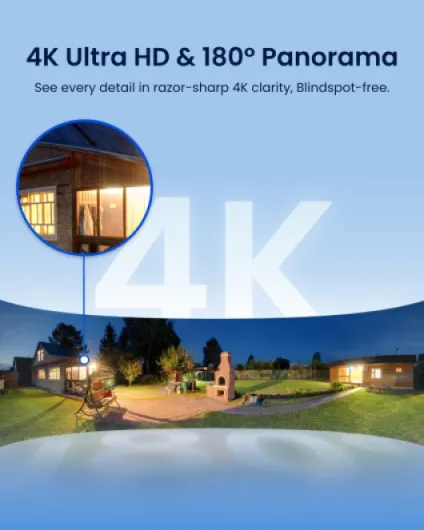
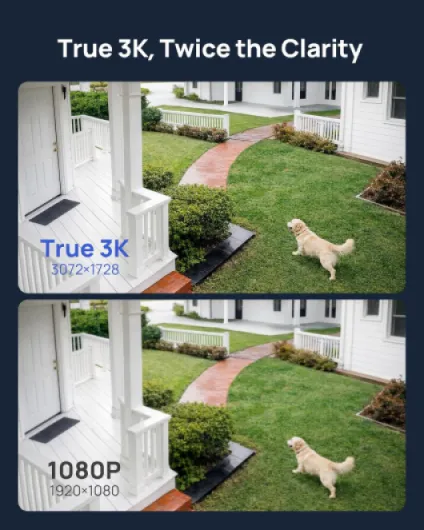
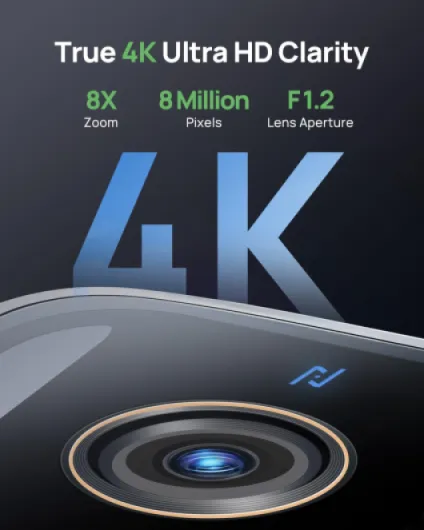
On performance, this is where the Aurora kit is actually pretty strong. The 4K resolution and 8MP sensor are not just marketing text. During the day, the image is sharp enough that you can see faces clearly at typical house distances and read car plates when they’re reasonably close (driveway, parking spot, etc.). Colors look natural, not overly saturated. The MP4 recordings play fine on a normal phone or laptop without any weird formats.
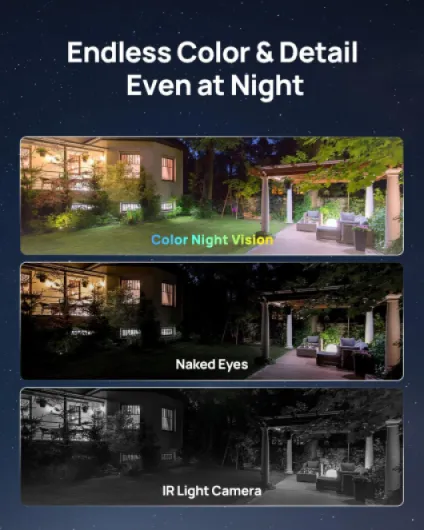
At night, the "color night vision" depends a lot on ambient light. With a bit of street lighting, the cameras keep a color image and you can still distinguish clothing colors, car colors and so on. In a completely dark corner of my garden, the image switches to a more standard low-light look, but it’s still quite usable. The F1.2 aperture and starlight sensor do help; you don’t just get a noisy mess. I’d say the night performance is better than the average 1080p battery camera I’ve used before, especially in half-lit areas.
The AI detection is actually one of the nicest surprises. You can enable or disable categories: people, vehicles, pets, packages. With all four on, my front camera picked up people and cars pretty accurately. It did mislabel my dog as a "person" a couple of times when he was close, but that’s pretty standard for consumer AI. Importantly, it did cut down a lot of false alerts from bushes and shadows, which is what I care about. You still get some random triggers if you set the sensitivity too high, but you can tune that in the app.
The Always-On Video (AOV) continuous timeline is genuinely useful if you’re the kind of person who likes to scroll back and see the whole day as a quick time-lapse. It’s not full 4K at full bitrate all the time – that would destroy the storage – but for checking what happened between two motion events, it’s very handy. The only downside is that scrubbing through the timeline sometimes lags a bit if your connection is weak. Overall, in terms of image quality, night vision and smart alerts, I’d rate performance as solid for a mid-budget wireless system.
What you actually get in the box and how it all fits together
The kit I used is the 4-pack: four cameras, each with its own solar panel, brackets, screws, mounting stickers and a basic manual. There’s no separate base station or NVR; each camera connects directly to your 2.4GHz Wi‑Fi and records to its built-in 32GB eMMC storage. That’s important: no SD card to buy, no mandatory cloud, everything is on the device. Anona claims over 4 months of playback depending on how much motion you get. With my fairly busy front driveway camera, the timeline was still comfortable after a couple of weeks, so the claim doesn’t feel crazy.
Setup is done via the app (Anona’s own). You add each camera one by one, connect them to Wi‑Fi, give them a name like "Driveway" or "Back Garden" and then you can adjust settings: resolution, motion detection sensitivity, AI categories (person, vehicle, animal, package), notification style, and the Always-On Video (AOV) time-lapse feature. The AOV is basically a low-bit-rate continuous recording that lets you scroll back the whole day as a smooth timeline, not just motion clips. That’s actually useful if you want to see what happened around an event, not only the trigger.
In practice, the overall system is pretty simple:
- One app for all four cameras
- Local storage on each camera (32GB eMMC)
- Solar + battery so no cables, no power drills into the house
- Wi‑Fi only, no Ethernet, no PoE
My honest view: the concept is good and matches how most people actually want to use cameras. No base station means one less thing to plug in. The trade-off is that each camera relies heavily on your Wi‑Fi signal and the app. If your router is weak or placed badly, you’ll feel it. But as an all-in-one wireless kit for a typical home, the package is coherent and not overloaded with pointless accessories.
Pros
- Sharp 4K video with good daytime and decent color night performance
- No monthly fees thanks to 32GB local eMMC and built-in AI detection
- Solar + 10000mAh battery works well if panels get a couple of hours of sun
Cons
- Only supports 2.4GHz Wi‑Fi, setup can be annoying on some routers
- App is usable but less polished than bigger brands
Conclusion
Editor's rating
Overall, the Anona Aurora 4K solar camera kit is a solid choice if you want proper coverage around a house without getting into wired systems and monthly subscriptions. The main strengths in daily use are the genuinely good image quality (especially in daylight and half-lit nights), the reliable AI detection that cuts down a lot of pointless alerts, and the combination of big battery + solar that makes it close to "install and forget" once you’ve found good spots for the panels. The built-in 32GB eMMC per camera is also a nice touch – no SD cards to buy, no cloud to rent.
It’s not perfect. You’re limited to 2.4GHz Wi‑Fi, which can mean messing with your router settings. The app is functional but not as polished as some of the big-name competitors. And the plastic build, while fine for home use, won’t impress someone used to metal pro gear. But none of these are deal-breakers if your goal is simple: see clearly what’s happening around your house, get useful alerts, and not pay a subscription every month.
If you live in a place with at least a couple of hours of sun most days, have a half-decent Wi‑Fi signal around your property, and you want four cameras to cover multiple angles, this kit makes sense. If your Wi‑Fi is weak, your walls are thick, or your yard is permanently shaded, you might be better off with a wired or plug-in system. For most typical homes, though, I’d say this is a good balance of features, simplicity, and long-term cost.