
Summary
Editor's rating
Is it worth the money compared to cheaper cams?
Chunky but practical design with some small quirks
Solar charging and 10,000 mAh battery: mostly set‑and‑forget
Weather resistance and build over a few weeks outside
4K video, colour night vision and triple detection in real life
What you actually get and how it works day to day
Pros
- Sharp 4K footage with genuinely useful colour night vision
- Solar panel and 10,000 mAh battery make it almost maintenance‑free in a sunny spot
- Triple detection and AI noticeably cut down false alerts compared to basic cams
Cons
- Bulky design and visible movement, not ideal if you want something discreet
- Auto‑tracking and motion settings need tweaking to avoid over‑recording and battery drain

Specifications
View full product page →| Brand | aosu |
A 4K solar camera that tries to do everything
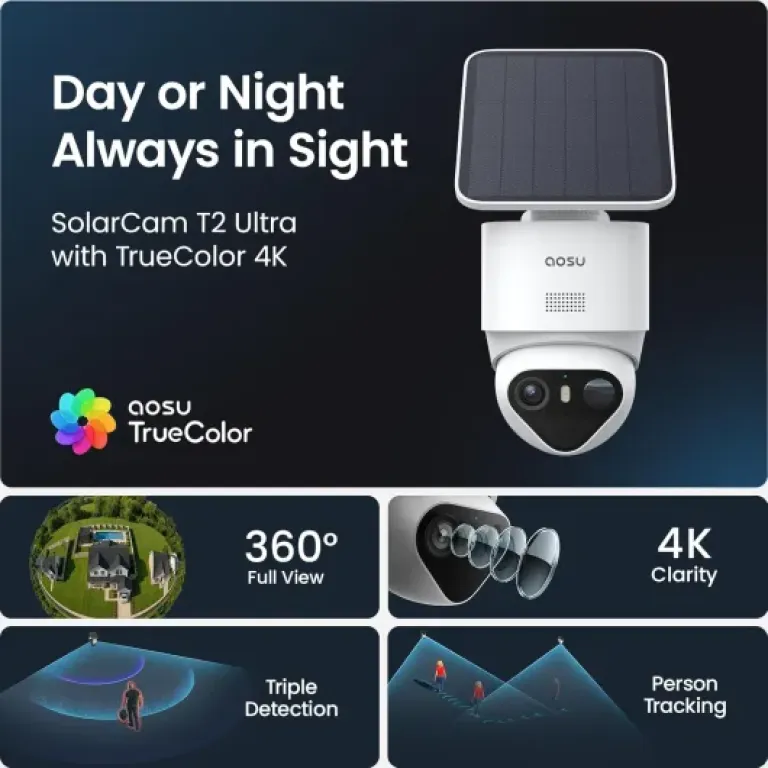
I’ve been using this aosu 4K wireless outdoor camera for a few weeks on my driveway, replacing an older 1080p Wi‑Fi cam that constantly needed charging and spammed me with useless alerts. On paper this thing ticks all the boxes: 4K, colour night vision, solar, big battery, 360° rotation, and triple detection with AI. It sounds a bit like a wishlist product, so I was curious to see what actually holds up in day‑to‑day use.
In practice, the first thing that stood out was the image quality. Coming from 1080p, the jump to 4K is not marketing fluff, you really do see more detail, especially when you pause footage and zoom on faces or number plates. It’s not cinema quality or anything, but for a security cam, it’s more than good enough to recognise who’s who and what’s going on, even when they’re a bit further away.
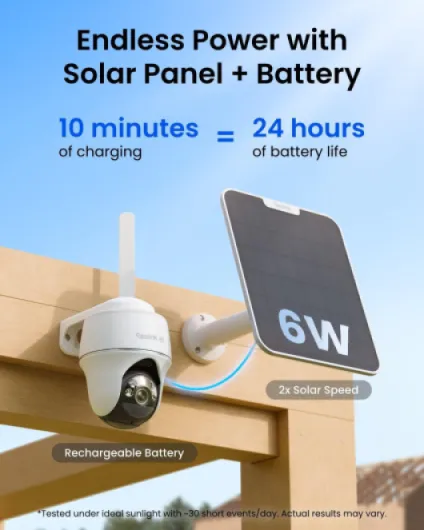
The second thing is the solar + battery combo. My old camera had to be brought inside every couple of weeks to charge. With this one, once it was mounted and the solar panel pointed roughly toward the sun, I basically stopped thinking about power. The battery percentage hardly moved after the first few days, even with a decent amount of movement on my driveway.
It’s not perfect though. The app is decent but not the fastest I’ve used, the camera head is quite chunky, and the motion tracking can sometimes overreact and swing a bit too enthusiastically. But overall, for an all‑in‑one, it feels like a pretty solid option if you want something you install once and mostly forget, as long as you accept a few quirks and you’re okay living inside the aosu app ecosystem.
Is it worth the money compared to cheaper cams?
Price‑wise, this aosu sits above the basic 1080p battery cams but below full professional systems with NVRs and wired PoE cameras. For what you pay, you get 4K resolution, colour night vision, PTZ with auto‑tracking, triple detection, a big battery, and a solar panel included. If you tried to piece those features together separately, you’d likely spend more or end up with a mess of cables.
Compared to budget Wi‑Fi cameras I’ve used, the big differences are: much clearer footage (especially when zooming), fewer useless alerts, and not having to climb a ladder every few weeks. Those three things alone justify the extra cost for me. On the flip side, the app is okay but not on the same level as some bigger brands, and you are locked into their ecosystem, so if you already have a different brand’s system, this won’t integrate with it nicely.
Another point: the solar panel included in the box is a real cost saver. Some brands sell the panel separately, and once you add that, you’re in the same price range or higher anyway. Here it’s all in one kit. Just be aware that 4K footage will use more storage and bandwidth than 1080p, so your Wi‑Fi needs to be reasonably solid, and if you use cloud or local storage, clips will be heavier.
Overall, I’d call the value pretty solid if you specifically want a wireless, solar‑powered, 4K camera with smart detection and 360° coverage. If you only need a basic cam to check a small porch, cheaper 1080p options will obviously do. But if you’re tired of blurry faces, constant charging, and false alerts from leaves, paying a bit more here makes sense, as long as you’re okay with a couple of app quirks and the bulkier design.
Chunky but practical design with some small quirks
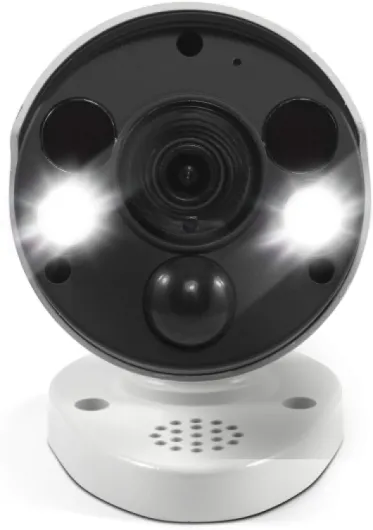
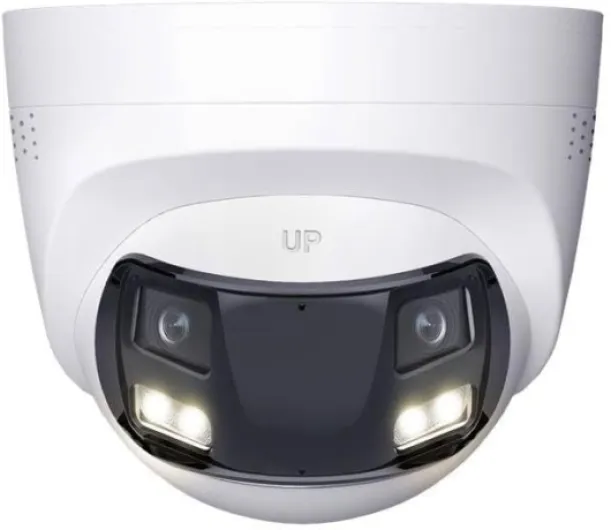
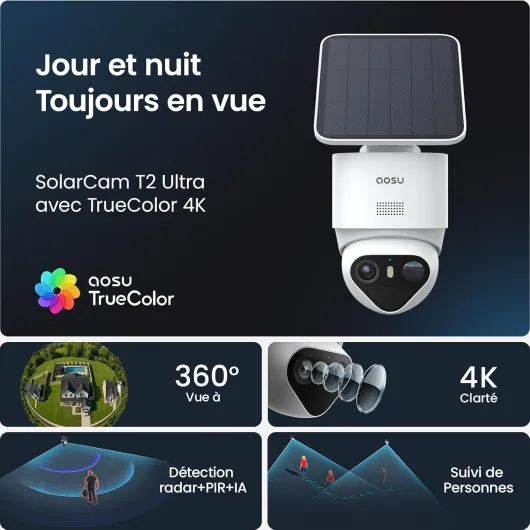
Visually, the camera is pretty standard for this type of product: white plastic body, black camera module, and antennas sticking out. It’s not "pretty" in any decorative sense, but it looks like what it is: a security device. Mounted on a wall, it’s fairly visible, which in my case is a good thing because it clearly signals that the area is monitored. If you want something discreet, this is not tiny, so keep that in mind.
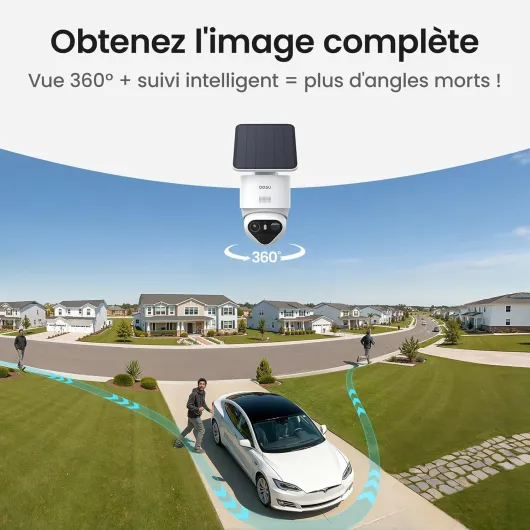
The 360° PTZ design is useful. The motorised head can pan around to cover a wide area, and the auto‑tracking makes real use of that. When someone walks across my driveway, I can see the camera physically turn to follow them. It’s a bit noisy when it moves in a very quiet environment, but outside you only really notice it if you’re standing right under it. I wouldn’t call it silent, but it’s not obnoxious either. The movement is smooth enough that the video doesn’t look jumpy.
The integrated/removable solar panel is the more interesting design choice. You can keep it attached directly on top of the camera, which makes for a compact all‑in‑one block, or detach it and mount it slightly away to catch more sun. This is useful if your ideal camera angle is in the shade but you still want good solar exposure. The downside is that you end up with more cables to tuck away and another bracket to mount, so it’s a bit more effort during installation.
One thing I noticed is the camera does stick out from the wall quite a bit because of the PTZ head and the panel. If you mount it low, it’s easy to bump into with ladders or if you’re carrying things. I’d say plan your mounting height so it’s out of the way but still reachable with a small ladder, because you may want to clean the lens or adjust the panel once in a while. Overall, the design is practical and thought‑through, but not exactly sleek. It’s functionality first, looks second.
Solar charging and 10,000 mAh battery: mostly set‑and‑forget
The battery and solar setup is one of the big selling points, and here it actually delivers quite well. The camera has a 10,000 mAh internal battery and a 3W solar panel. In my case, mounted on a south‑facing wall in a UK climate (so not exactly tropical), the battery has stayed between about 85% and 100% the whole time. I’m not in a super high‑traffic area, but there are daily comings and goings, delivery drivers, and some cars passing by.
aosu claims it can last up to 90 days without sun, which I obviously haven’t fully tested, but judging by the battery graph in the app, the drain per day is low when you’re not getting hammered with constant motion events. The key is to tune the motion settings: if you leave sensitivity on max and let it track every car 20 metres away, it will record a lot and that will eat into the battery. Once I limited the detection range and drew proper activity zones, the battery usage stabilised nicely.
The solar panel itself is light and easy to angle. If you have a shaded wall, I’d definitely recommend using the panel in detached mode and running the cable to a sunnier spot. One small annoyance: the cable management isn’t perfect. You’ll probably want a few extra clips or trunking if you care about a tidy look. Also, the panel doesn’t feel premium, but it works, and that’s what matters here.
In short, if your mounting position gets at least an hour or two of decent sun per day, you’re realistically looking at a camera you won’t need to manually charge. If you put it in full shade and crank all settings to max, expect to have to top it up via USB every now and then. For me, it’s been very close to "install and forget" so far, which is exactly what I wanted after dealing with battery‑only cameras that constantly begged for a charge.
Weather resistance and build over a few weeks outside
The camera is rated IP65, which basically means it’s fine with rain and dust. I’ve had it mounted through a couple of heavy showers and some pretty strong wind. No leaks, no fogged lens, and the video quality stayed the same. The plastic casing doesn’t feel premium in the hand, but once it’s on the wall, you don’t really notice. It doesn’t rattle or flex when you adjust the angle, and the joints feel firm enough that it won’t drift on its own.
One thing to watch is the mounting bracket. It’s okay, but because the camera and panel together are a bit bulky, I made sure to use proper wall plugs and not just throw it into crumbly masonry. The included fixings are fine for solid brick, but if your wall is a bit weak, I’d invest in better anchors. Once tightened properly, the camera hasn’t moved at all, even with wind hitting it directly.
In terms of long‑term durability, I obviously can’t speak for years yet, but a few weeks in mixed weather haven't shown any worrying signs. The white plastic will probably yellow a bit over time like most outdoor gear, but that’s cosmetic. More important is that the moving parts and the solar panel connections stay solid. The pan/tilt motors still move smoothly, and there’s no grinding or weird noises.
I’d say the overall build feels good enough for the price range: not bulletproof like professional metal housings, but also not flimsy toy plastic. If you mount it sensibly (not at head height where it can be easily knocked or grabbed), it should hold up fine for typical home use. Just don’t expect it to survive someone deliberately attacking it with a stick or ball; it’s still a consumer camera, not a vandal‑proof dome.
4K video, colour night vision and triple detection in real life
On the video side, 4K at 15 fps is what you actually get. The frame rate is a bit lower than some 1080p cameras, but for security it’s fine. During the day, the image is sharp, and you can clearly read number plates within a reasonable distance and identify faces without squinting. The dynamic range is okay: if the scene is half in bright sun and half in shade, you still see details, though it can blow out very bright skies like most consumer cams.
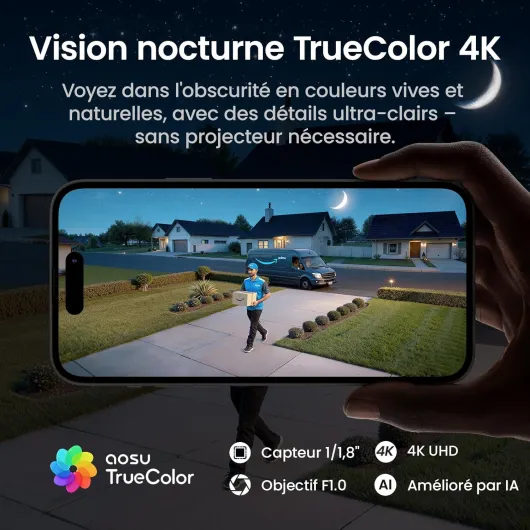
At night, the TrueColor colour night vision is where it stands out compared to older black‑and‑white IR systems. As long as there is some ambient light (street lamp, house lights, or the camera’s own LEDs), you get a proper colour image instead of that washed‑out grey look. In my case, with a dim streetlight, I can still see the colour of cars and clothes. In total darkness, it relies more on the built‑in lights, which obviously announce that the camera is there, but if you’re okay with that, it gives a much clearer view than pure infrared.
The triple detection (PIR + radar + AI) does a decent job of cutting down false alerts. Compared to my previous camera, I get far fewer notifications from moving branches or passing clouds. It’s not perfect: I still had a few alerts from cats or when a spider web swung right in front of the lens, but overall the ratio of "useful" alerts to "junk" is much better. The AI person/vehicle detection is fairly accurate; it correctly tagged deliveries, neighbours walking past, and my own comings and goings.
Auto‑tracking mostly works, but it can be a bit over‑eager. Sometimes it will follow a car right off to the edge of its range and then stay pointed there, so later events on the other side are off‑screen until motion is detected again. You can tweak zones and sensitivities in the app to reduce this, but it takes a bit of trial and error. Once dialled in, performance is pretty solid for the price bracket: good image clarity, usable night colour, and motion detection that helps more than it annoys, which is honestly the main point of a camera like this.
What you actually get and how it works day to day
Out of the box you get the camera body, a removable/adjustable solar panel (3W), mounting hardware, a USB charging cable, and the usual paper manual. It’s one of those all‑in‑one kits where you don’t really need to buy anything else unless your mounting spot is weird. The camera is a bullet style with a motorised head that can pan and tilt for the 360° coverage. It connects over Wi‑Fi and you control everything from the AOSU app on your phone.
Setup is fairly standard: charge it a bit via USB first, add it in the app, connect to Wi‑Fi, then mount it. I had it paired and streaming in under 15 minutes. The app walks you through each step with clear screens. It’s not the slickest app I’ve ever used, but it does the job: live view, playback from the timeline, motion settings, activity zones, and firmware updates are all easy to find after a few minutes of poking around.
The core functions you’ll actually use are: live view, notifications when motion is detected, checking short clips, controlling the camera angle, and talking through the two‑way audio. The siren and floodlight alarm are there too, and they are loud and bright enough to surprise someone, but you’ll probably only test them a couple of times unless you really want to scare off visitors. Auto‑tracking kicks in when motion is detected and the camera tries to follow the person or car across its field of view.
Day‑to‑day, it feels like a camera aimed at people who want a bit more control than a basic cheap cam, but without going into full professional NVR systems. You get 4K footage, smart detection, solar power, and PTZ in a single unit. There’s no need to run cables or think about power if your mounting spot gets reasonable daylight. If you’re already in the aosu ecosystem, it slots in nicely, but even on its own, it’s easy enough to live with once you’ve done the initial setup and tweaked the motion settings.
Pros
- Sharp 4K footage with genuinely useful colour night vision
- Solar panel and 10,000 mAh battery make it almost maintenance‑free in a sunny spot
- Triple detection and AI noticeably cut down false alerts compared to basic cams
Cons
- Bulky design and visible movement, not ideal if you want something discreet
- Auto‑tracking and motion settings need tweaking to avoid over‑recording and battery drain
Conclusion
Editor's rating
After living with the aosu 4K wireless outdoor camera for a while, I’d sum it up as a practical, feature‑packed camera that mostly delivers on what it promises. The 4K image quality is a clear step up from the usual 1080p stuff, the colour night vision is genuinely useful, and the triple detection does reduce the amount of pointless notifications. Combined with the 10,000 mAh battery and 3W solar panel, it comes close to a set‑and‑forget setup if you mount it in a sensible spot with some sun.
It’s not flawless: the camera is on the chunky side, the app could be snappier, and the auto‑tracking sometimes gets a bit carried away. But once you take the time to tweak motion zones and sensitivity, it turns into a reliable guard for a driveway, garden, or side passage. I’d recommend it to people who are fed up with constantly charging cheap cams and want sharper footage with smarter alerts, without going into full wired professional systems. If you’re on a tight budget or just need a simple door cam, this might feel like overkill. For everyone else, it’s a good value, no‑nonsense option that gets the job done with a decent mix of features and real‑world usability.